

Interview & intro by Beau Croxton
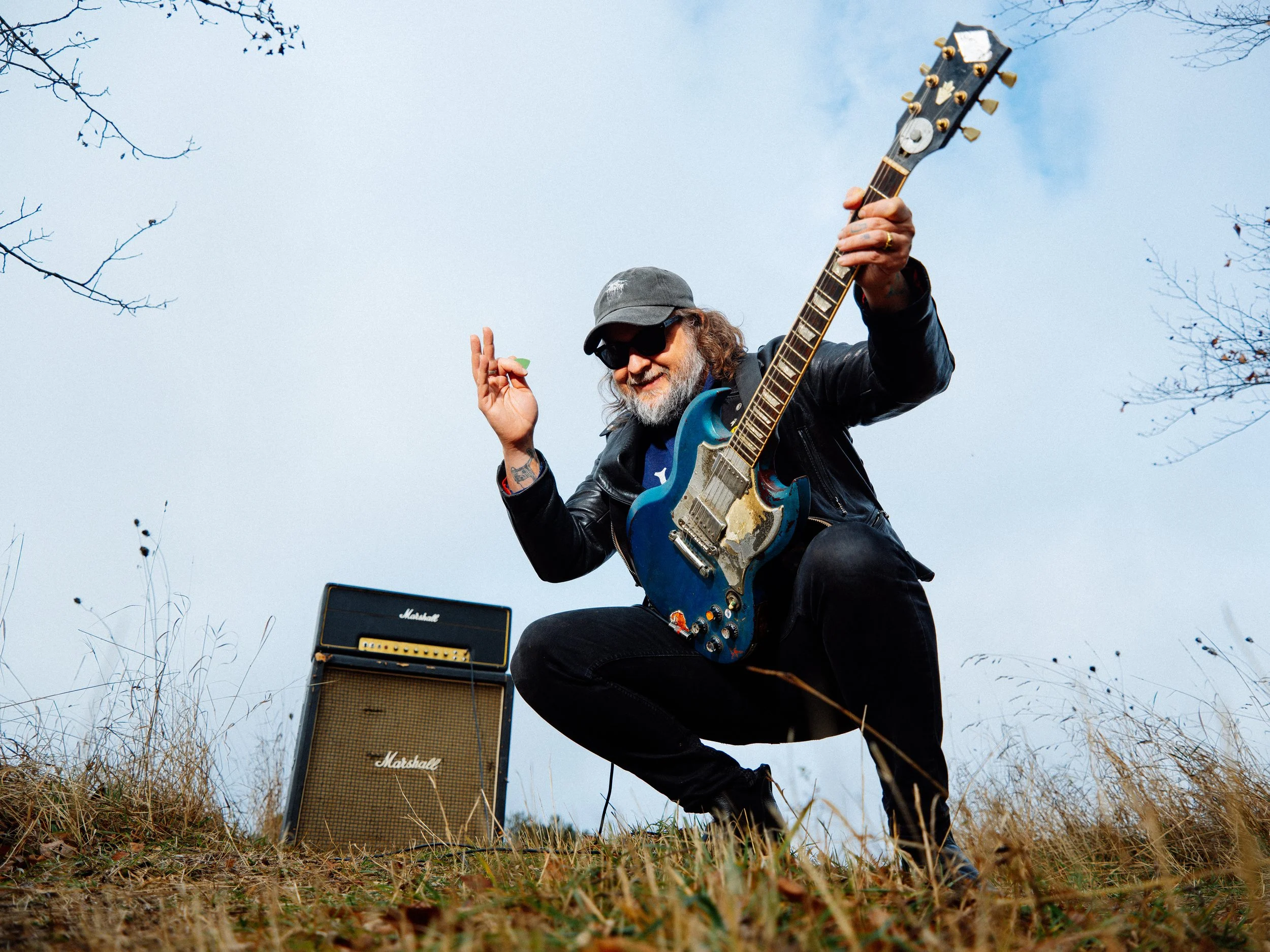
King Tuff by Wyndham Garnett
For our 9th installment of In Conversation, we are thrilled to have an interview with King Tuff.
King Tuff (aka Kyle Thomas) won over the hearts of music lovers back in the late 2000’s with a fabulously scuzzy, Marc Bolan-esque, lo-fi garage rock sound. The crunchy garage rock of Was Dead, King Tuff, and Black Moon Spell spawned a kickass core-sound of power pop-leaning garage rock that was very irresistible and immediate.
On his 2018 album The Other, Thomas tampered with his original formula quite a bit and found a bridge to entirely new sounds. On 2023’s Smalltown Stardust, Kyle brought his songwriting all the way to the other side of the sonic palette, with a much more soft, chill, introspective and beautiful approach. It was an insightful and spiritual exploration into the different sides of King Tuff as an artist and individual, yielding some brilliant songwriting.
Now in 2026– King Tuff is having a full circle moment. This Friday March 27th, Kyle Thomas comes roaring back to rock and roll glory with his new King Tuff LP, MOO– which channels the spirit of his earliest work. With glorious riffs and anthemic rockers like “Stairway To Nowhere”, “Oil Change” and “Invisible Ink”, there's a whole lot to get unreasonably excited about.
MOO’s origins began when Thomas retrieved his old tape machine that he used to create his debut LP Was Dead. The machine (a Tascam 388) had been sitting in his parents house for 14 years– Kyle brought it to LA and fixed it up.
MOO is an incredibly fun and charming rock n’ roll return to form that brings some extra twang and a proper dose of classic rock influences to the table. It revives the lo-fi, crunchy rock n’ roll days of his garage-y heyday in a fresh, updated and satisfying way. It’s short, sweet, simple, to the point, and it totally rocks. It's also a triumphant reclamation of identity, as Kyle Thomas started really feeling like King Tuff again– Thomas claimed: “The first song I recorded on it was “Twisted On A Train”, and I was shocked by how instantly I sounded, and felt, like myself again. In fact, I wrote and recorded the whole dang song in the span of a few hours, which was basically the opposite of how I had been working on the computer.”
A few weeks ago, I caught up with King Tuff to talk about MOO, Smalltown Stardust, his stoner rock band Witch, his involvement with Ty Segall & the Muggers, and more.
Check it out below!
INTERVIEW
BEAU CROXTON: So we're about to enter a very exciting and fantastic new era for King Tuff with MOO. But I'd love to start the convo with Smalltown Stardust. That record kind of felt like an arrival point, and it seems like a very significant era for you– “Portrait of God” is one of my favorite King Tuff songs. I know you're looking forward to getting loud again with MOO–
I'd love to hear your goals with the last record, and your artistic transition from that record to your new era.
KYLE THOMAS: So I think with Smalltown Stardust (and the other record before that to a degree) I was just kind of seeing where else I could go with the music– and really just letting the songs guide me. Those are just the places the songs wanted to go. With Smalltown Stardust, I definitely wanted to make a more chill album and experiment with strings, and all that stuff. I was also writing a lot of the songs on piano. So that had a lot to do with the different sound of it. And I love that record– I'm really proud of it, and I think that it sounds really good. It was made during COVID time…so it's kind of a nice…memento from that era. (If there could be a nice thing from that era!)
But when it came down to it, when I went and I toured the album, it wasn't as fun to play that stuff live. I was playing keys on some of the songs, which was cool. When I would play my older stuff in the set, it was so much more fun. So I really came into making this record with that in mind– I just wanted to make something that was going to be exciting to play live. A lot of these songs are also written on an acoustic guitar, so I can solo acoustically and they'd maybe be more in that world. But I think in general, I've always kind of had these two sides to my songwriting. I've had a more delicate side and then the more rock side. So…I'm sure I'll always just keep going back and forth.
BEAU: It's full circle to the other side, and then back around again.
KYLE: Generally when I make something, immediately after that, I want to make something completely different.
BEAU: The grass is always green around the other side…
KYLE: Yeah!
BEAU: So when I listen to the record, MOO is a title that makes sense– the record rocks, but feels a bit twangy too. So where did that title come from and how did you land on it?
KYLE: It's just a nice word, isn't it? (Laughs)
I think it also has something to do with moving back to Vermont. You know…the cows were calling me back. Also, I was looking for a title that wasn't one of the song titles– which I generally always have ended up doing just cause I can never think of a title. I just liked how short it was and it can mean whatever you want it to mean.
BEAU: So I did have a question about Vermont. I saw all of your posts last year about leaving LA and moving back to Vermont. There was a lot of reflecting on your early days on Smalltown Stardust, and then with this record, you recorded it in LA before you moved.
Were you kind of yearning for the simple life in your song writing, and maybe subconsciously telling yourself that you wanted to leave LA?
KYLE: It wasn't subconscious. It was very conscious (laughs). I had been thinking about leaving for a few years. So it was definitely bleeding into the writing, definitely even in Smalltown Stardust– there was a lot of that in there too. With this one, I was trying to manifest something, which has already come true, which is cool. I find that happens a lot with my songs– I'll really be trying to manifest something and a lot of times it will work.
BEAU: Yes— I had to talk to myself about quitting smoking for a very long time before it happened. So I know the feeling.
KYLE: There's something to be said for manifesting!
BEAU: So MOO is super rockin’ with some great energy. I'd love to hear some of the different influences. I'm definitely hearing stuff that’s a little more similar to Neil Young and Crazy Horse than the T Rex-like sound of your early stuff. What were some of the influences this time?
KYLE: Yeah– I don't know if there's anything specific… I always come back to listening to the Beatles, obviously. A lot of Tom Petty, Traveling Wilburys– that kind of stuff. Just “Dad Rock”. That's my genre, and I'm just embracing that. I like to call it “new classic rock”. (laughs) I mean, I just listen to the classics, but a lot of times when I'm making a record, I don't listen to anything. I'm just trying to hear new songs.
BEAU: “Stairway to Nowhere” is probably my favorite song on the record. The bassline is really brilliant. I'd love to hear about your process for that one, thematically, instrumentally and all.
KYLE: That was one where I really wanted to create the song around the bass– a bass hook. I love it when the bass is kind of the lead instrument. Again, like a lot of the Beatles is like that. Also, I was thinking a lot about Buzzcocks “Why Can't I Touch It?”.
BEAU: Absolutely– that may have drummed up the nostalgia I felt when I was listening to it. I think it also maybe reminded me a little bit of a Sheer Mag too. Obviously, it sounded most like King Tuff.
KYLE: Yeah– I feel akin to Sheer Mag in a lot of ways…that sort of melodic and classic kind of rock sound. So I had that melodic bassline, and it took me a while to find lyrics. I actually had kind of pulled them from a song that I had been working on for my other band, Witch, and I kind of put it into there. It's also obviously the “Stairway to Heaven” reference. But I just sort of kind of started to think about the music industry. It's definitely kind of about that. It feels like you're just endlessly trying and screaming into a void…getting fucked over. So yeah, that's kind of where that one is. But yeah– I'm glad you pointed out the bassline.
BEAU: Yeah, absolutely. I think it's important to talk about that stuff too. It's only getting more difficult– in Brooklyn, a lot of our favorite venues are getting shut down…
KYLE: I didn't even though there were venues there anymore! (laughs)
BEAU: Well, we're looking forward to seeing you at Music Hall of Williamsburg, because that's not going to be there after next year.
KYLE: Yeah, I know. I'm psyched to play there one last time, but that's always been one of my favorites. I mean, I've been playing there forever back when it was North Six. Yeah, it's sad.
BEAU: Well, we gotta keep it alive! Kudos to you!
KYLE: Somebody's got to try! (laughs)
BEAU: “East of Ordinary” is great— it stood out to me. It felt nicely in between rock and folk. What can you tell me about that track?
KYLE: I think that a lot of my music is that kind of intersection of folk and rock. Going back to the first album too, like “Sun Medallion” and “Frequent I'm Dead”, those are like that too..… with an acoustic guitar rhythm track with electric riffs on top of it. That's kind of my sweet spot. “East of Ordinary” started as that riff, and that riff just felt so good to play, so I just went from there. That one's definitely kind of the “manifesting” song. That one and “Backroads" are kind of similar, where I'm just kind of imagining myself in the future, and now it seems to have happened.
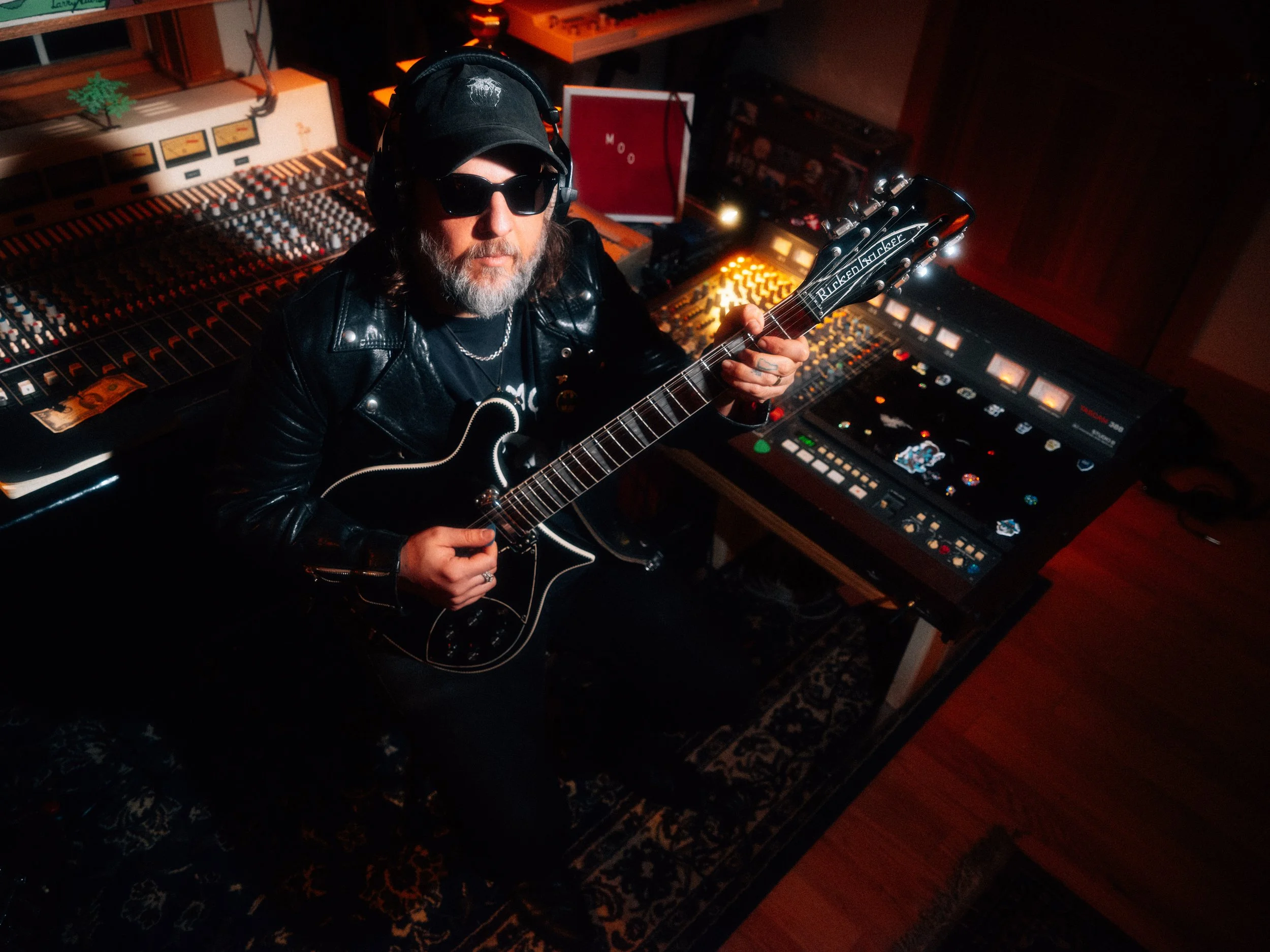
King Tuff by Wyndham Garnett
BEAU: “Unglued” was also an interesting one. I was getting a little bit of an Elvis Costello vibe or something…it just stood out from the other tracks- it's great!
KYLE: I mean, that one was me trying to be the Traveling Wilburys…but shitty. (laughs)
BEAU: Gotcha! (laughs) Well, it sounds fantastic.
KYLE: At some point, I was just like…all the best songs are just that simple rock beat. You know….I could just listen to that forever. It's every Tom Petty song…It's like, that's all I really want!I originally wanted the whole album to just be that beat. It's the most simple rock beat, but I strayed a little bit.
BEAU: So WITCH was such an incredible project. “Seer” is one of my favorite riffs ever– I remember playing that song in college endlessly with my friends. When you think back to your early days in WITCH, what was it like, and how did it shape things ahead for you? Do you have any wild stories you can share from that era?
KYLE: I just always think about our first band practice, which was in my parents' basement. There's a room in the basement that you have to go through a little kind of carved out doorway. It looks like it was smashed out of cinder block. It's what we call the “bomb shelter”. I think they were building it as a bomb shelter, but it would not protect you from anything. we did our first practice in there and J (Mascis) brought his whole giant drum set down there.
I was you know, 21 maybe. And it was just insane to me, like ....I'm supposed to play lead guitar in front of J? you know? But it was never weird. It was just crazy. But yeah– that stuff was so fun to play live. Like there's nothing better than playing out of a full stack. It's just can't be beat. We were always pretty shitty, like at playing. We never practiced, really lazy. Probably the laziest group. That's why we hung around so long. We didn't do anything. But yeah. Yeah– obviously Dave Sweetapple, the bass player, passed away a year and half ago. I don't think we'll be playing again, but we do have an album that we finished, so.
BEAU: I was so sorry to hear. Well, WITCH is legendary– I'm sure everybody will be very appreciative of more WITCH.
Speaking of great projects with your friends… I saw the Ty Segall & The Muggers show back in 2012 at Webster Hall in New York City. That lineup was just insane. Cory Hanson, and you and Ty Segall…. How did that all-star lineup come together, and do you have any fond memories of that tour?
KYLE: I mean, we're all just good friends in LA. We all hung out with each other all the time anyway. And Ty was making a record. I was like, “if you ever want to switch it up, I'd come on tour”. I mean– I just love that era. It was so fun and every show was insane. I'm just really so happy I was part of that.
The KEXP performance alone…. I don't really like to watch any of my own stuff, but I'll watch that KEXP performance once a year and just laugh. It's incredible! (laughs)
BEAU: Yeah….“Baby Big Man”. Oh my God, it ripped so hard, it's so sick. I've watched that KEXP session endlessly as well– what an era. At the NYC show, I remember Ty had all of Webster Hall chanting “Babies! Babies!”
KYLE: (laughs) He's got a weird thing! He's got a weird thing with babies. I don't know.
BEAU: (laughs) Shout out to babies.
BEAU: So you mentioned you have a lot of classic influences— but are there any current bands that you're kind of digging on right now or anything you want to shout out?
KYLE: What am I digging on now? You know, I listen to a lot of my friends' music. I think that the band Snooper is really good. Obviously, Sheer Mag is great. It's always a hard question because I just go blank. Well, I'm psyched to go on tour with this band, Mod Lang. They're from Detroit– Kinda real power pop, younger kids…it seems like rock is rearing its head a little bit.
BEAU: Absolutely, especially in the last 5 years. I feel like in the mid 2010s, there was some weird thing going on where it became very not cool to play guitar...
KYLE: I think it's been not cool for years (laughs)
BEAU: (laughs) confirmed, I’m so not cool.
KYLE: And I'm not cool either, and that's kind of what this record was like… it's not cool to make rock music, but that's what I do. And I'm going to do it to the best of my abilities.
BEAU: Hell yeah. The resistance.
KYLE: I mean….There's nothing better than a rock show. Yeah. Like going to a show, if it's good, it's unbeatable.
BEAU: Yeah it's a great feeling. Speaking of great feelings, you have said that you're feeling very re-energized with MOO. What do you think the future holds after this record? Is it kind of steering you in any direction?
KYLE: I think I will continue just playing that Tom Petty beat, you know…. ACDC. But no, I can never say what my music is going to be like, it just comes out. But I do think I'll just kind of just do my thing. That's all I can really do. Music to me is just all about showing your personality. So that's all I'm trying to do.
BEAU: Well, we're really looking forward to catching you at Music Hall Williamsburg. What can all your King Tuff die-hards expect from the shows on tour?
KYLE: All the classics and all the new classics.
BEAU: That's what we love to hear. Hell yeah– well, thank you so much for making time Kyle, it's been real! Have a good one!
KYLE: Thank you so much!
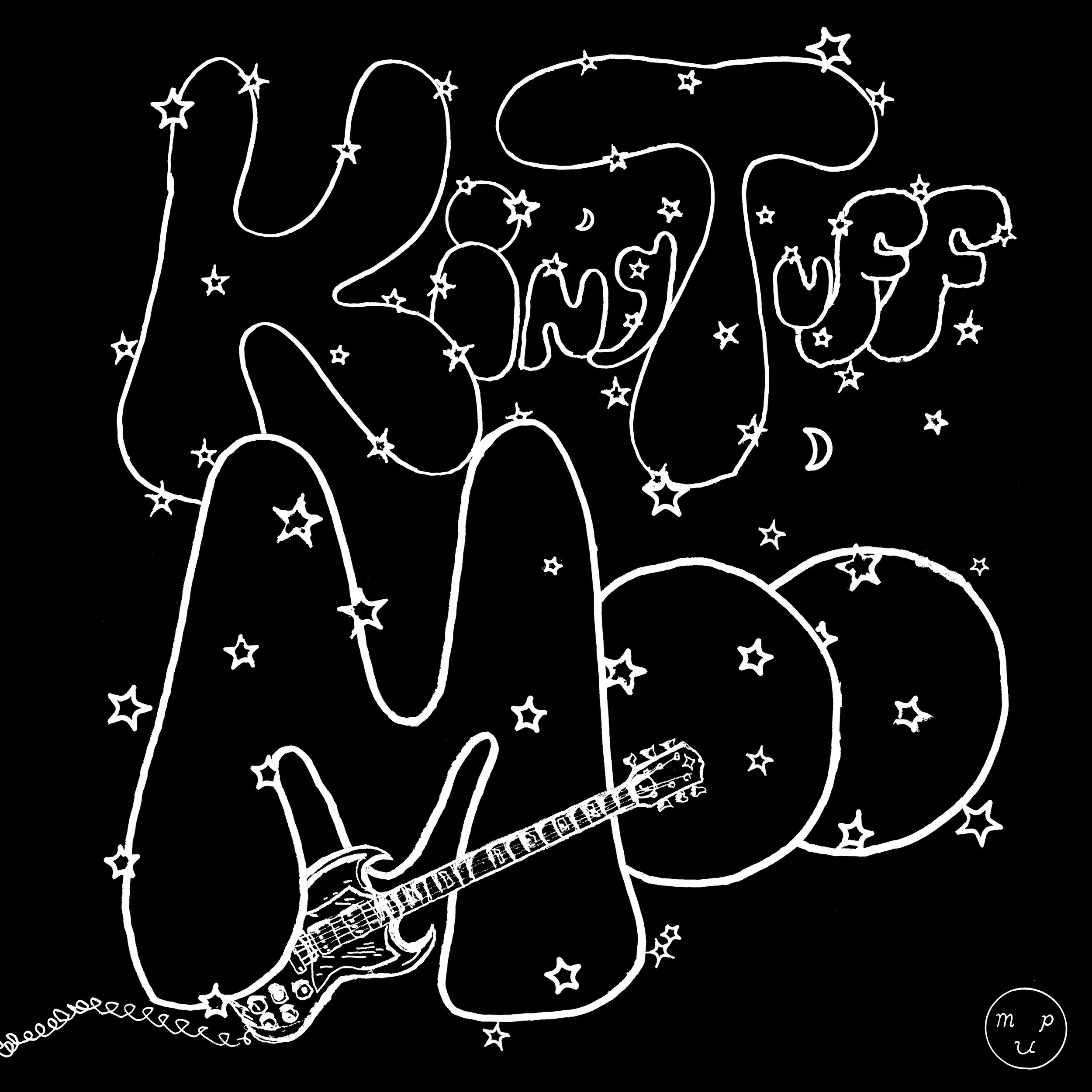
MOO by King Tuff is out everywhere this Friday, March 27th, via MUP Records.
King Tuff is doing a free in-store signing and performance at Rough Trade NYC THIS FRIDAY— RSVP here.
King Tuff plays at Music Hall of Williamsburg in NYC on April 16th 2026— get your tickets here.
You can find the MOO vinyl, tons of other King Tuff merch HERE.
You can find tour dates everything else King Tuff at https://kingtuffworld.net
And you can listen directly below!
SUPPORT OCCULT MAGAZINE
Hello reader and thanks for your support!
Occult Magazine is currently an independent & ad-free music publication. We rely on the passion and volunteered hard work of our generous contributors.
If you enjoy what we are doing—
Please consider donating HERE or HERE if possible!
Thank you!