

Behind Primitive Ring’s Debut LP - An interview with Charles Moothart
Interview & intro by Luke Dumpert
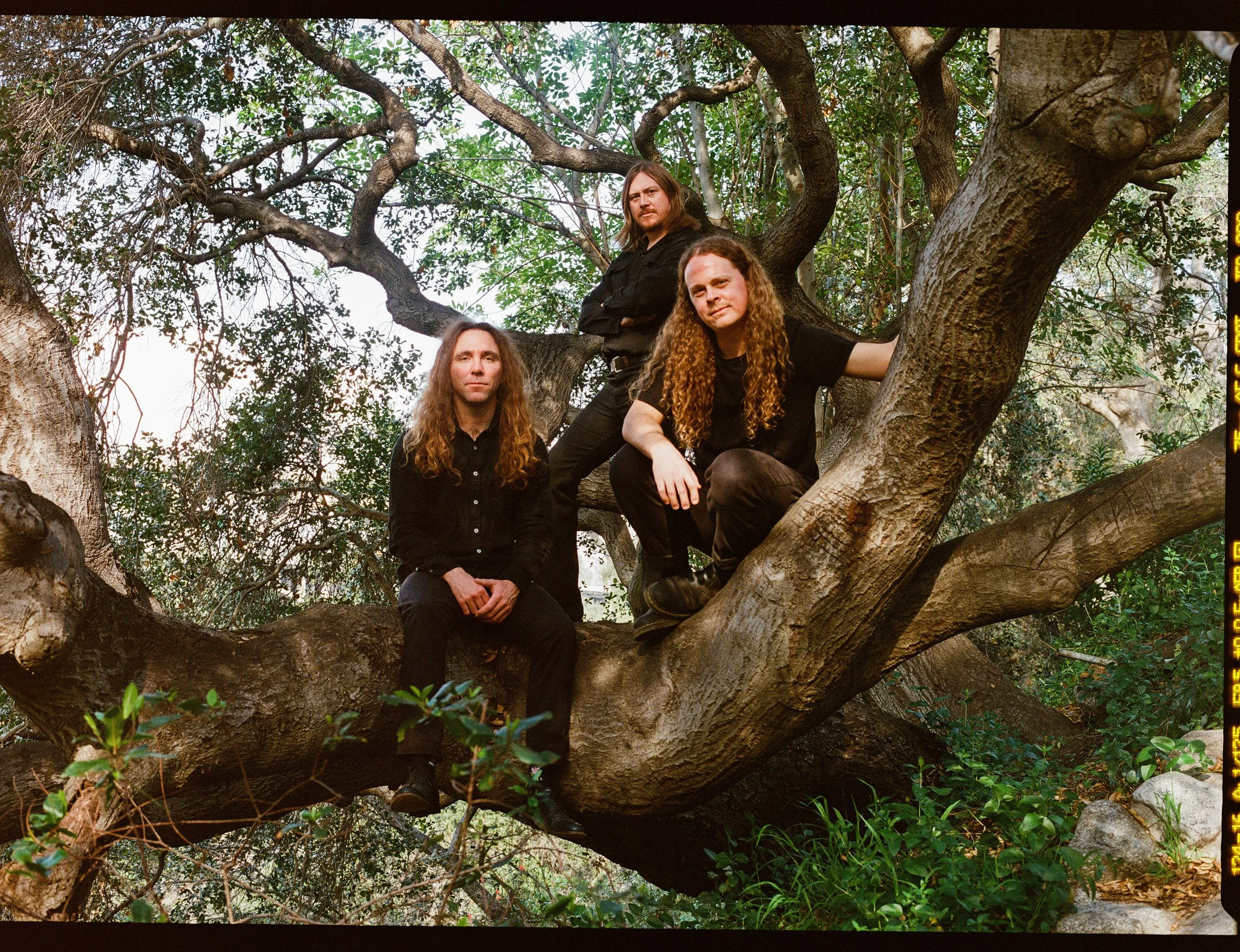
Primitive Ring by Sheva Kafai. Left to right: Charles Moothart, Bert Hoover, and Jon Modaff
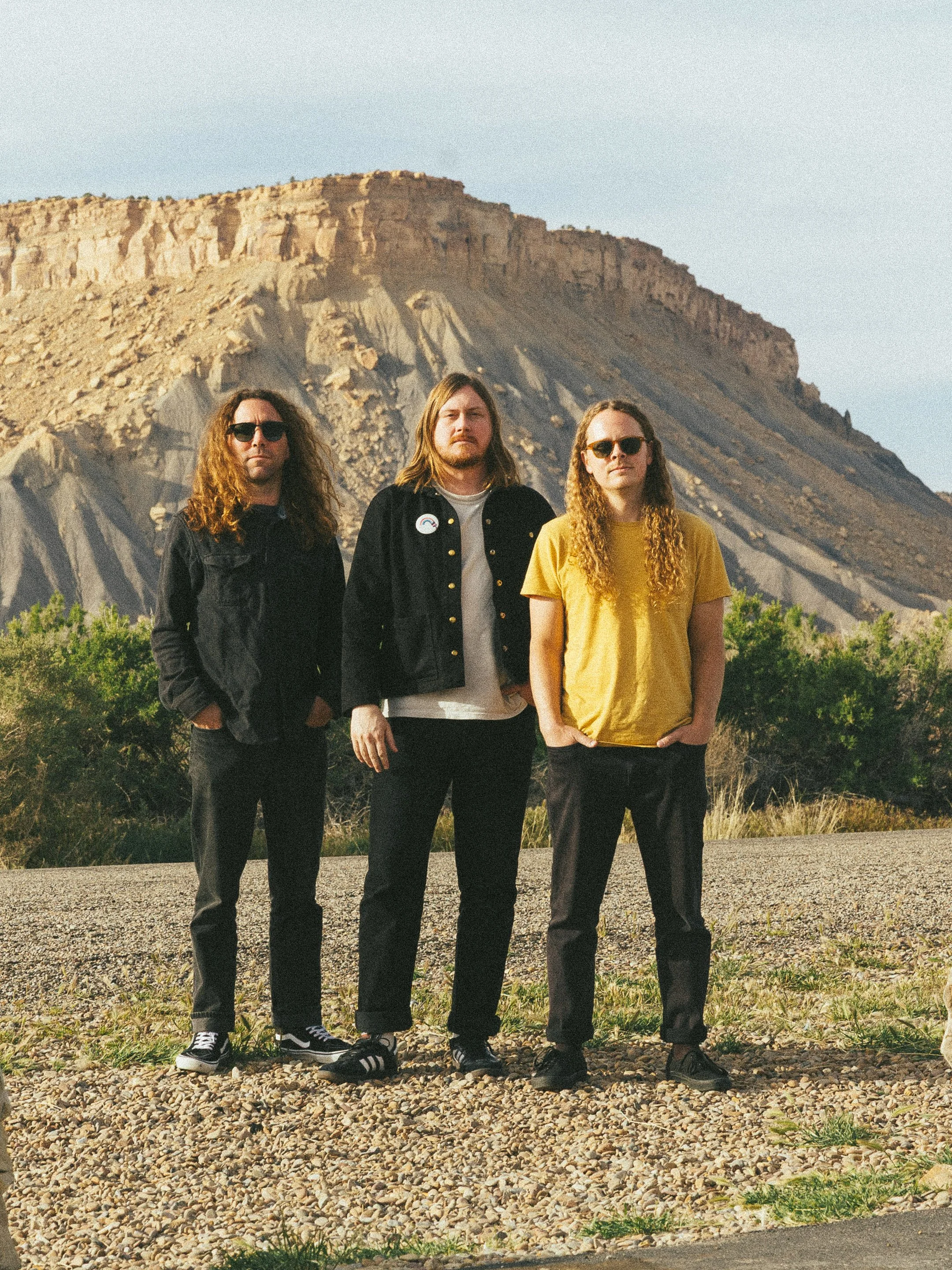
Sonic worlds have collided and created one of the most thrilling rock albums of the year. Psych/garage rock super-group Primitive Ring came together after many years of cutting their teeth writing and playing with different groups. The band is comprised of: Bert Hoover on bass/vocals (of Hooveriii), Jon Modaff on drums (of Hooveriii and Frankie and the Witch Fingers) and Charles Moothart on guitar/vocals (of Fuzz, GOGGS, and numerous Ty Segall projects.)
The power trio are here to prove that whoever said “rock is dead” is a goddamn liar. 2025 was a busy year, with the group releasing four singles on four different labels before beginning the recording process for what would become this self-titled debut. Those four singles gave the world a sneak peak into the minds of sonic beasts, dabbling in modern psychedelia while paying homage to those power trios that came before– wearing their influences proudly on their sleeve.
Their aesthetic is intentionally elemental, with two of those first four singles recorded to a Tascam 388 machine, which limited them to just eight tracks. These limitations shaped a sound that’s stripped back, three dimensional and most of all, honest in their approach. The Beastie Boys said it best, “what you see is what you get and you ain’t seen nothing yet.”
The album runs around 42 minutes at 11 songs, taking the listener on a scorching journey through the collective vision of some of the best minds in rock and roll. At this very moment, they are in the middle of a west coast tour with Ty Segall before a residency at the Zebulon in Los Angeles later in June. The band has a large number of live dates throughout the year (linked below the interview), including a slot at King Gizzard’s Field Of Vision festival in August.
Primitive Ring’s debut self-titled album comes out this Friday, May 15th via In the Red Records. I caught up with singer and guitarist Charles Moothart to talk about everything from the group’s beginnings to Moothart’s work with Fuzz and Steve Albini.
Check it out below!
INTERVIEW
LUKE DUMPERT: What spurred you guys to start Primitive Ring?
CHARLES MOOTHART: It really started with a conversation between Bert [Hoover] and I. We both have spent a lot of time touring with a lot of bands. So, there were a few conversations he and I had where we were just kind of wanting to have a new collaborative experience. Sometimes you just need to kind of hit refresh on that creative energy. We talked about just getting together and jamming, and Jon [Modaff] has played drums with Bert a lot. Jon was also then playing drums with me, and so we'd all spent time playing music together. So it just made sense, like our worlds were kind of coming together, you know?
At the time, Bert had a recording session booked with our friend Eric Bauer, who's an awesome engineer. They were just going to just do a garage home recording session, just a kind of “throw paint at the wall” kind of thing. Since he already had that booked, Bert was like, ‘let's just write a couple songs and do that.’ That's what ended up becoming our first two seven inches. So, it was kind of just a fortuitous moment where it just made sense.
LUKE: Your bio states ‘Rock and roll is in its essence a primal experience, and the name reflects that.’ Does the ‘Ring’ in your name represent unity within the band, to expand on that primal feel through your music?
CHARLES: I'm glad you asked that, because, to me, I think that's the most fun thing about the name. You can kind of take any definition of the word “ring” and it works. There's the ring like we are all here together, then there's also the sound. There’s also the physical primitive ring, like, if you were to think of [it as] some archaic or lost vestige of the past or something. I think that it's a fun way to kind of pay homage to both what the band is as three people continuing the journey of rock and roll. We’re aware we're not reinventing the wheel, but we still take pride in what we do. We are all part of the primitive ring.

LUKE: The album is described as a Genesis story, and I was wondering, do the lyrics tell a story in chronological order within the tracklist?
CHARLES: No— but there are moments, though, where I think that we are toying with that. Once “Fire and Brimstone" started coming together, it was pretty clear that it was going to be track one. Once we were working on it, we were like, ‘cool, let's tackle this as the opening song.” We were really trying to lean into a kind of a cinematic [feel]. Bert kept using the term ‘title,’ like if the record was a film– then this is the title sequence. That, in itself, felt like an explosive creativity moment of kind of being like, ‘this is the genesis of the record.’ This is us really trying to make ourselves known to the world, or whoever wants to listen and to people who are getting familiar with our music. Our singles were that as well, but this is us kind of trying to put some mistakes out there and be like “This is who we are, and we retain the right to go farther than this.”
LUKE: I’m glad you brought up “Fire and Brimstone.” The string arrangements on that song and “Golden" are awesome. I think they add to the song in such a unique way. How did you decide to bring those into the mix?
CHARLES: With “Fire and Brimstone”, we were definitely in the demoing process. We used a Mellotron to get the sounds we knew we wanted there. And Lena, who plays strings on the record, she's just so talented in so many ways. She's a great musician, she has a great ear. She's also an incredible guitarist, so it's like she has a rock and roll mindset. She can do both things and take it on. We figured out a way to kind of tackle the idea in a way that actually makes sense for her instrument.
With “Golden”, once we knew we were going to have strings and some keys on there, the idea came to us to have it end with those with the guests being part of the ending. I don't always like to reference the references we make, but there's definitely a Here Come the Warm Jets [by Brian Eno] kind of energy that I think we were trying to channel where it's the end of that record and the way it kind of fades away, then all of a sudden you're left with this beautiful line. Lena was just kind of freestyling.
LUKE: Was the original release of “Golden In Your Eyes” more of a demo?
CHARLES: Yeah, I really like the life that that song has had because when we went in to do the first session, we didn't really know what we're going to come out with. Like, in our heads, we were like, ‘Oh, if we have one single, or whatever this is a win.’ And then once we realized that we had three songs, it was like, ‘Okay, well, shit, if we could get four, that would be awesome.’ Bert had that basic melody for Golden, and I started kind of playing with it in my head a little bit and came up with a very basic vocal arrangement.
It's funny because it was obviously the outlier of the three. Like the other three tracks were rocking, and this one was going to be mellow, which was fun too, because at a certain point it was just us three sitting there playing acoustic guitars. Jon is playing the 12 string on the seven inch recording. I was just kind of trying to lead the way that I heard it in my head with vocals and we just started layering it. But the real beauty of it was that after we'd made the song, we're like, “Oh, this is really cool.”
It feels really rough around the edges on the seven inch. It essentially is a demo. Once we started playing it live, you know, realizing that it worked in this more up tempo, rocking [way] like The Velvet Underground, that it started to open up new approaches to that song. Then it kind of took on a life of its own.
So it became a fun thing when we realized, “Oh, this might be the only song that we re-record from our first four seven inches for the LP”, especially because it's the only one we felt like we really were starting to play differently. That song had a really fun little journey, [going] from being a little seedling to now just this fun rock song.
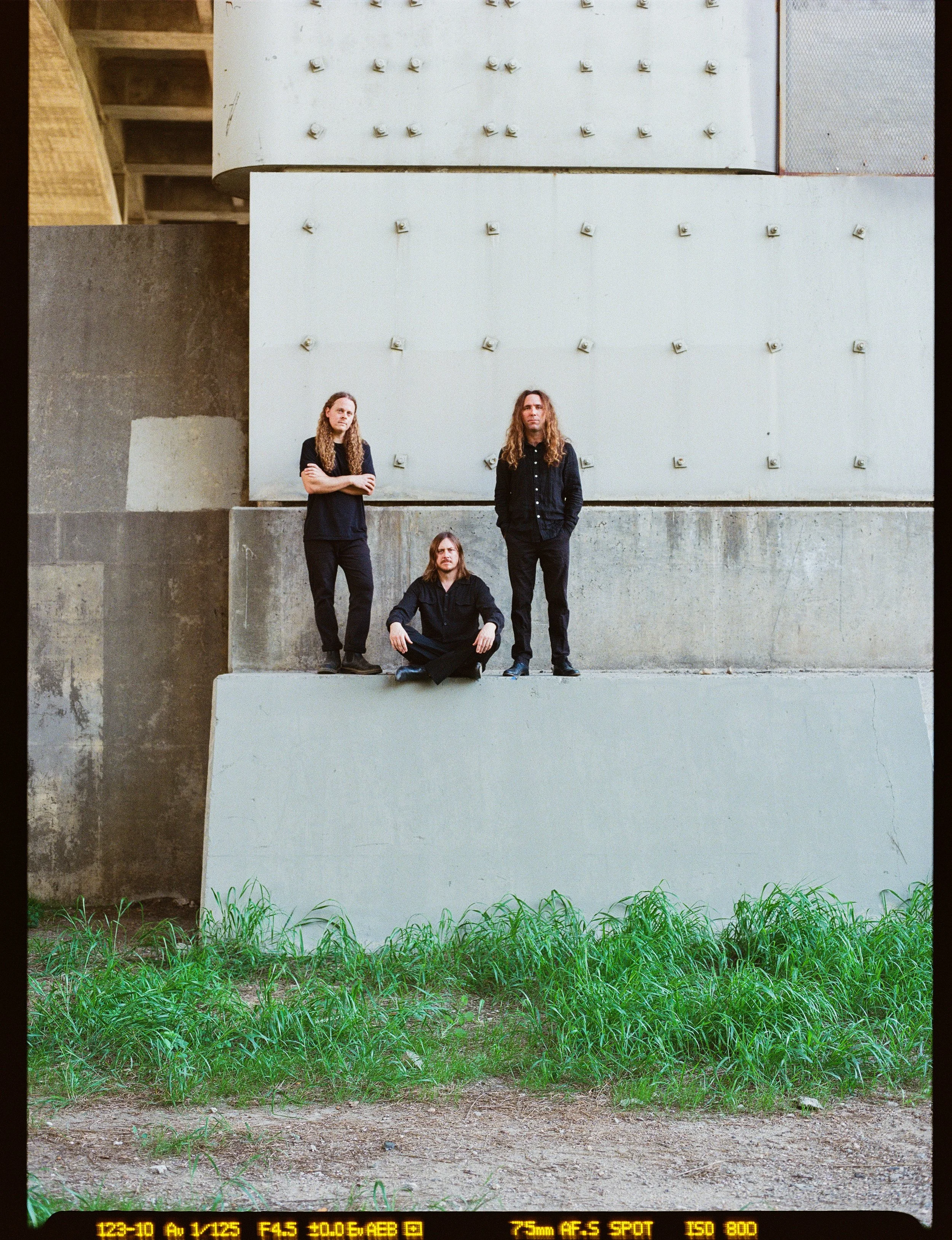
Primitive Ring by Sheva Kafai
LUKE: Your cover of “I've Been Waiting for You,” by Neil Young is fantastic. What led to the inclusion of the B side to “Luck”?
CHARLES: That was one of those things where we had it in our heads that we wanted to do four seven inches in a year, and then make it the goal to make an LP out of all songs that were not on the seven inches. I don't remember where that decision was made, but we consciously made that choice at some point in time. I feel like, at least in our world.
“I've Been Waiting for You” pretty early on was a song that was Bert’s idea to cover it, and I would have never thought to cover that song. We started playing, and we were like, ‘Oh, this is awesome.’ When we first played our first couple of shows, we didn't really have enough songs to play a show, so we needed something like a cover to bring into the mix. We fell in love with playing it pretty quickly. The first two seven inches were recorded in one session, and the second two seven inches were recorded in another session. We were writing a lot at the time and we sat down and set out a couple days at my rehearsal space to record what would be the next two seven inches and it was a no-brainer that “I've Been Waiting for You" would be one of those songs.
LUKE: Tell me about the song “The Callous Man,” because it is a heavy hitter, especially lyrically. What is it about?
CHARLES: Bert wrote those lyrics for the most part. I can speak to what my opinion is of where he was coming from because we did workshop a few of the lines together, but he had kind of come up with it on his own time. “The Callous Man” is riffing off of some sort of concept of a demonic figure that could be a figment of your imagination or it could be a very real person who is maybe like the classic drug dealer on the corner, who will also make a deal for your soul, kind of thing.
I think it's also just kind of like a cliche figure of a manipulative or dark figure that you know is going to wield influence over someone and the choices they make. I love that song. I love where it goes, vocally. We're currently trying to figure out how to play and sing that one together live, because there is a really cool thing that happens with our vocals together. Bert came up with some really cool stuff on that one. I will say that the lyrics to that one are really cool.
LUKE: What was it like working with Steve Albini for Fuzz’s third album?
CHARLES: Incredible. I had the honor and the privilege to work with Steve a few times. I got to work with him with Ty [Segall] a couple times, and having him do the third Fuzz record was awesome. He was so funny. It's a sad thing that he's not here.
When we said we wanted to fly him out to LA to do that record, I think he was a little bit like, “Oh, okay. Like, you sure? You guys must really want to work with me on this album.’ It was fun because, having worked with him before— I knew his style, I knew his sense of humor, I knew his opinions about things.
He’s the best to have in a room for when you're tracking because his whole thing was that he didn't want to influence the band's conversation. That was a big thing I learned about him up front— he just kind of wanted to do his job and capture the thing. There'd be times where he would interject with a funny story or a funny statement. But when it comes to a band, especially like Fuzz, where you have a power trio that's just kind of trying to rip through tunes and get takes, until you get to the vocal world, there's not too much you're trying to think about, you just want to get a good band take.
He was a great person to have around, because you knew he wasn't going to fuck up capturing the song. You knew that he would just kind of be there and he would give you a thumbs up or a thumbs down if he did or didn't like it. He preferred to stay out of that conversation. He was so much fun to work with, and I felt very honored to have gotten close enough with him to feel like we were friends in some capacity. He was a hilarious person, and I always enjoyed being in the studio with him, because he was just a great person to work with, super professional, but also really funny.
LUKE: The song “Rolling Greed” is really reminiscent of a Steve Albini kind of sound. I was wondering, are there any recording techniques that you picked up through working with him?
CHARLES: Yes, but not any that I can really use. He is pretty well known specifically in the drum room. In the drum room, he would put these microphones just on the wood floor. That was the thing; he would just put them on the ground and then put caution markers around them so people didn't step on them because that would get this warm resonance of the floor, which is an interesting move. You're also just getting this different perspective of the room sound, which he knew his rooms so well. You're not necessarily hearing all these close mics, you're kind of hearing the room. With ‘Rolling Greed’, I used the Glyn Johns mic style for that, and that room that we recorded in is just really room-y sounding. So, it kind of already was going to go that way. I love Steve's recording style, and he's recorded records that are really influential to me, sonically.
LUKE: The album has a very noticeable live sound. What was it like working with Mark Raines?
CHARLES: Mark Raines is incredible. Him and Steve are very different people and very different engineers but there was also a kind of a similar energy in the sense that Mark is really engaged and he's down to be part of the conversation, probably more than Steve was the first couple times I worked with him. Steve was like ‘don't ask me questions, I'm not part of the band’, which was kind of amazing at first, a little scary, but I came to really respect [it]. Mark can be if you if you want him to be. If you want him to be silent and not part of the conversation, he can sit there and be like, boom. He gets great sounds and works really fast. He's totally dependable. Then at the same time if you ask him a question, he's also engaged and will answer the question honestly and be part of the conversation if you want him to be. Being someone who's worked with a few different engineers, and also someone who has engineered both my own records and recording things for friends and my bands, sometimes it's exhausting to be also part of the conversation. Sometimes you're just kind of like, ‘I just need to watch the levels. I just need to make sure nothing's getting blown out. Like, I can't be part of your creative conversation too.’ I really respect that when people are available for that too.
LUKE: The album cover kind of reminds me of “Vincebus Eruptum” by Blue Cheer. Who designed the album cover?
CHARLES: The artist is Callum Rooney. He's incredible, based in New Zealand. “Vincebus Eruptum” was 100% a reference point. We wanted to try to do something, especially since it's our first album - we were wanting to pay homage to some of those classic guitar records, especially power trio records. You think about Cream’s “Disraeli Gears", and Thin Lizzy’s “Bad Reputation,” we had these very specific reference points.
Vincebus Eruptum is a record cover that stuck in my head immediately. The first time my friend showed me that record, I was like, ‘What is this? I need to know.’ It still kind of gives me chills if I see it, because it was so influential to me. We approached Callum with those ideas and were kind of like, ‘Do what you want to do with it, but these are what we are kind of imagining.” I'm really happy with how it came out. It was hard deliberating between choices of color and stuff but I'm really happy with the blue. It's funny when you're trying to make those decisions with something that's supposed to be kind of simple and striking. Callum Rooney— he killed it.
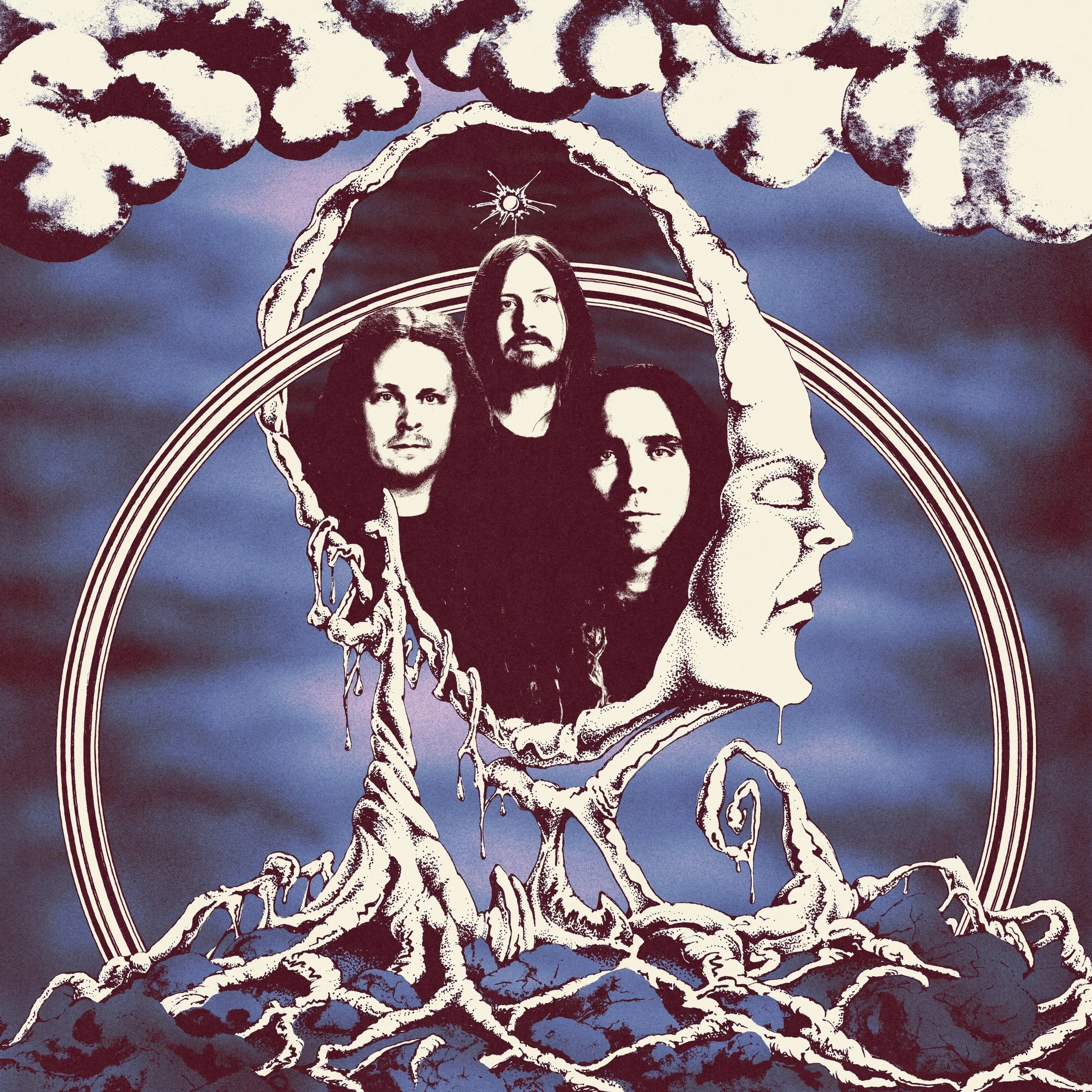
Primitive Ring will release their self-tiled LP everywhere this Friday, May 15th— via In The Red Records.
You can preorder different variants of the new LP HERE.
You can catch Primitive Ring on tour with Ty Segall and playing many dates this year—get your tickets here.
And you can listen directly below!
SUPPORT OCCULT MAGAZINE
Hello reader and thanks for your support!
Occult Magazine is currently an independent & ad-free music publication. We rely on the passion and volunteered hard work of our generous contributors.
If you enjoy what we are doing—
Please consider donating HERE or HERE if possible!
Thank you!