

Temples - In Conversation
Introduction & interview by Beau Croxton
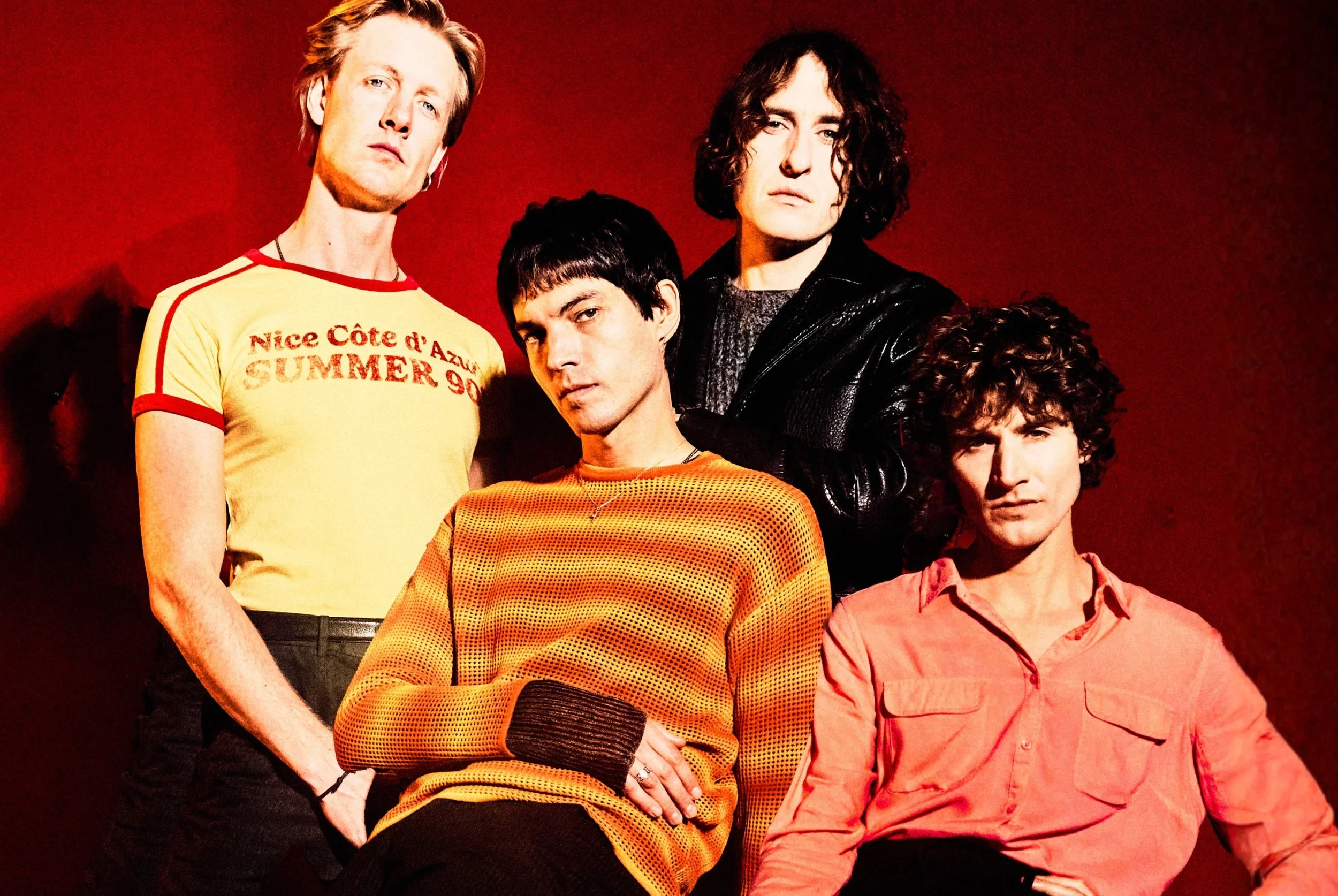
Temples by Jimmy Fontaine
English rockers Temples have made quite a name for themselves over the years with their trademark Bolan-esque vocals and psych rock tendencies. Since their classic retro-psych debut, Sun Structures (now hitting its tenth anniversary), the group has expanded on their core sound in a number of creative ways. Arriving on June 26, their new record BLISS finds the group returning to self-production and embracing their own strain of dance music that straight-up rocks. The new record excitingly reimagines their approach in a way that's passionately delivered, while retaining many of their trademark quirks. The record charges ahead with rock power while utilizing sampling to reimagine a euphoria that was popularized by 90s electronic music, french electronic and beyond.
Album opener “Jet Stream Heart” is an immediate smash to kick things off– it thrives on an addictive eastern guitar melody, hard cuts, an insistent groove and delectably fuzzy bass-lines. On the track, the band stated “We always strive to make a bold sonic statement. The feeling of music in a club is visceral, almost like you're directly wired into the song. Mainlining the rhythms to the heart. This song explores the feeling of being seduced by music, being pulled into a sonic jet stream, and having to give in to the magnetic feeling of certain music.
“Vendetta” is a core track that beautifully embodies the spirit of the record, as it weaves lasering synths and ethereal dance melodies. It finds Temples leaning into anthemic, EDM-leaning melancholy while retaining their knack for songwriting and catchy pop melodies.
While the singles have been an excellent glimpse, there are still plenty more thrilling standouts to come, like the banger that is “Megalith”. Thematically, it addresses frustrations and surrender in a moving world, while its instrumental thrives in an unshakable and resilient way. The record couldn't arrive at a better time, as its club-ready heartbeat should be a totally killer soundtrack for warmer temperatures and summer nights ahead.
I recently caught up with Temples frontman James Bagshaw over Zoom for an interview discussing the techniques they utilized for BLISS, sampling, gear, their upcoming tour and much more.
Check it out below!
INTERVIEW
BEAU CROXTON: Hello James ! Nice to meet you, man.
JAMES BAGSHAW : You too. How are you doing?
BEAU CROXTON: Doing well! It's great to talk to you.
JAMES BAGSHAW: You too.
BEAU CROXTON: Congrats on BLISS– I got to spend some time with it in the past couple days, and it's been great. I'm in New York, and it's been nearly summer weather for the past two days, and I think the record is gonna land really well in June.
JAMES BAGSHAW: Yeah, the timing is pretty spot on, actually. The worry with this sort of stuff is if you miss the right time for the music to sort of grow and resonate, so to speak.
BEAU: Absolutely, it'll be a great summer record. I would just love to know– what was the initial spark was that inspired you to chase the sound for this particular record
JAMES: As always, you sort of faff around trying to come up with new ideas, and then something eventually sticks. I think I was very much into revisiting very old ideas (like pre-Temples…), and some production things that I had lying around on hard drives. Basically, “Vendetta” is one of those songs where that intro part is actually a sample of an old idea. That sort of ended up being a technique that we used on quite a lot of the material, it was like a way to kind of create inspiration from past inspiration. It was quite a nice idea. As far as the feeling that you create with a sample, there's a certain nostalgia to it– even if it's not a song that anyone's heard of. Usually you sample something that's like Marvin Gaye for hip hop, or a bit of James Brown for the drums. But this was a different way of doing it, so we really started feeling like we were creating dance music, but a band doing it.
Once we got that, we didn't really talk about it until we were around the final stage of production….but everything had a thread of like that sort of melancholic euphoria that's associated with stuff like the early 2000s Ibiza music scene (of which we weren't a part of), but we know the songs. So that feeling with sampling, and then the sort of the euphoria that you associate with dance music.
BEAU: Excellent. So BLISS was a bit of a return to self-production as well. When you were channeling all these influences in this direction, was there certain stuff that you wanted to avoid, or certain stuff you wanted to really focus on and nail production wise?
JAMES: I guess it was that thing of “serve the song”. If a song wasn't written on a keyboard, then you don't need to add keyboards. If you write a part on a keyboard, that doesn't mean that the guitar has to play it, or you have to play rhythm chords with it to make it a guitar song.
I think we're always trying to strip back, and even though it's a dense record, there's lots of opportunities where we could have gone, “I will put a 12 string on that bit, because, like, that's a part of our palette”. While there is some 12-string on the record, it's more a reimagined way of doing it, rather than just doing like a classic jangley, Birds-y thing.
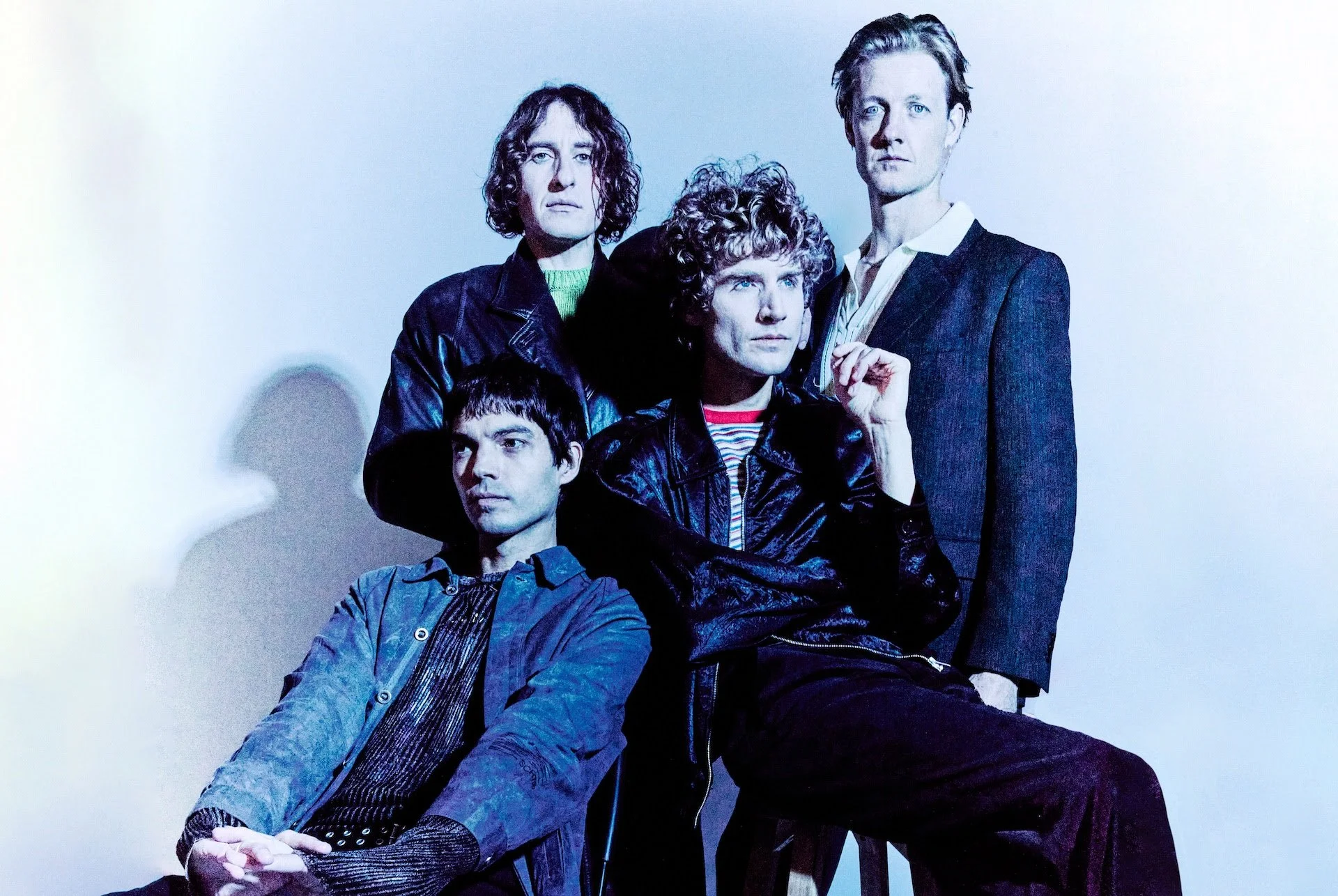
Temples by Jimmy Fontaine
BEAU: What gear was really central in leaning into your new sound on the record
JAMES: Yeah– the sampler– I actually have an old Akai S900 here, which is the old 12-bit like DJ Shadow did, but it's misbehaving a fair bit, and the floppy drive doesn't work– it's a bit of a pain.
So I invested and bought something else with 64 meg of memory, which is the teenage engineering K.O II. It’s an incredible little machine, because you can record straight into the microphone on it. It's very instinctive and in the moment, which is great. So, on “Jet Stream Heart”, the beginning sound is like me just singing into the mic, going like, “Ahhh” , but then like stretching it live— time-stretching it.
There's just loads of bits where instead of singing something, we'll sing or record it from the vocal tag that we originally did, then record it into the sampler, and then re-sample it. That way, you can play the sample as a melody, which is nothing new, but it's new for the way that we're doing it.
Then you'd end up sampling the song that you're working on in real time. Usually you'd sample from something that pre-exists, so it was quite an interesting idea to get a song to a certain point, then sample it. For example– the keyboard sound on “Vendetta” is the keyboard sound that we had, but then we sampled it and it created a completely different texture and warmth, and compression that became the sound. That was a huge part of it.
The other thing was the vocal sound. I've got a very lovely microphone that I've used for the last three records on vocals, (although with Sean he had some amazing mics, so we ended up redoing some of the vocals on those mics). So that microphone is kind of super high-fidelity– it's a U 47 valve condenser. But on the record, we didn't want it to sound polished, so the vocal chain was really important. The distortion/reverb/compression relationship– that became the go-to.
I think every single song has the same vocal channel. It was interesting, because often in the studio, they'll record it dry, and it will sound lifeless– but they're just trying to get the performance. This was recorded with the channel on, so you could react with it in real time, which meant that I sang in a different way. I never felt like I was doing the final take, I felt like I was just singing like a gig, which was really interesting– because it sounded like it sounded like a record as you're singing.
I'd say between those two things, everything else is kind of probably quite standard for us. We'll use some synth, we'll distort some bass, we'll add some dreamy guitars, and, and you know, in some reverb and delay.
BEAU: That's cool with the vocal chain– you’ll probably perform a little bit differently when you kind of have it all going. There's a different kind of confidence going on there. It's like when you are plugged into a fuzz pedal, and the gate is acting a certain way– you're gonna react to that and perform according to that…
JAMES: Yeah, I mean, most of the time with killer fuzz riffs, if you take the fuzz pedal off, they're shit riffs like– it's all about the sound. It's very rare that you'd record a guitar DI-ed and then go, oh, “We'll make it sound good later, take the DI in case,” but you know, often you just go with what you had.
BEAU: Absolutely. I'm definitely hearing some late 90s dance influence on the record, and I’m also hearing some harder electronic sounds. Parts of“Vendetta” reminded me of Justice's earlier records in a bit of an abrasive sense.
I'd love to hear a little bit more about all your different influences during this go around.
JAMES: Yeah, I mean, the whole French electro scene from like 2000 and even a bit later than that… There's the whole Ed Banger thing, there's DJ Mehdi, and Justice with those massive songs, like “Waters of Nazareth”, especially the Erol Alkan version, which I think is kind of better than their version.
In the electro scene in London, when you had Trash and places like that– that's back when I lived there for like a year. I was studying, but I barely went to Uni, and then dropped out in the end. I used to like those club nights, and they're always great. You had the new rave thing kind of happening, but you also had like the electro scene– it never felt removed from like the “guitar scene”, and people who were enjoying it were in guitar bands, so it felt like whatever that music does…I don't know whether it's because it's kind of heavy sounding, and the synth is almost a reminiscent of a distorted guitar, or a wall of sound, when it comes to like guitar music– but it was always accepted, whereas maybe some other styles of like EDM wouldn't be.
Back in the day, it would have alienated guitar bands, it would have been like “that's not us”, whereas Electro had like an organic thing about it still… I think we've got the French artists to thank for that, because they did it so tastefully.
BEAU: I really love “Jet Stream Heart”. The riff is incredible, and I love the fuzzy bass and the hard cuts towards the end of the track. What can you tell me about the process for that track?
JAMES: Yeah– Honestly, that was inspired by a Kylie Minogue song called “Padam Padam”. It's very different, it doesn't sound anything like it, but there was something really like thumping about it, and I love pulling inspiration from something that just isn't in the same wheelhouse. It started off as something that just had that sort of scuzzy bass line, and just a really simple drumbeat. There's something beautiful about simplicity with rhythm sections, especially if there's interplay with bass. I remember showing Adam the riff in the song, and he was like, “I like the idea, but I don't like the riff”, so there's a couple of versions where I tried to write something different. It started sounding like a very different song, so then I just sort of left it in. We just sort of got used to it, and then now it's out in the world. But it's just so funny, like sometimes you know all of our individual tastes aren't always in the same recipe book.
With “Jet Stream”, although it was inspired by a heavily pop-orientated yet dark song, it really evolved. With the hard the cuts at the end– it's tricky because we're aware that there's this whole improv section in the song, and the song never really kicks back into the chorus. So in a way, it was like it comes in an instrumental chorus, and we were like, “Well, what can we do?”. So I just sort of joked, and just muted the master bus, and then we're like, “that works.
Then when Alec Von Korf mixed the record, because the cuts weren't in the stems, he had to redo those cuts. When he did it, it was a bit smoother, and so we had to keep going back to the demo and saying “No, it can't be a fade, it needs to be a mute”. I know from my engineering sort of mind as well with audio that a mute is pretty destructive, you know? Maybe a quick fade would be better. But I'm glad we did it, and it really creates an impact to have dead silence for a split second twice in the song when the rest of the song is so loud and bombastic. It's been played on the radio over here, and people are like, “I thought you pressed something!” (laughs) … like people freaking out, and I just think that's brilliant.
BEAU: I love it– when I hear an artist do that, I imagine they must be having so much fun just sucking the air out of the room like that, you know.
JAMES: Yeah, totally.
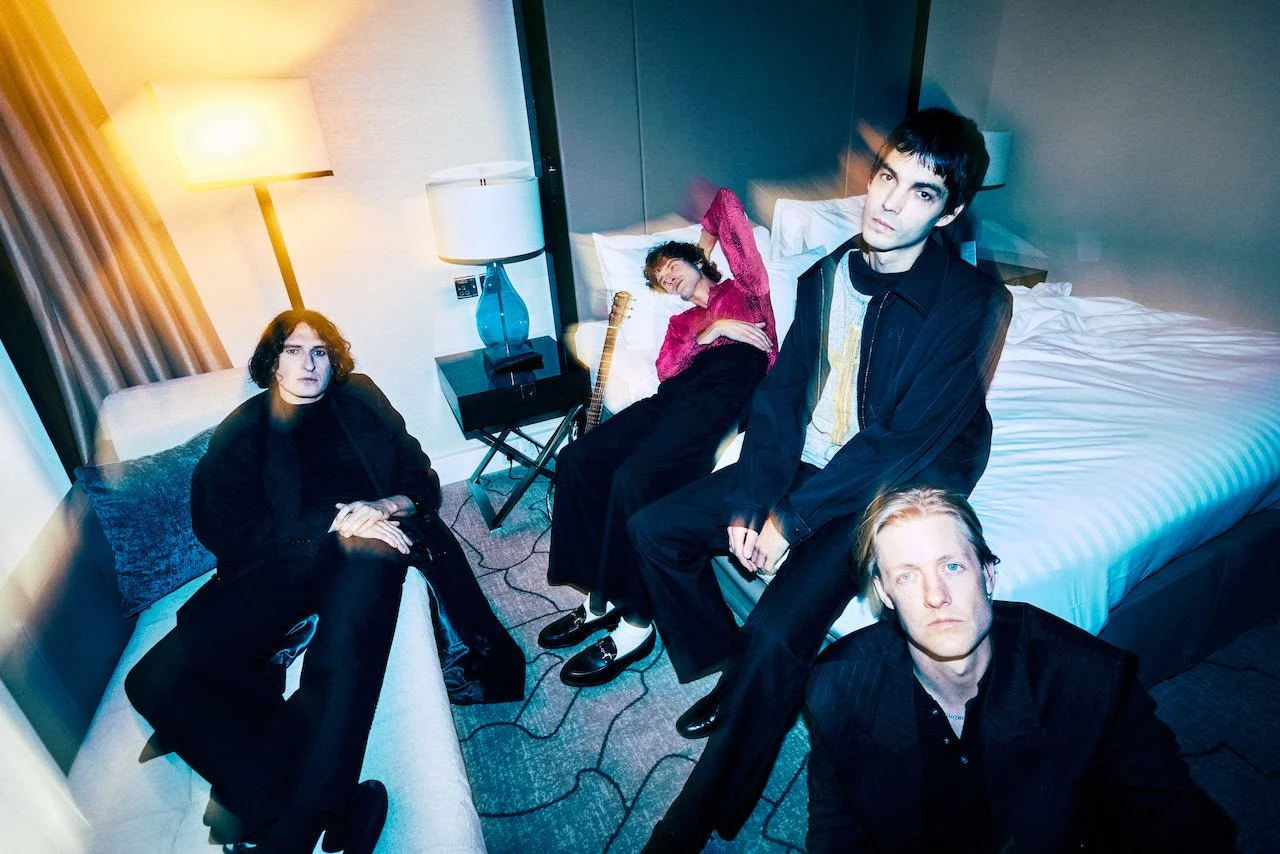
Temples by Jimmy Fontaine
BEAU: Well, “Megalith” is another really excellent tune. I keep getting this every time I'm listening to this record, but I feel like it's dance music that really rocks. What can you tell me about the process behind that one?
JAMES: Yeah, so Adam brought that in and I remember being very interested at the beginning, because it did something with the counts, it's like it's 4/4, but it's not– it kind of does five with the way that he's emphasizing it. It took me a while. I was like, “Hang on, like I'll try and do some guitar as well on this”... I don’t really play that much with time signature stuff, really, so I was interested right away.
The rest of the song is a little bit more straight with it, but as far as the sound, it shares similar sounds to “Jet Stream Heart”, but it's a very different song. As far as studio techniques, it was all about having that gritty sleazy guitar/bass/drum relationship, but once again– using a sampler and mashing things up.
We made a loop of the drums, and then we processed the loop that was going around in it. Each time it went around, we just processed it differently. So you'd add these extra delays, and if you listen to it, you'll hear like there's like high-hats that then suddenly go over the bar– because it's delayed. So we had a lot of fun. We almost like… live-remixed the song, and it was almost like we had been given the song from someone else. Again, it nods to the Eastern thing, but it's a bit more contemporary than that. In the middle section, particularly, it goes on to nod into a more of a soul thing.
BEAU: Do you have any personal favorite songs at the moment from the record?
JAMES: Yeah, I mean, “Vendetta” is probably one of my favorite songs that we've done. For me, it's one of those where it took a while to get right, and I had multiple versions before I even showed anybody.
I didn't know where to start with the keyboard part, because I thought there's something about that melody that said exactly what I wanted to say. It just came about out of nowhere, like most ideas. But then when we got in a room, Adam came over, and I just said, "Look, I've got like four versions of this. I really don't know what to start with…”
We ended up resampling just that little riff and making it sound really small (the intro part). It was like just straight in with the vocals, and I think Adam started writing some lyrics with the idea that it was called “Vendetta” originally. It was just some random thing that I found on my hard drive, from years ago, from when I was probably still working on a PC. He started writing lyrics around the “Vendetta” idea. Then it was like literally just recorded singing the lyrics with this rhythm, we just kept vibing off each other.
The chorus was the hardest bit to get right, because the keyboard part said so much, and that's why there isn't any vocals when it first comes in. It lets it breathe, but I think that's one of my favorite songs. I'm really proud of that song. I just think it's very forward thinking as well. I feel like there's not really anything that sounds like that, that the band's doing.
BEAU: Yeah, it's a great one! So are there new bands nowadays that you're finding inspiring at all?
JAMES: Yeah, I’ve been listening to a bit of Gift, and I think we're allowed to say it– but I think they're going to be doing a bit of the US tour. Yeah, so that'll be cool.
BEAU: Yeah! Gift is great. Great band.
We're looking forward to seeing you at Warsaw in Brooklyn in December. How excited are you for the tour? Looks like you got a pretty extensive string of dates coming up. Anywhere you're excited to play in particular? Any highlights of that you're looking forward to?
JAMES: Yeah, I'm looking forward to all of it. It's just gonna be great to play these songs live, and other material. There's not one place in particular. I just think it'd be great to be back in another country playing these songs, you know. I mean, today I've spent like five hours dialing in like sounds on the pedal board. I'm learning the songs, basically, because like we wrote these and you forget how to play them, because you're just recording and writing, you know? So there's a fair bit of learning to do, but yeah– I’m excited for all of it!
BEAU: Exactly, that's my last question— how's the translation of all the sampling and the whole process of the record coming along in a live setting? Are you slowly getting through it and making sense of it?
JAMES: Yeah, kind of. When we're all in a room, it'll make more sense. We’ll know what gaps need to be filled in. But at the moment I'm kind of filling all of the gaps with the idea that I can just not play in certain bits. I'm learning all the parts that will be played by guitar, but there'll be parts that are synth on the record, but live, they will be guitar. We always love that thing where people don't know what something is (where it's like a misheard lyric) but you get misheard instruments.
I think that's a really cool thing, and I'm always trying to sort of blur the lines with that. I've been playing around with quite a lot of sounds where you do a hybrid thing– where you're using an old synth style pedal, but your guitar is like the voltage going in, so you can do interesting things. I don't need to sit there playing a keyboard, because that just sucks. Like I've got plenty to do, to be singing and playing guitar.
Adam's gonna have his work cut out, and Tom will, because there's the synth bass, and then there's real bass, and there's a hell of a lot of sampling– so we've been sort of looking at his keyboard recently. He's going to have some pads and stuff, and knobs and things with his keyboard, so he can do like some like playback with samples and fuck with them. So we're looking into that at the moment, and sorting out the rig. I'm just sort of rebuilding shit here as well.
BEAU: Excellent, that sounds sick. I'm looking forward to it! Appreciate the chat. The record slaps. Thank you so much, James!
JAMES: Yeah, thank you so much. Thanks for the lovely questions as well.
BEAU: Have a good weekend! Cheers!
JAMES: Cheers, mate.
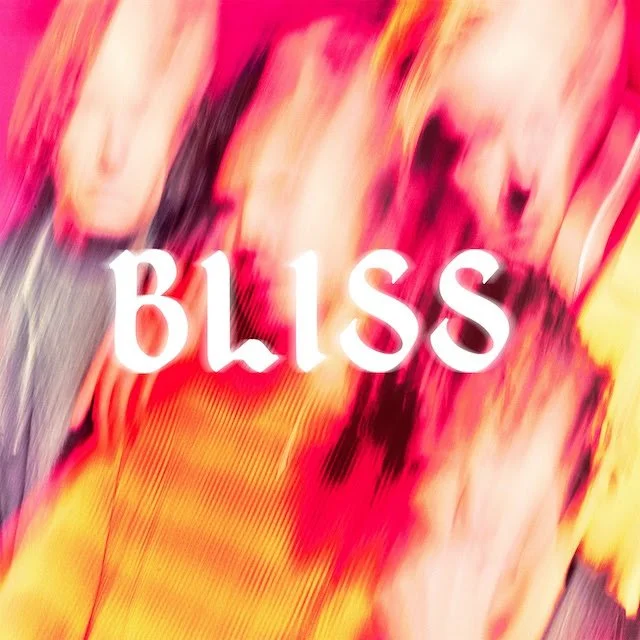
BLISS by Temples is out everywhere this Friday, June 26th via V2 Records.
You can find vinyl, merch, tour dates, and much more for Temples all here on their website.
SUPPORT OCCULT MAGAZINE
Hello reader and thanks for your support!
Occult Magazine is currently an independent & ad-free music publication. We rely on the passion and volunteered hard work of our generous contributors.
If you enjoy what we are doing—
Please consider donating HERE or HERE if possible!
Thank you!