

White Denim - In Conversation
Introduction & interview by Skye Matlock
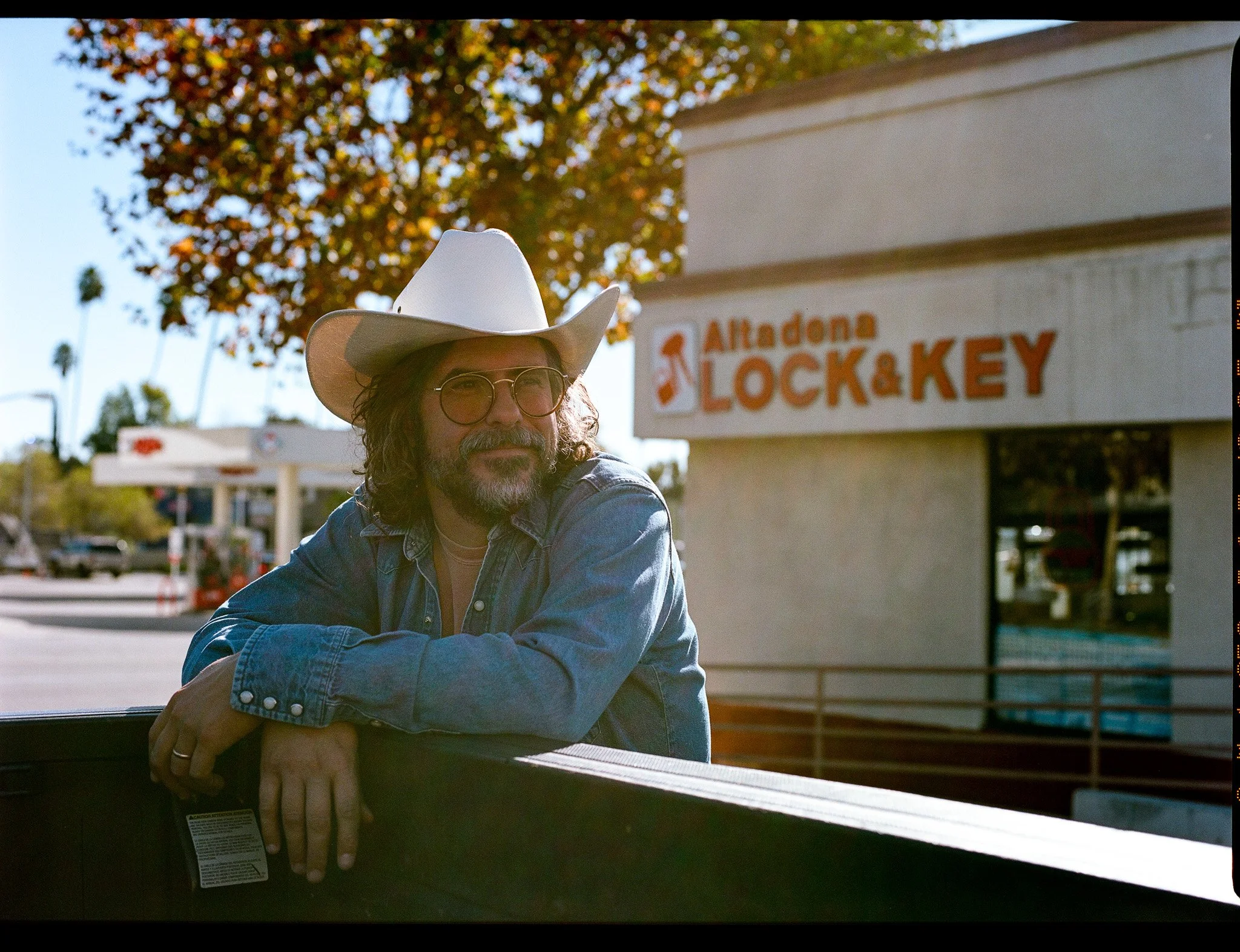
James Petralli of White Denim by Charlie Weinmann
For our latest installment of In Conversation, we sat down with James Petralli, the ever-evolving force behind White Denim.
Emerging out of the late 2000s Austin scene, White Denim built a reputation on restless, shape-shifting rock that pulled as much from psych as it did from funk, jazz, and garage. Early records like Workout Holiday and Fits were explosive, unpredictable, and technical without losing their looseness. At the center of it all was Petralli, whose elastic songwriting and guitar work have given the band its unmistakable edge.
Throughout the shifts in White Denim’s lineup over the years, Petralli has leaned further into craftsmanship, focusing on new approaches to composition, melody, and lyrics, gradually reframing the project as something more focused without sacrificing its instinct to pivot. His albums throughout the 2010s (and beyond) revealed a songwriter just as interested in restraint as he was in release.
Now, with 13 arriving this Friday, that evolution sharpens into something more defined. Originally conceived as part of a larger double record, his captivating new album 13 stands as the darker counterpart to its predecessor, 12, shaped by contrast rather than continuation. Where earlier work often leaned outward, this record turns inward, built from meticulous, almost obsessive attention to detail.
Ahead of the release, we spoke with Petralli about the making of 13, the shifting identity of White Denim, and what it means to keep evolving while holding onto the core of what made it matter in the first place.
Check it out below!
INTERVIEW
SKYE MATLOCK: Before we start getting into the new album, I just want to know how you’re doing right now?
JAMES PETRALLI: How am I right now in this moment? I'm doing pretty well. I feel very torn between my family life and my work life, which is kind of interesting to have a record coming out and plan touring. But this week alone– I have to get my daughter to choir. I have like two baseball practices for my son, and I'm kind of really enjoying helping out with his team. So I’m just planning career stuff around kids stuff, it's a little overwhelming. I wish I could just be a stay at home dad, honestly, and make weird records in this shed that I'm in right now. But I've got to go on tour. So it’s a little bittersweet for me.
SKYE MATLOCK: Yeah, I saw you post something on your Instagram story about your partner supporting you as an artist, and how you manage your time.. Does that impact your creative flow?
JAMES PETRALLI: It's been really good for my process. I mean, it's forced me to learn how to operate all this machinery. It's forced me to learn how to play more instruments than just guitar.
Because I don't really have the time to develop the facility that so many people have on their instruments– I started studying arrangements a little bit more, and leaning into how texture and intentional arrangement choices can kinda get across the same feeling that virtuosity and musicianship can get you.
So I mean, I think that without having to do that during the day, I might just practice guitar and then hit bars to try and be on the scene and make connections and build community in that way like I used to, which was great.
But now, it's forcing this other kind of growth, which feels like it's giving me the energy and inspiration to keep pushing creatively. You know, I'm 44 now, I've made a million records by now, so it's mostly a very good thing.
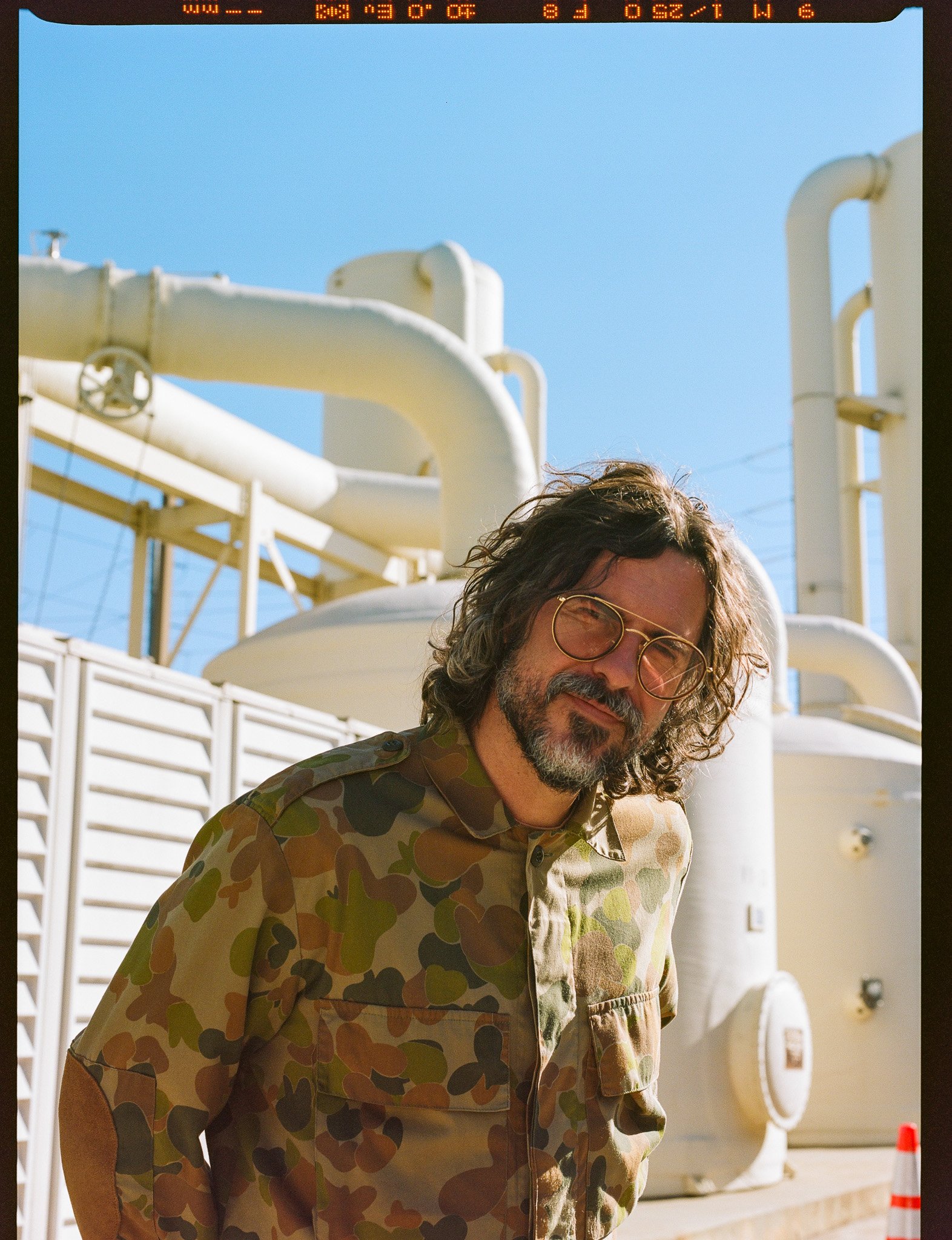
James Petralli of White Denim by Charlie Weinmann
SKYE: I noticed a connection with the album art for WD13 and Ed Ruscha's artwork Actual Size, I’m dying to hear more about that.
JAMES: My favorite group when I was around my daughter's age was the Beastie Boys. The Beck album Mellow Gold came out around that time too— the connection there is the Dust Brothers, the production team. And I think in the 80s, this idea of culture jamming and remixing….that was the creative culture that I grew up in. So I kind of see creativity through that lens first always.
So we went to Los Angeles County Museum of Art (we have a fairly regular “tourists of LA” kind of thing that we're still doing)…and we saw that Actual Size piece, and I just snapped a photograph of it. I immediately saw that the M in spam would be a W, and the P (if I flipped it upside down) it would be a D.
I just kind of had all these things laying around, and I built this narrative in my mind on the ride home, like “Oh, it'd be cool to make the next album cover like a reference of this”....and kind of smashing these ideas together.
I just kind of trolled the White Denim audience and posted a picture of the Ruscha piece upside down. Somebody got in the DMs and was like, “Hey, I like this.”, and we started talking about the artists, and I noticed that he was a painter. And I was like, “Why don't you make this for me?” You know, and we came up with the budget.
Now we're like pen pals! So it's a very rare success story of community building with social media, a kind of positive story (laughs) which, you know…maybe it's not that rare.
I've liked the way that I work now. I'll get things to a certain point, and I find people through Instagram that have home studios, and they're tracking nice sounding things. And if they do something that I like, I can hear them in something that I'm working on. My network is a lot like that now– remote collaboration has become a much more important part of how I work and make albums now.
SKYE: Yeah, that's so sick. The variety of instruments and musicians included on this album seem to feed into that idea of community. Tell me more about the recording process.
JAMES: Most of the basics for this record is my stage band. So I would create demos, and I would block out a studio maybe for five days or something like that, and fly everybody to that place.
The goal would be to get the rhythm section live together to do my demo, or we start with just that. Then with everybody else that's playing, if we get keeper stuff from them– it's a bonus. So it's kind of a hybrid approach– it's not like fully to the grid. I'm still really trying to capture musicians playing together, and interacting on the floor. So that's kind of the second step here. They have the demo as a reference. If it feels better to mute the demo while they're playing, then that's what we do, and I just rebuild from their thing.
I guess there's one tune that has the Dawes brothers– (from the band Dawes). So Griff and Taylor played guitar and drums to my demo. Then there's also Matt, (my stage drummer) who is one of the drummers on the song “Time Time”. I have an electronic arrangement that I made with some of these old drum machines I have . They would play along to that– and then I would treat them like drummers that I'm sampling from old records, so I’m just kind of dropping them in strategically whenever it makes sense for the tune. Then I have this guy Costa Gallinopolis, who plays in a great band called Rio Costa. He plays with Luke Temple, who's one of my favorite songwriters and band leaders. He's the bassist and the drummer on two of these songs. The guy that I founded the band with, Josh Block, plays drums on a couple too.
So I think it's about eight or nine songs that are like primarily the stage band, like augmented by people I met on Instagram, and the other dudes that I mentioned. There's some ladies in the mix too. I got like, you know, Jesse Payo, Adrian Daly…. I got a couple singers to do duets and things like that. They're just from groups and things that I like, you know, meet people backstage and kind of get along and, you know, a couple years later follow up with something for real.
SKYE: Just letting you know I went into this album completely blind. And, obviously, “(God Created) Lock and Key” opens with this kind of conundrum which threw me for a loop, but then the lyrics drew me in entirely. I wasn’t expecting to listen to it every day the way I have been, I cannot wait for this to come out. Do you listen back to it very much?
JAMES: Thank you. I have been avoiding it for a while. I delivered this record almost a year ago. It was a double record. So 12 and 13 was a 20 song record that I delivered like, almost four years ago. And my label partner at the time was just like, “it’s not going to work in 2024” or whatever, so I kind of got shelved. And like, I got really discouraged. And the way that I kind of dealt with that was just like pivoting and then really getting into the minutiae of the productions.
I was like “well, if they don't want this right now or see the value in it, I'm going to try to make them see the value in it through how much work I put into it.” So yeah, when I delivered the double, I was like, “This is the best thing I've ever done,” you know. When the first part of it came out, it was not very well received–12, I think some critics liked it, but my audience seemed very confused by it, and it's shrunk as a result of it.
So I'm just going deeper and deeper into the details. I really like it— I just like to work on the little things forever. I love listening to the way two or three instruments are interacting for like an entire day, and building micro arrangements inside of the pieces. I find it really meditative. I think before the pandemic, I was really much more like, “Let's get the band rehearsed” then we cut it, and then we have some fun with it. But let's keep that within reason.So over the past few years, that reason has completely gone away.
It's an absurd thing to do to put that much time and energy into music in this day and age… like in terms of what you get in return, or an “hourly wage” or whatever. So yeah– I have just embraced that absurdity. I really love doing this, I love the minutiae of it– I'm going to work on it until I can't work on it anymore.
To get back to your question, I haven't listened to it in a while. But when we were making a video for “Lock and Key“- I watched it a few times, like I was super anxious because it uses AI. If I'm honest, I'm like, pretty anti…..I don't use chat GPT….I think generative AI is pretty bogus. But I also didn't have any money, and my neighbor was like, “Hey, I want to help you with this, but you've got to trust me.” (laughs). So I had all this tension going into it like “I'm going to be embarrassed…I'm going to get roasted in the comments,”, but I saw it and listened to it and watched it multiple times. And it was moving to me to have some distance, I was like, “Wow, this is bold, I'm proud of this work”, you know– even though the AI bit is a little embarrassing, I think it's appropriate and actually everything made sense to me. So I'm kind of trying to break it off in little pieces.
I have to approve test pressings now. So after we get out of this call, I'll give the album a listen through. But yeah, the farthest I've made it into this record, in probably eight months is like track three. I'll kind of stop listening to it at that point. But I know that it's worked. I know there's stuff later in it that's hopefully going to feel good and surprise me.
SKYE: The first thing I wrote down in my notes when the record started was “authentic”... as cheesy as that word is. But there were moments where I really did feel like “he means this.” When hearing some of the phrasing of your lyrics, it's like “How did he come up with this?” There are lines that wouldn’t just come from anyone, but are also oddly relatable at the same time.
JAMES: I approach them differently. Some of these tunes are very much acoustic, songwriter-y kind of tunes.
I used to smoke tons of cigarettes, like 40 a day. And I quit when I moved to LA. With all my friends in Austin– all we did was smoke cigarettes and talk about songs, or I'd write them by myself or with other people– other smokers.
So a lot of these are leftovers from that, like “Hired Hand”, “Matchbook Baby”, “Quiet Moment.” You can kind of guess which ones are the songwriter kind of tunes. Those are like acoustic guitar, notepad…mumbling through things. Sometimes like one or two phrases kind of pops through, and I'm just building from there.
I keep a lot of books laying around.-- So I’ll have my kids open the book to a random page. And then you would pick two word phrases and write them down and do it 10 times. So then I'll have like 20 phrases that I'm like, “Huh…Okay, cool. I can assemble these”. It's kind of a William Burroughs cut-up method kind of way of starting something. So I'll do that to come up with things to base lyrics around. And then you're kind of trying to apply a narrative to this like a language exercise, basically.
For “(God Created) Lock and Key”- I built that song mostly in a day. That's one that we stayed pretty true to the demo–I just got better musicians to play certain things. But I use this CB radio microphone that works like how a pedal works. Sometimes when you have a certain fuzz sound and you have a gate or something– you're going to play differently to that texture. So I kinda tried to improvise a form over the demo really quickly. And then I was kind of like translating…Like “What is it? What do I sound like I'm saying here?”
Some words automatically kind of were there– and those stayed. But then the rest of it was almost like mad libs or something like that, where you have certain anchor words in a phrase and you're just kind of trying to match syllables and find other colorful words that work in the melody that you've created.
The hardest ones for me are like– “Crossfyre” and “Only a Fool”, where the music for those songs was written by the guy who plays keyboards in my stage band. When I get a piece that's finished from a musician in the band, that's pressure time for me– becauseI get really excited that they've given me something to write to. It's also mysterious, because it didn't come from me. So I feel this pressure to really do a good job.
I think both of those tunes probably got like eight rewrites. I was just hammering them, to try to make them like this bulletproof lyric writing for this beautiful piece of music that was given to me.
SKYE: I'm very curious about the song “Earth To”. When I heard the lyric “drop a warm floater on your absent dream” I somehow felt like I knew exactly what you’re talking about. It seems like maybe you were sharing your opinion of older generations in that song?
JAMES: That's exactly what it is, and I'm using names that are from the boomer generation and the space race imagery. I mean, that's what it is….and what is the “warm floater”? Like, is it the floater that you get on top of your margarita at Chili's… or is it like shit that won't flush, you know? It’s definitely about suburban life. It's funny– like being from Dallas… I mean, you're much younger than I am. But I bet they're wearing plaid shorts and…
SKYE: Yeah, I mean, it's exactly what you know. It hasn't changed. I was like, “Oh my God, I feel so seen.”
JAMES: Cool– I'm glad to hear that. Yeah, I mean, and a lot of the characters are me being obsessed with Led Zeppelin in seventh grade…. and you know, Hammer of the Gods leading to the Satanic Bible, and this trajectory of “I'm different. These are ways that I'm going to like to let everyone know that I'm different.”. I try not to like to completely attack. I try to see myself in all the people that I'm trolling… you know?
SKYE: I noticed how different this record is to 12. Is there any reason why you think that is specifically?
JAMES: Well– if I'm completely honest, the guy who signed me to the deal that I'm currently in just picked those 12 songs was like, “these are the best ones”. I think that was his A &R kind of move. It's funny that he kind of picked the most optimistic tunes. To me, I have this kinda dark thing, and I have this kinda light thing that's happening. There's balance in this double record, the themes are working. In retrospect, as much as I hated seeing the record get dissected, I think that he was right, and the right thing happened. I'm able to say that with 12 and 13. Even just the 12 tunes and 13 songs, the numerology connection, it makes sense to me in this light-concept album kind of way, with the division of it.
This record to me is the evil twin in a lot of ways, or maybe a little bit of a shadow. I don't think it's fully developed as a concept album, but I'm definitely hinting at it.
12 had the thing where the first single from that song is like “Light On”, and I literally say “live laugh love” in that. That shit is like…putting that out, I'm like, “that's potentially the corniest shit that you're ever going to put in a song”. (laughs) But like, what else is there? I don't know. So yeah— I'm definitely definitely wrestling with it.
But that's how I think about it– the evil twin kind of vibe. Even though there's love songs on this thing too, it's not all just like diss tracks.
SKYE: I was also wondering– at any point in the album, are there characters you’ve made up, or are you elaborating on parts of yourself?
JAMES: Man, that's a complicated question– that's a good one. I think that I project music like how I have found security and who I am as a person. When I was younger, it was like I “hide” in this, and I “peacock” in this. I'm the guy at the party with the guitar in the corner– and that makes me feel secure and potentially interesting. That kind of grew into like, “Oh, I can write and learn about my feelings and I can kind of grow through this process of doing this”, you know?
I think that it's always me, and it's always Elaine– she's my partner. I met her two years after I started playing music, so we have a lot of history together. My kids…my bandmates…it's always the people in my life. But there is a lot of fake shit to be a singer– and to me, that's where the entertainer part kind of comes in.
And this is the biggest rub in doing this work for me. In my ideal scenario, I would not be the guy singing these songs, you know? So the character stuff comes in when I have to sing. So for some songs where it starts with just a vibe (like on the CB microphone) there's a lot more fiction in that than there is like authenticity or whatever. So I guess it's always both things.
Did you see the Pee Wee documentary?
SKYE: Yeah.
When I saw that, I was like, I loved this guy when I was a kid. I love him now. I'm a collector. Before I'm an artist or a musician or whatever, I'm an archivist– so I felt so connected to Paul Rubens in that kind of thing. So in that way, the work is like little snippets of things that I'm just gathering all the time and kind of collaging.
SKYE: Does that mean you’ve started thinking about your 14th album then?
Yeah— I'm making a couple of albums right now. I don't know if they're going to be White Denim albums. I'm trying to make a record that's kind of informed by the way that people scroll, and the one minute limit that you have on a reel or whatever.
But it will never be released digitally. It'll only be like a vinyl thing. So it's like two 15 minute sides of an album that change on the minute, and they're linked by tempo. So it's kind of like an old school DJ mix or something like that. So there's a lot of live instrumentation, but it's mostly electronic.I don't know if that's going to be a White Denim record.
I'm also getting together next week with the original members– the original trio of White Denim– and we're going to try and make a record in like five days. But I don't think we're going to call it White Denim…. I don't know what we're going to call it. So I don't know— this might be it for White Denim. I don't really know.
I'm definitely going to keep making records with all the same people, but it's really slowed down a lot for me on the live side. I don't know if it's just an industry wide thing or whatever, but it feels like audiences aren't quite as interested in what the band is doing now, so it's more difficult to sustain. Like– I have really great players that are super expensive and it's hard to keep it going.
I mean I'll always make records. I've collected all this stuff and I'm learning how to use it every day. So I'll always make records. I just don't know how much more I can hang with touring life and the dream of having a rock band, it kind of feels crazier and crazier the older I get.
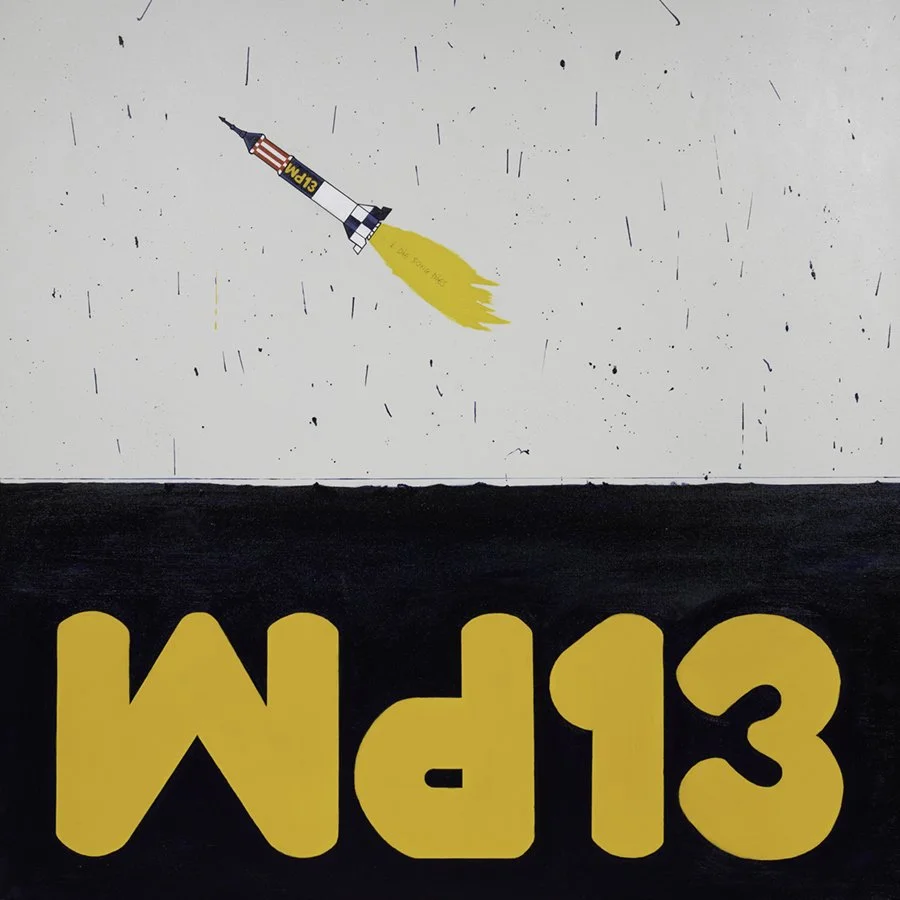
13 by White Denim is out everywhere this Friday, April 24th via Bella Union.
White Denim is playing NYC at Brooklyn Bowl on October 7th— get tickets here.
You can find the 13 on vinyl, tour dates and much more on the White Denim website HERE.
And you can listen directly below!
SUPPORT OCCULT MAGAZINE
Hello reader and thanks for your support!
Occult Magazine is currently an independent & ad-free music publication. We rely on the passion and volunteered hard work of our generous contributors.
If you enjoy what we are doing—
Please consider donating HERE or HERE if possible!
Thank you!