

Gorillaz - “The Mountain” Review
Written by Beau Croxton
All images courtesy of Gorillaz
ALBUM OF THE MONTH: FEBRUARY
The Mountain is peak Gorillaz– Damon Albarn and company explore gorgeous soundscapes, psychedelia, India and the afterlife to deliver their most brilliant record since 2010’s Plastic Beach.
Everyone’s favorite virtual band Gorillaz will be rolling into their 25th anniversary this year, and there is no better way to celebrate than with their new masterful opus, The Mountain.
Their ninth album yields yet another stellar list of collaborators: IDLES, Johnny Marr, Sparks, Black Thought, Kara Jackson, Yasiin Bey (fka Mos Def), and Paul Simonon of The Clash are among them— just to name a few.
While there is plenty of adventurous fun to be had with The Mountain– the journey to making this record was not an easy one, as it was marked by loss. Bandleader Damon Albarn and artist Jamie Hewlett both found tragedy only ten days apart, when they both lost their fathers– Hewlett also lost his mother-in-law. The duo took inspiring trips to India, and noted that it was “an interesting place to carry grief, because they have such a positive outlook on death”. The two found inspiration in journeys to Jaipur and beyond, with Albarn spreading his fathers ashes on the Ganges river.
The Hindu and Buddhist philosophy of death is central to The Mountain. The record explores these more “positive outlooks” on the cycle of life, death, and the afterlife– which depict the end of life as a rebirth, and a transition of mind and body. The record also carries a heartfelt approach to grief that emphasizes hope and finding peace. The Mountain achieves all of this with a beautiful sense of psychedelic production and immersive world-building. There’s also tons of fun and cheer, including lore-centered detours into dictators, delirium, gurus and beyond.
Instrumentally, the record is a seamless, rich sonic tapestry that is emboldened by traditional Indian instrumentation– courtesy of award-winning sitarist Anoushka Shankar (daughter of Ravi Shankar), Ajay Prasanna (flute),The Bangash Brothers (sarod) and the Hindu Jea Band Jaipur, among others.
Gorillaz also honored the themes of The Mountain by incorporating and celebrating their past collaborators who have departed. They used audio from old sessions to create cameos by Tony Allen, Bobby Womack, Dennis Hopper and more, with some bits even working their way into a full chorus (like Mark E. Smith). It’s just as grand in scope as their best work, even if it sonically leans more towards the pretty and chill side of things.
The Mountain was recorded in India including Mumbai, New Delhi, Rajasthan and Varanasi, as well as Ashgabat, Damascus, LA, Miami and New York and beyond. While the record is mostly in English, artists perform in five languages: Arabic, English, Hindi, Spanish and Yoruba. Whether you speak all the languages or not, the performances beam straight from the heart and undoubtedly resonate through the music.
Let's dive in track-by-track for our Album Of The Month: Gorillaz — The Mountain
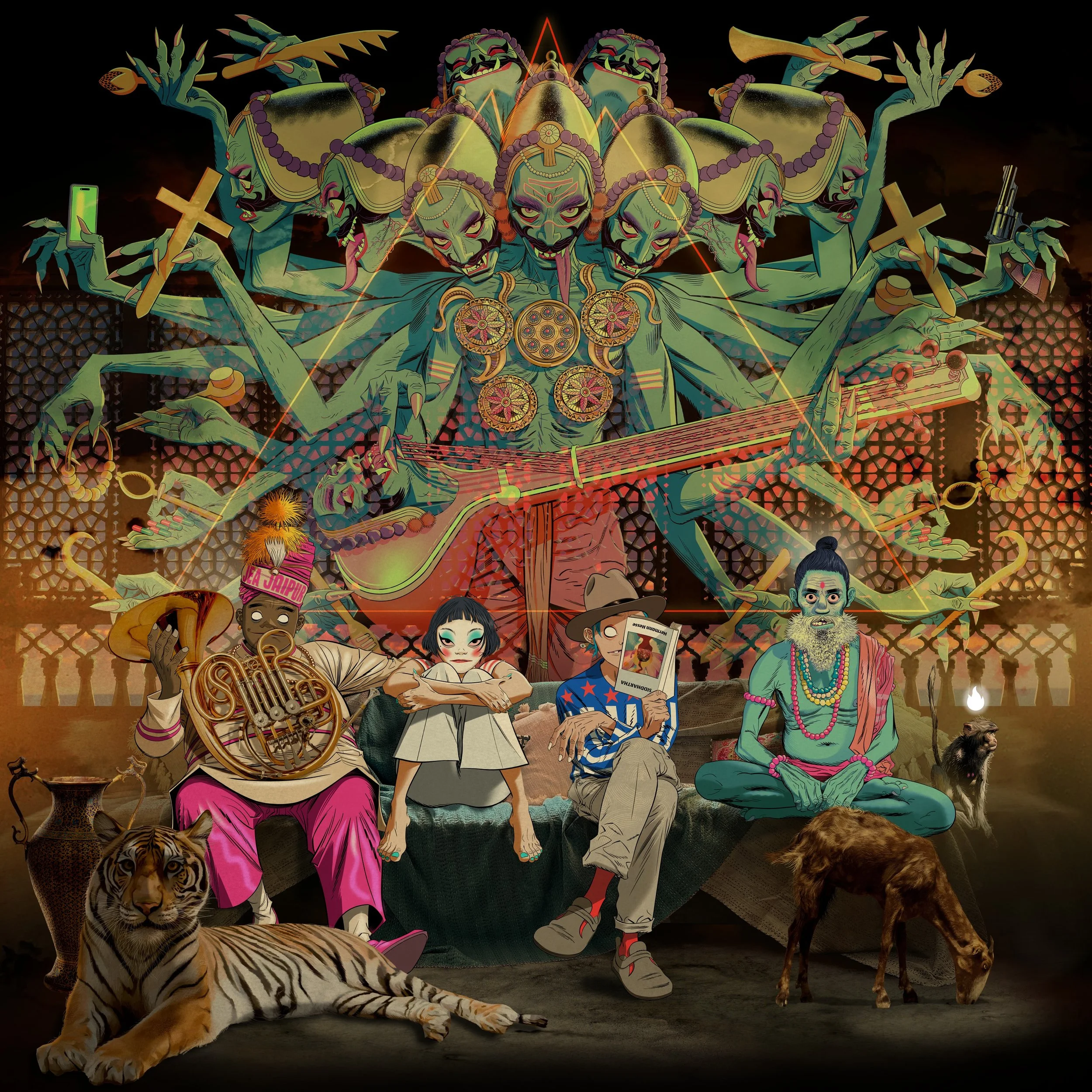
All images of Gorillaz by Jamie Hewlett
Opening title track “The Mountain” leads in with glistening sitar contributions from Anoushka Shankar and flute runs from Ajay Prasanna. Melodies dance back and forth until they meet in a soothing serenade led by a divine motif. The beauty that floods your ears is goosebump-inducing. It’s fitting that Anoushka and Ajay lead the record, as their contributions give The Mountain its signature sound. Iconic Gorillaz albums like Plastic Beach & Demon Days have an epic intro that leads directly into an amazing tune, and The Mountain is no different.
”The Moon Cave” is a divine cut that soars in with disco-tinged strings until it lands in an immensely funky groove. It’s highlighted by thick synth-bass, glimmering synths and supremely classic-Gorillaz flare. The track cleverly seems to deconstruct and remix its own structure towards the back half– which creates a funky runway for Black Thought to rap an impeccable verse. It’s a major standout that ticks all the boxes of groovy, old-school, cheerful Gorillaz.
“The Happy Dictator” is a jovial smash thatboasts Gary Numan-like synth sounds and Bowie-esque whimsy from the duo, Sparks. It was a perfect choice for the lead single of the album, because it’s an absolute hit, with swirling choruses and giddy, brainwashed enthusiasm. The booming refrain of “No more bad news / so you can sleep well at night / and the palace of your mind will be bright” serves as a loud and sarcastic take on willful ignorance
“The Hardest Thing” is a theatric transitional moment that introduces themes of loss and the afterlife and shares vocals with “Orange County”. Tony Allen’s voice appears as a tribute, before Albarn launches his spacey ballad, which sets the stage for “Orange County” beautifully. “Orange County” arrives as a bop that studies grief with a smile and a tear in its eye— it has a hopeful demeanor, with its radio-jingle whistling and catchy vocals from Albarn and Kara Jackson. Towards its climax, the song starts to paint itself as The Mountain’s version of “On Melancholy Hill”, with similar gloomy vocalizations in the background. It’s immediately accessible in its structure, warmth and universal theme of loss.
“The God of Lying” feels like someone fed LSD to 2001’s “Clint Eastwood” and raised it in a carnival. IDLES’ Joe Talbot takes a subtle lead here to address themes of addiction. It was an odd choice for a single, but within the record, it makes for an interesting, wonky and spooky detour.
“The Empty Dream Machine” expands into a dark and moody vibe. While it may be the least exciting cut of the (fabulous) bunch, it has plenty of highlights worth fawning over– which speaks volumes to the amount of love poured into all 15 tracks. Anoushka Shanakar’s minor-key sitar lines sound especially unique against this alien electronic sound, and Black Thought’s rap verse absolutely lights up the second half.
“The Manifesto” proves there’s a significant overlap in South American and Indian music to be explored more thoroughly — of course, someone as creatively ambitious as Albarn/Gorillaz would run into such discoveries.
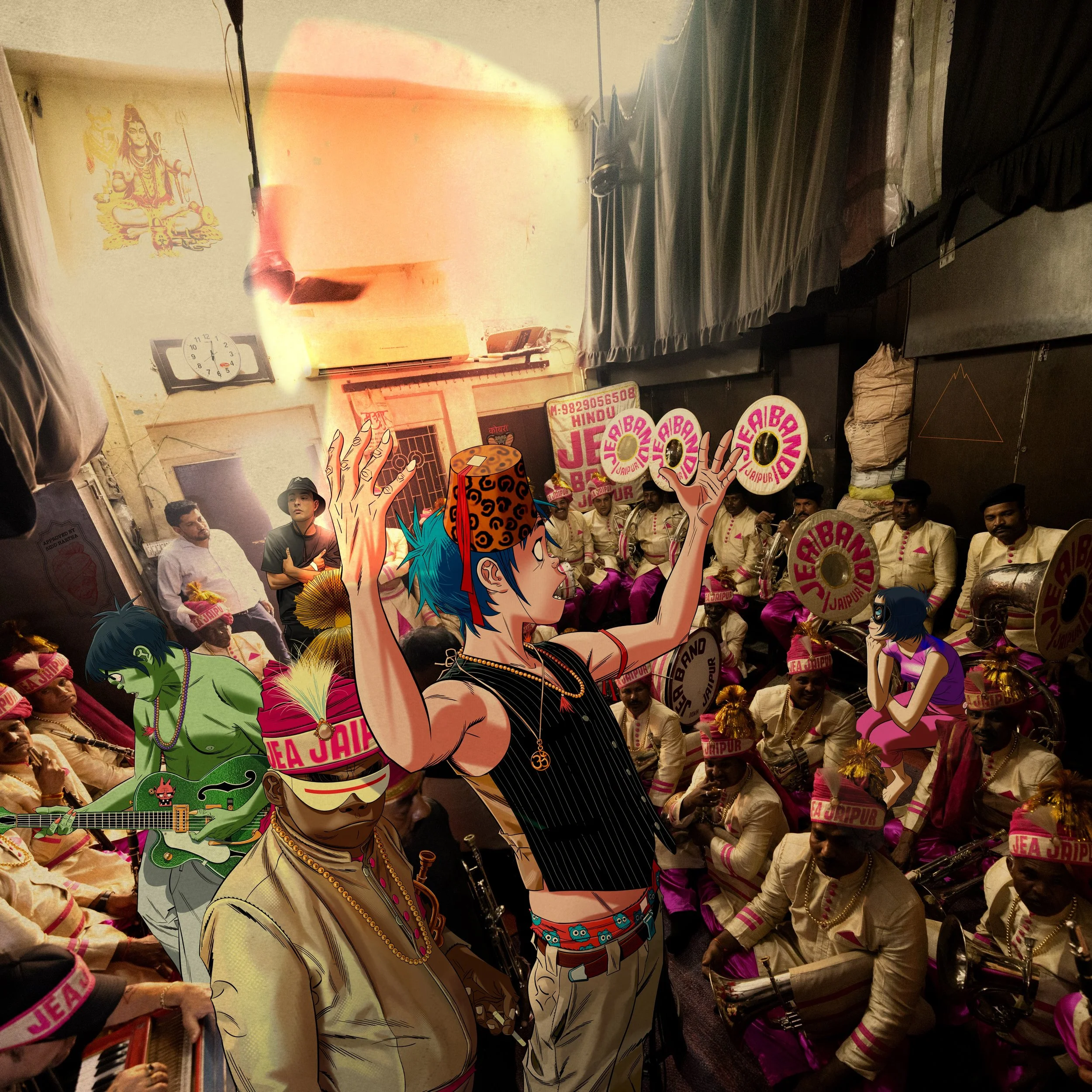
In Part 1 of the song, the Hindu Jea Band Jaipur, a string section, and Gorillaz’ in-house “Mountain Choir” all collectively deliver one of the most irresistible and catchy melodies on the record. Argentinian rapper Trueno raps furiously in Spanish, exploring mortality and the afterlife.
In a surprising shift, Part 2 the track is cued by a beat-switch. It kicks into a 6/8 timed shuffle over a moody, spacey progression that features a verse rooted in life & death performed by the late D12 rapper, Proof. A third phase kicks things back to a punchy 4/4 beat that serves as one last hurrah for Trueno to spit even harder bars than before.
At about 7.5 minutes long and 3 beat-switches, this track is ballsy, multiphased and surprising. It's incredible to hear such nutty ambition from Gorillaz 25 years in, and there’s so much to unpack and enjoy on repeated listens.
“The Plastic Guru” kicks off with delightfully-bubbly synth loops and with cheerful verses from Albarn. It’s emboldened by big, campy choruses with seemingly political undertones–“We believe what we choose / Is that not the truth?”. While this song was inspired by an oddball guru that Damon and Jaime met in India, the chorus feels like a tongue-in-cheek jab at our current age of rampant disinformation and ignorance.
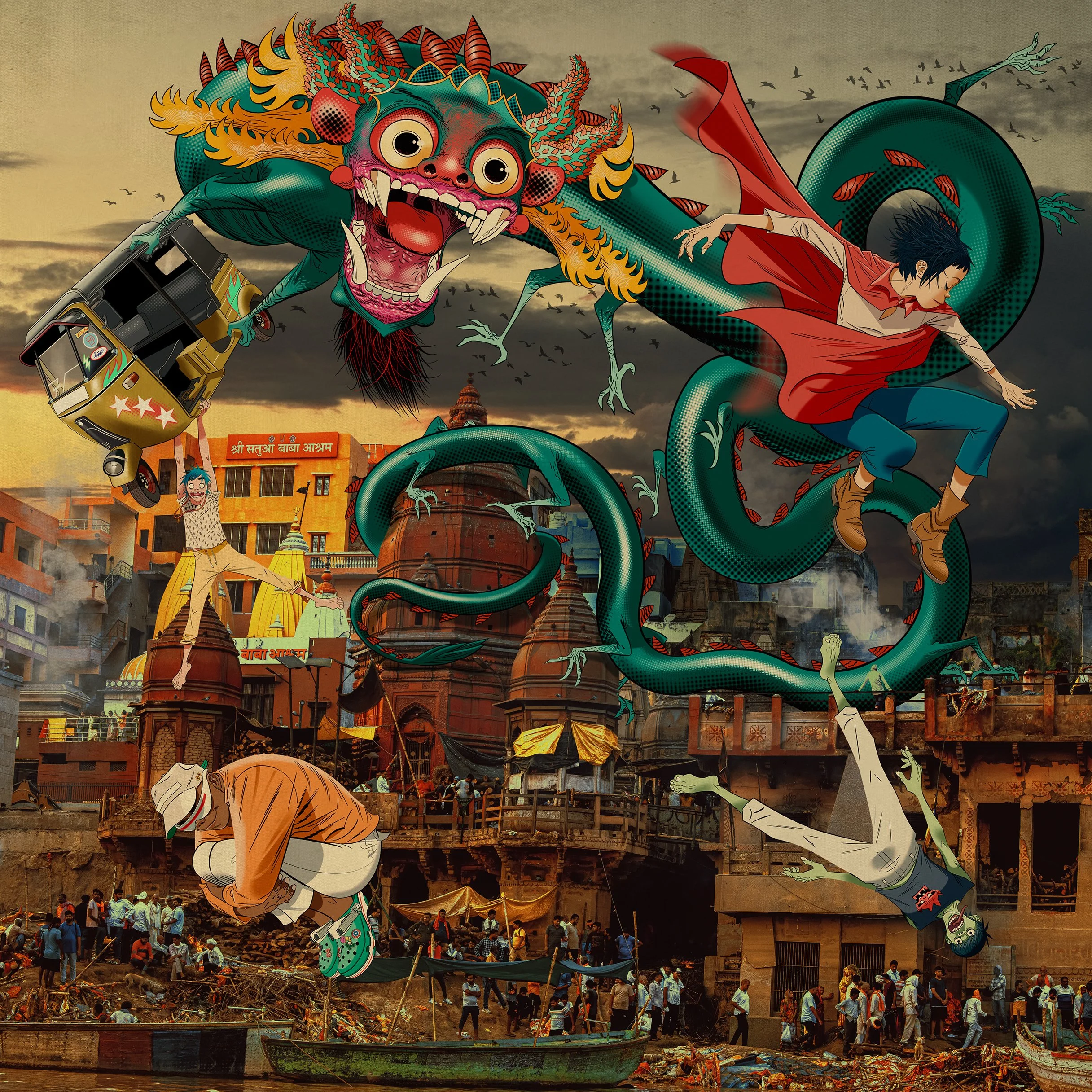
“Delirium” opens cinematically with harmonized choir vocals that lead you into Albarn’s moody verses about “new gods”. Damon carries a triumphant tone that resembles Bowie crooning on his most dark and stormy material. The track builds cryptically until a huge swell leads into a massive, devilish beat drop. Mark E. Smith’s wild ramblings on the chorus feel like Shaun Ryder’s presence on 2005’s “DARE”, and the beats urge you to cut a rug almost equally. This huge highlight expertly displays tension and release; the verses are some of Albarn’s best, and the infectious chorus drops are so satisfying. Both this track and the next feel like amped-up Plastic Beach bangers.
“Damascus” is the energetic zenith of the record where the cross-cultural spirit of collaboration may be at its peak. It boasts a thrilling call and response performance between Brooklyn rapper Yasiin Bey (fka Mos Def) and Syrian Dabke music guru Omar Souleyman— it’s an infectiously energetic and wildly potent pairing that only Gorillaz could pull off. This track dates back to the Plastic Beach sessions– and that completely checks out, considering “Damascus” carries the same collaborative brilliance and feverish energy as the orchestra/rap hybrid “White Flag”.
From track 12 forward, the album carries out a beautiful and immersive vibe that drifts into heavenly psychedelia. “The Shadowy Light” feels like a cross between a George Harrison-esque kumbaya moment and the more cheerful Albarn led-cuts from 2018’s The Now Now. This track features Plastic Beach collaborator Gruff Rhys, Ajay Prasanna, Anoushka Shankar and 92 year old Indian music legend, Asha Bhosle, who lends verses that touch on the ultimate spiritual liberation– aka “moksha”– as depicted in Saṃsāra.
On the themes, Ahsa Bhosle told Vogue India: “In one part of ‘The Shadowy Light’, I sing, “Chal mere raahi, gehra hain paani, mujhe jaana hain uss paar.” I’m telling the boatman to ferry me across the river, which is my life’s journey: my birth, my relationships, my dedication to music, my achievements, my duties as a mother, daughter, sister, wife and Indian. The boatman is a metaphor for my music, which has guided me across this river of life. When I get to the other side, my journey will be complete and I will attain moksha. If you listen carefully, you will be able to discern thousands of sounds floating around us. I shall become one of them. This freedom to become one with nature is what awaits me on the other side of the river.”
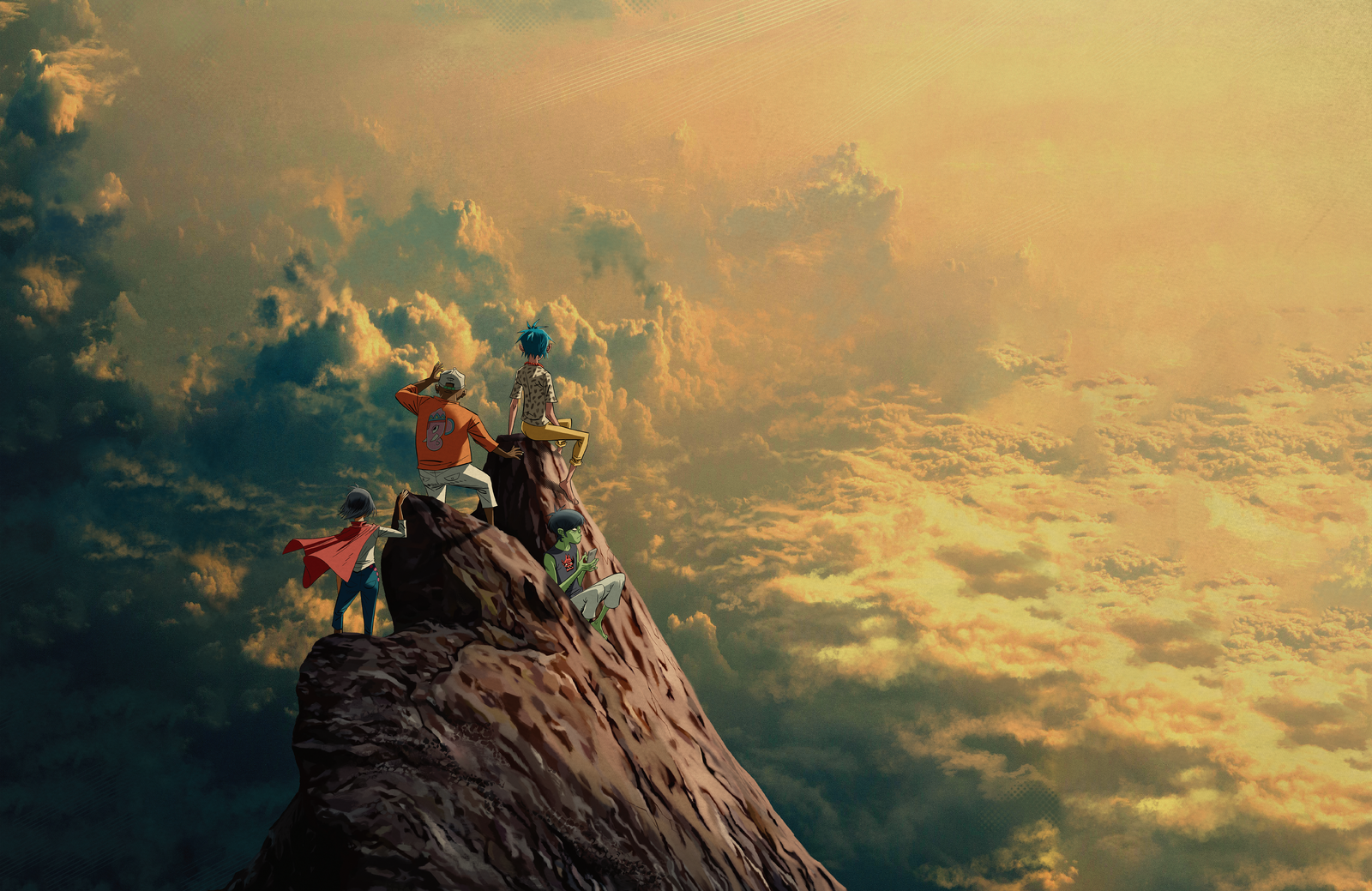
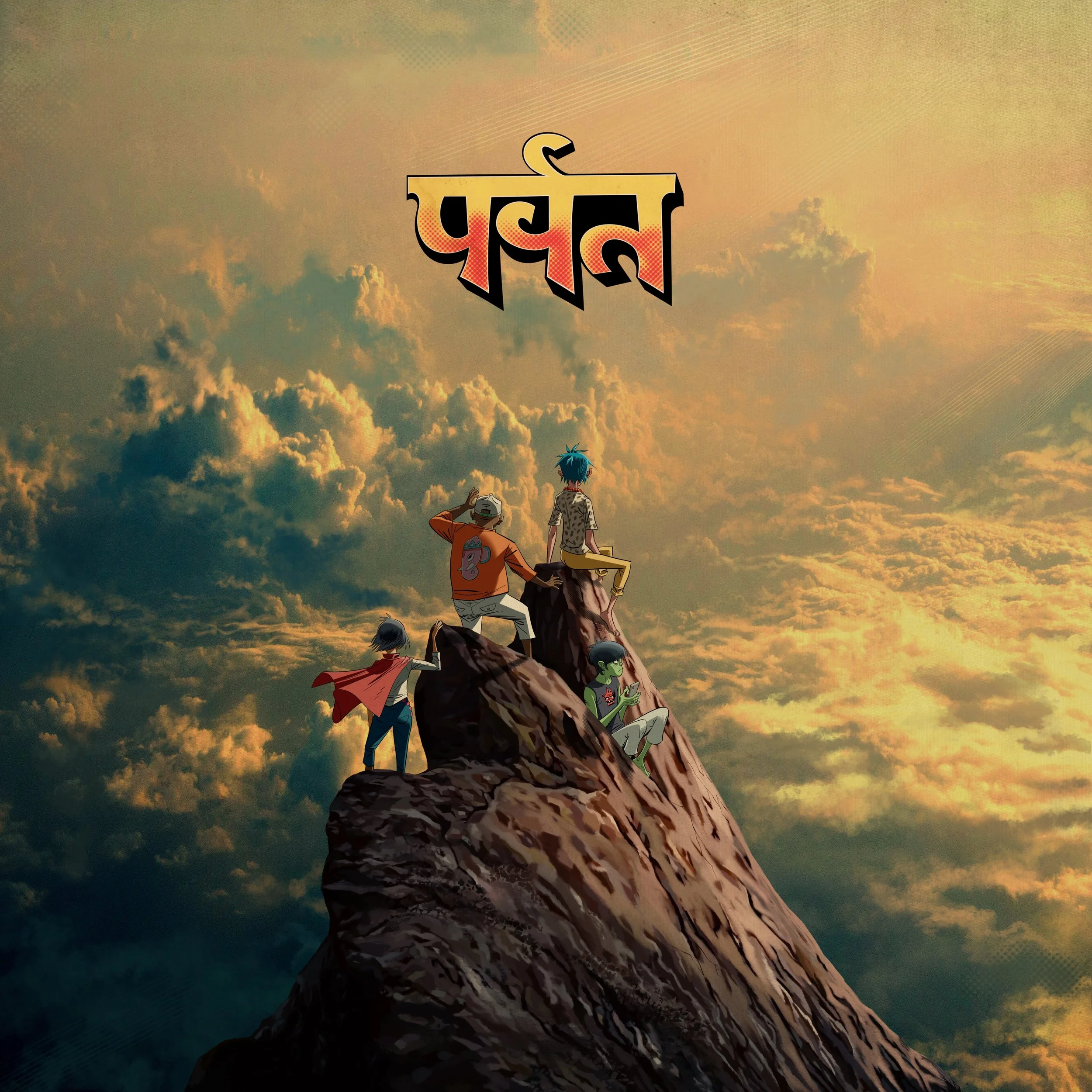
The cinematic, slow burning “Casablanca” is a waltz that combines moments of drifting uncertainty with ethereal moments of bliss. As Albarn sings in his weary, distorted tone “I don't know anything that feels like this” surrounded by Paul Simonon’s harmonies, a gorgeous string section, and Johnny Marr’s tremolo guitar– you would be forgiven if you thought you had ascended to the clouds at the peak of The Mountain, as depicted on the album cover. The production is very dreamy, floaty, psychedelic and immersive in the final track run.
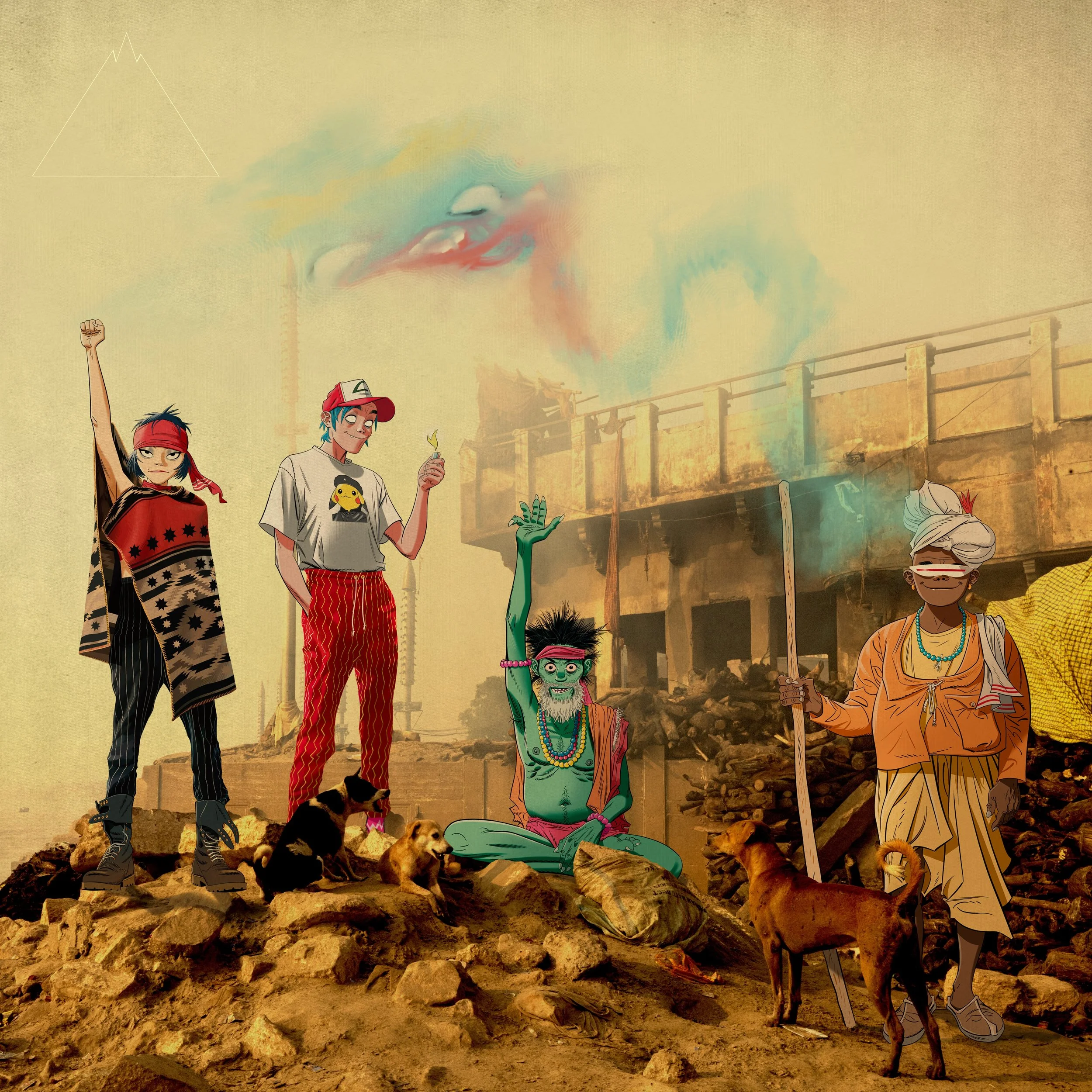
”The Sweet Prince” feels like Damon’s personal closing to the record, as it's a beautiful tribute that details the final moments between him and his father. Prasanna, Shankar and Johnny Marr detail this ode beautifully. The Bangash brothers add delightful, weeping, sarod arrangements–the outro jam is one of the most serenely beautiful moments of the album.
“The Sad God” cleverly repurposes the title track motif via wonky synths in a full circle moment. It’s sung from the perspective of a disappointed god who reflects on all he gave to humanity, and all the unfortunate things they've decided to do, despite his generosity. It feels like an additional hymnal reprise out of the finality of previous tracks, and the sitar droning at the end cleverly takes the listener out of the record just as they entered.
The Mountain is pretty much a best case scenario 25 years in– it's a beautiful thing to get a record from Gorillaz that truly deserves to be considered beside their hall of fame records like Demon Days and Plastic Beach.
While there have been many brilliant tunes from Gorillaz since 2010 (..Aries, Souk Eye, Momentary Bliss, Ascension... to name only a few of dozens) — the albums attached to the songs have not felt as fully realized as a the band’s earlier work. The Mountain greatly benefits from being a fully focused project that has a more consistent through line and a uniform concept. Albums like Demon Days also found Albarn leading the charge instead of getting lost in the features. On The Mountain, the ratio works beautifully– there's tons of classic Albarn-led cuts that make you feel right at home.
The Mountain is a beautiful, diverse and highly consistent record that revels in the maximalistic collaborative spirit of Gorillaz, while remaining totally cohesive due to a strong conceptual frame and universal themes that are explored beautifully by its authors.
Addressing grief and having fun are two very difficult things to juggle at the same time. The Mountain successfully handles these heavy themes in such an endearing way; it gives the material a major heartbeat. Even when dealing with the daunting weight of death, The Mountain yields a universal appeal about the human experience that brings joy, warmth, and beauty instead of sadness.
Additionally, Albarn using The Mountain’s theme to honor their departed collaborators is a clever and beautiful gesture, especially when paired with the gorgeous traditional Indian instrumentation of Shankar, Prasanna, and The Bangash brothers, among others. All of these swirling elements come together to give The Mountain a gorgeous, peaceful and moving identity that resonates. The Mountain is a melting pot of culture and fruitful collaboration that comes together to make a beautiful and meaningful statement.
This brilliant cross-cultural collaboration by Damon Albarn and friends is a return to form for Gorillaz that brings forth their most fully realized, conceptually solid and straight-up best LP since their peak with Plastic Beach and Demon Days. Much like the worlds built on those albums, The Mountain feels like an epic movie that you are absolutely immersed in, and you never wanna leave.
For Gorillaz to release such an ambitious, high-quality and thematically cohesive opus in 2025 like The Mountain is a major moment worth celebrating. The Mountain is an excellent piece of fully realized work that stands with the very best that Gorillaz has to offer.
Occult Highlights: The Moon Cave, Delirium, Damascus, The Happy Dictator, The Mountain, The Plastic Guru, The Manifesto, Casablanca, Orange County
(…but we recommend you listen on headphones and close your eyes till you ascend to the peak of The Mountain)
9.0/10
SUPPORT OCCULT MAGAZINE
Hello reader and thanks for your support!
Occult Magazine is currently an independent & ad-free music publication. We rely on the passion and volunteered hard work of our generous contributors in order to deliver our best to you on your favorite music.
If you enjoy what we are doing—
Please consider donating anything you can HERE or HERE if possible!
Thanks!