


WITCH (We Intend To Cause Havoc) - In Conversation
For our third installment of In Conversation, Beau Croxton speaks with Zambian “Zamrock” Legend Emmanuel “Jagari” Chanda of WITCH (We Intend To Cause Havoc) to discuss the process of their more modern records SOGOLO and Zango, as well as Jagari’s influences and reputation.
foreword & interview with Emmanuel “Jagari” Chanda by Beau Croxton

WITCH by Izzie Austin — Emmanuel “Jagari” Chanda (right) & Patrick Mwondela (left)
WITCH is a fascinating African band from Zambia that came to fruition in the 1970s– their band name is an acronym for “We Intend To Cause Havoc”. Their cultural backstory is nearly as enthralling as the story of Sixto Rodriguez (as detailed in “Searching For Sugarman"), the story of Buena Vista Social Club, or the story of William Onyeabor (as detailed by the documentary “Fantastic Man”).
There is a great documentary on the band called “We Intend To Cause Havoc” that details the story in the best way– ( you can watch for free here).
For those who are unfamiliar, here is some background and context ahead of my conversation with their lead singer Emmanuel “Jagari” Chanda.
WE INTEND TO CAUSE HAVOC
WITCH were pioneers of “Zamrock”— a Zambian brand of rock music. It is defined by a fusion of traditional African music with psychedelic rock, garage rock, blues and funk. Zamrock was heavily influenced by the many classic rock and roll groups of the 1960s and 70s, such as The Rolling Stones, Black Sabbath, Cream and Deep Purple.
The band name was derived from the wah-wah pedal aka the “footswitch” that was used to create their psychedelic "Zamrock". By taking the “s” out of the “switch” it resulted in “Witch”. Later, their graphic artist friend from Kitwe came up with the acronym “We Intend To Cause Havoc” for the band name.
The group was most active in Zambia's golden post-independence days– a more prosperous time after Zambia achieved independence from the United Kingdom. Fronted by charismatic singer Emannuel "Jagari" Chanda, the band had a unique and trademark style. When the group played live, they often wore what Chanda calls the “WITCH hat’ a very iconic, oversized, floppy, colorfully-patterned sun hat. They frequently wore bell bottoms, an afro hairstyle (as popularized by Hendrix, according to Chanda) and high heeled shoes.
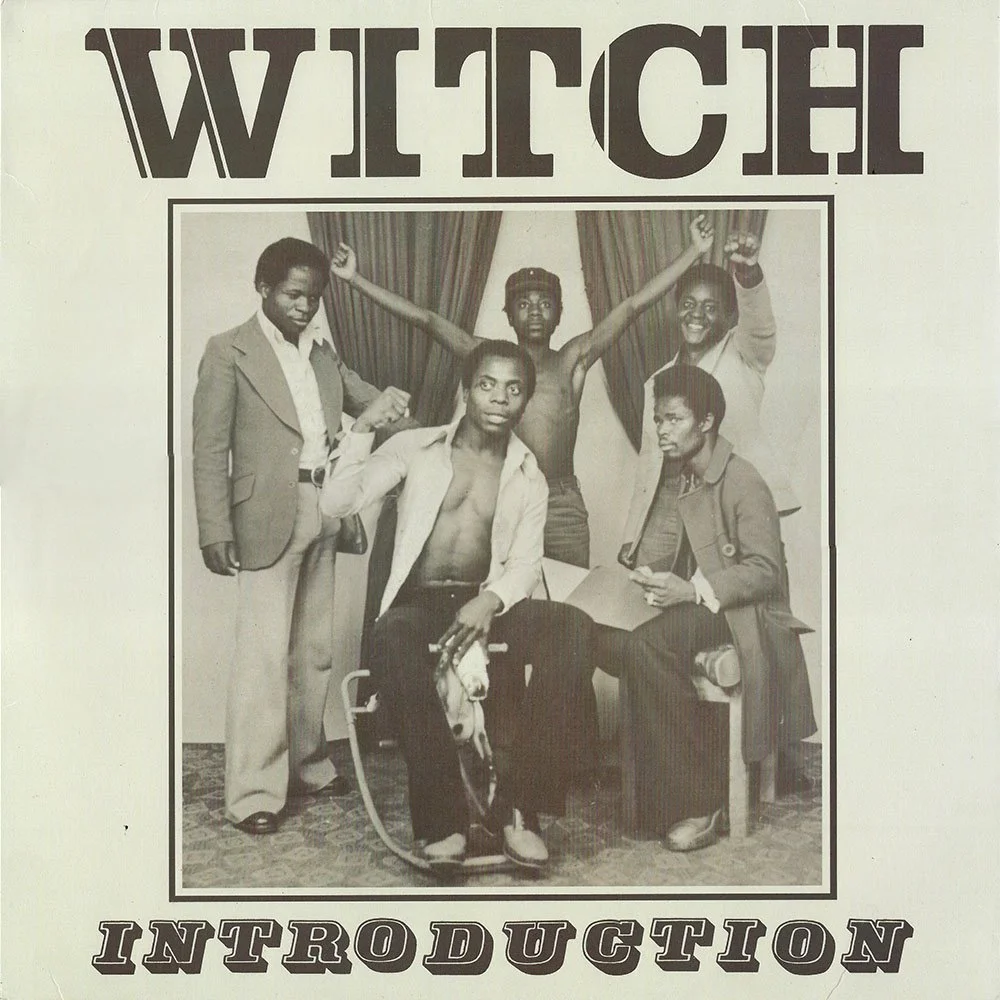
WITCH Introduction artwork— and original lineup with Emmanuel “Jagari” Chanda (1973)
During this period, folks in Zambia were very vocal about Jaragi’s absolutely electric stage presence, often calling him the “Mick Jagger of Zambia”. He was known for his daring stage-diving from balconies and wild dancing— the guy was an absolute rockstar and showman.
In reference to their shows in Zambia, Malawi, Zimbabwe, and Botswana, Jagari told The Guardian – “We were worshipped by our audiences”. According to The Guardian–The intensity of the band’s popularity was so extreme that the police were called to calm riots outside overcrowded shows. On one occasion, the fans even ripped the roof off of a hall where the band played, as other frenzied fans tried to get through the windows.
Unfortunately, in the late-1970s with the economy starting to collapse and the rise of government authoritarianism, WITCH (and most Zamrock bands) were reduced to playing daytime shows to avoid the government-imposed curfews, which resulted in the Zamrock movement fading away. This prompted Jagari to leave the group to explore other career options in gemstone mining and teaching. The band continued on, with varying lineups and eventually diverted into disco and other genres.
WITCH were stars in their home country, but unfortunately they didn't get the true recognition they deserved elsewhere in the world. Luckily, the group started to appear on many compilation albums, and in 2012, Now Again Records reissued their entire catalog, which led many new fans to discover the magic of the band.
Lead singer Emmanuel “Jagari” Chanda was invited to perform in the states in 2012, and he began a collaboration with Jacco Gardner in 2016. The aforementioned documentary captures this moment in time, and the formation of the modern WITCH lineup. The modern resurrection of the group features Jagari (vocals), another surviving WITCH member Patrick Mwondela (on keys) and they are backed by European musicians Jacco Gardner, Nico Mauskoviç, Stefan Lilov, and JJ Whitefield.
I was awestruck seeing the band’s resurrection at Desert Daze festival myself in 2022. It was truly incredible– as I was in the front row as a first-hand witness. It was one of my favorite sets of the entire weekend, especially due to the sheer joy that Jagari and the group exuded. Now performing well past the age of 70— Jagari’s showmanship is still totally electric. His cheer was a beam of joy that was clearly felt by every single audience member.
The band teamed up with Desert Daze (festival) to release their fantastic comeback record Zango on a new Desert Daze label in 2023, which received rave reviews and featured notable guest-artists like Sampha The Great, and incredible tracks like “Waile”. (below)
In 2025, WITCH continued their resurgence in a very strong and creative way with their new follow-up record SOGOLO, which is a blast - you can check out Blake Peck’s Occult review here.
I had the absolute pleasure of chatting with the legend himself, “Jagari” Chanda on the release day of SOGOLO. (He was a bit late, because he was getting a haircut, but it's release day so…gotta stay fresh for the big day!)
Check out our chat below.
INTERVIEW
BEAU: Hi ! How are you doing? Good to see you, Jagari!
JAGARI: Good to see you! I was cutting my hair.
BEAU: Yeah– you know, you got to have a fresh haircut for release day!
JAGARI: It's hot here, so at least now the air can pass.
(everyone laughs)
BEAU: Well, it's so great to talk to you. Congratulations. Today's the day– great to speak to you on the release day of SOGOLO. Congratulations on the record– It's really great. We loved it, it's a riot of fun.
JAGARI: I'm humbled. If you love it, it's good for me….and for the rest of the group. It's good for us!
BEAU: What are you and the bandmates doing to celebrate the day? How are you feeling about it?
JAGARI: Unfortunately, we are in different places, I don't know where the other guys are. I'm checking on the social media page where they're saying congratulations, and things like that.
BEAU: Well, I'm glad I got to say it myself to you. It's so great that WITCH has a new lineup, making new records. Zango is really incredible, and now SOGOLO is too. I'd love to hear a little bit about the process of recording the album.
JAGARI: In a normal situation or normal circumstances, the band would practice together for some time and then they determine when they can get to the studio and make a record.
That wasn't the case for the past record. You know, we live on different continents. There's someone from America, two guys from Europe, and another guy in the UK… and the girls from Africa. So we only spared 10 days of our busy schedule of a tour of Europe and the UK in July. And we borrowed (if you like) 10 days of that tour? I was asked to bring some samples from Zambia, the demos of the composition, and Patrick had some from the UK. And when we met there, we didn't have a lot of time to practice those things. So, we let people listen to what was available ....There were a bit of adjustments here and there.
And then finally we sort of settled for what we could do within that time. So the good thing is that the musicians were ready– they are experienced musicians. They are determined and creative, so it made the work somehow easier.
But in the beginning, I was a bit nervous - I wasn't too comfortable ( if you like) with the way we handled the recording. It's somehow surprising that what has come out is acceptable. And we had a good grading from the critics and analysts, which is a plus for us. Some grateful for them. Yeah, but we didn't have enough time for perfection, even though there's no real perfection. It's amazing that it turned out to be what it has come out to be.

WITCH by Izzie Austin— newest lineup, Jagari Chanda second to left.
BEAU: There's a great rawness on the record that translates from the older material and a little bit from the last one too, so, the spirit is absolutely there. I can understand what you were saying like you were kind of nervous…you know, when there's a lot of things that are out of your control and a lot of new things at hand etc…
JAGARI: It’s different from the way we used to record. We used to rehearse to a point that we were happy to get to the studio, especially from the third, fourth, fifth albums.
The first albums, Introduction and In The Past, we were ready musically. We were ready as a band. When we got there except it was analog and it was just you set the equipment like it's a gig or something. That's how we did the first two albums. From the third one, we went to an upgraded studio (DB studios) and we had an opportunity to do something slightly different.
But for the Lukombo Vibes and Including Janet – the fourth and fifth albums, we were ready for the recording. even though… on Lukombo Vibes , we only had nine hours, because the studio was going on break. They just considered us, because we had come from another country. We didn’t know that they were going on break– So they said, okay, “we will accommodate you, but only for nine hours.”
But because we were ready, we did it. Lukombo Vibes was done in nine hours. Yeah, now for modern day recording, I think you have to debate certain things….. “Is that the tone we want? Do we use the synthesizer here?” We use it as that kind of thing. That's the time we didn't have actually. When we went back to our respective areas, we had to phone Jacco, who was mixing the stuff and say, “make some changes here and there” and things like that. But in the end, that's what came out. Thank god, yeah.
BEAU: Like I was saying, the spirit of the old material is really there….not just on SOGOLO, but on Zango as well. What was the process like getting the production to kind of have the “WITCH sound”, and the spirit?
We had a similar situation in Zambia. The label wanted us to go back to the same studio we had recorded “Lazy Bones” in. I suppose they didn't want us to be “too modern”, in terms of sound or too digitalized– that kind of thing. I think they wanted us to have that feel of Zamrock. So when we went there again, we had about eight songs or so we couldn't finish the other two–like “Avalanche of Love” for Zango. We were featuring Sampha The Great, after the band had gone back and it was the time of COVID. Yeah, so there were these cancellations of tickets, postponement of this and that. So the band had to go back to Europe, most of the people before the recording finished. So Sampha and I went to another studio to do “Avalanche of Love.”
But the instrumentation was done, (most of it) was done before the band went to different places. So somehow, you don't have enough time to do what you expect to do. But such is life! There's no real perfection. If we, the owners of the music, are not perfect– what do you expect? (laughs) It was like a test for us. Apparently satisfactory results have come out.
“Avalanche Of Love” video (… with the infamous “WITCH hat”)
BEAU: Absolutely– We love the record! So speaking of which, did you have different goals with the music that you were making for this record? You definitely expanded more from the last record.
Well, when we finished Zango and we met for a tour, Jacco said something about what he had expected me to do. As one of the composers, he said, “is it possible you could stick to some traditional stories, cultural stuff? Would you want to do some Zambian?” You know, he was pointing me towards the storytelling and traditional music styles and things like that. So of the six demos that I brought, six to seven demos were along the lines of African, the traditional Zambian stories, which included music. In the song “Dancer on a Trip”, I'm talking about a village situation. The musician is going on a trip.
In European history, you had the troubadours who went to different palaces, countries and things– we also have such people in the history of Zambia. This is where the story comes from. The mother is trying to encourage the son (who is a musician) and say “every village you go to— watch out. When people clap for you, appreciate that, but don't overstay your acceptance. When people start to clap, you must stop– so that you don't do a wrong thing which will take away from that appreciation.” So this is what the story is about. He's also telling them, “I'm just like you guys, don't overpress me for this or for that. ( starts singing “Mwilang'ombela ee Mbela ee, Mbela ee mbela ee! Mwilang'ombela ee! )--- it's my mother who has taught me this. This is the story.
If you follow Anna's song, “Nibani”, it's also about the Africans village setup – where some child has gone missing. And people are asking, “have you seen my child? I just sent my child to go and fetch this – but I can't find my child.”
Then we also have “Tiponde Manzi”. It's a story about the village community. It's a story told when you go to bed, by grandparents…parents…especially under the moonlight. They told stories of the animal kingdom, where the animals gather together to say “The land is so dry. Let's look for water.” And you know, there are some animals that look very clever. Sometimes they think they can do things on their own and then they try to look for water by stamping the ground, but they don't find the water. Then the tortoise comes to say, “Can I try also?” And they say “No, you can't do anything. You don't have the strength. You don't have the speed.”— and things like that. Unfortunately to them, that's the one who found the water. The rabbit, the hare, is just good at talking, but is not very useful in a venture like that. So they say, “No, you just thought you would be the one to find water, but you didn't find water. The tortoise found the water.”
So the moral of this story is — don't underestimate anybody before you give them a test, or before you see what they're able to do.
BEAU: So… don't celebrate too hard, and don't underrate people, right?
JAGARI:: Yeah, yeah, yeah! You know?!
(everyone laughs)
JAGARI: That's the kind of thing that we draw inspiration from. I personally drew inspirations from traditional stories. And of course, sometimes you can imagine certain things like “Queenless king”. It's not common that a king can have no wife. The idea of looking for wives, by other people rather than the husband himself– poses some kind of desire.
It's supposed to be a man looking for his own– because in our culture most marriages are arranged. The family will approach another family and then they will say, “We think that you should marry in that family because they are hardworking. Don't marry in this other family because most of them are lazy.” Then we have the health background of people going mad, people being lazy, things like that. Within the village, families studied and graded one another.
Especially if those people had children in the urban area, and they decided to go and get married in their village– they depended on their parents to choose wives for them. I'm dreaming that I'm a king, but I don't have a wife to call a queen. I'm enticed by the beauty of this lady thinking, oh, “she's very pretty looking” things like that. Not knowing that she's a very shrewd and cunning lady. Later, I find out that she's not an angel per se. Getting closer to her, “I thought this is an angel!” but getting closer to her again, I find that she's a cheating rebel—this is the inspiration for “Queenless King.”
BEAU: I really love “Queenless King”. That song and “Dancers…”… those are two of my favorites. The instrumental is also just wild.
JAGARI: Thank you! I also like “By the Time You Realize”. That song is not only for the village, it is global. We take our partners for granted. The partner keeps complaining, “stop doing what you're doing. It hurts me. You think “Oh….She loves me. She loves me. She will still stick around.” But there comes a time when they are just fed up with you, and they walk away and leave you alone. By the time you realize— it's too late.
BEAU: It's a good universal theme– I agree. You can't get stuck in your ways so much because everybody around you will get affected. So– Back in the 70’s, people said you were the “Mick Jagger of Zambia.” I would love to hear more about that.
JAGARI: It was probably because of some songs that we played. We were influenced by these bands. I was listening a lot to the Beatles, to Cliff Richard, the Hollies, the Troggs and many groups just for listening. But when it came to what we wanted to play, we would pick the Rolling Stones. ….Things like “Sympathy for the Devil”, things like “Satisfaction”, “Jumping Jack Flash” and such.
And according to the fans, they think I did well– covering those songs. So they gave me that name…..I was worried. I was a bit worried. Well– he is a great man. He's a great musician. He's a great person. But I didn't want to live in somebody's shadow.
BEAU: Yeah– You have to have your own personality. I think they were saying it's a quality thing. They're saying you're “that cool.”
JAGARI: Yes, yes… But then what could I do? I couldn't go around the country trying to convince fans that, “No, I'm not Jagger!” All I did was I put a “Y” to Jagger. I became Jaggery. And then I went to the dictionary and it gave me “dark brown sugar.” That is crude. You just take sugar, put it on a hot pan and the brown sugar turns into something sweet. So I said, “okay, this is okay. At least it's different.” It's Jaggery. And at the same time, in Africa, there was a leader in Nigeria who was called Shaul Shagari. So I said, “Oh, wow, I can Africanize this name instead.” And I just changed the spelling to J-A-G-A-R-I. Much, much later, that's when I knew that that name exists in India as well. There is Jagari in India. It's got a different meaning altogether.
BEAU: So how does it feel to be back? Like in 2012, you were asked to perform... Now there's just this large interest and resurgence with Zamrock in 2020’s… How does it feel to be a musician again— you were a teacher and a gemstone miner, correct?
JAGARI: Yeah!
BEAU: Your life is so different now. I mean, you're a rock and roller again! You're going around and performing shows all over the world. How has that whole switch been for you?
JAGARI: Because I'm a believer in God, the creator, I take it that he has given me a chance– He has resurrected my career.
I'm happy making music and sharing it with the world rather than going to the pit of the earth to look for gemstones. It's not easy, but I'd lost hope somehow. Looking at my age, I thought probably, “oh, time is over for me. I can't go back on stage”, things like that. So I thought maybe I should go into gemstone mining so that if I strike big, I can use the money to buy my dreams of owning a school of music and international standard recording studio and things like that ... .Where I could have an opportunity to impact or share with the younger generation. That was what was in my mind. But then Egon of Now Again Records reissued the music from the 70s, Zamrock, and then Gio Arlotta from Italy also did the documentary. You've seen it?
BEAU: Yeah of course!
JAGARI: Yeah. So the combination of the two arose. It aroused the interest for people to say, what's this kind of music? Where was this kind of music? You know, when rock and roll and things were at the peak in the 60s and 70s
So that has helped for people to become curious. And then I enjoy traveling, this tour. I tour with great musicians and very, very wonderful audiences. Wherever we've played, people have appreciated what we've played and contributed. It encourages me a lot.

WITCH by Izzie Austin
BEAU: Absolutely– there’s nothing better than the wonderful feeling of a really appreciative audience. For me, I discovered WITCH because I listen to a lot of psychedelic rock that sounds like the 60s/70s. And then I listen to a lot of stuff like Fela Kuti, and other afrobeat– so naturally, my streaming service algorithm said “look no further” brought WITCH my way as a suggestion– my friends were already listening to it, too.
JAGARI: Yes, we also got influenced by a band called Osibisa. Osibisa was a West African band living in London or something like that. And they combined some rock with the high life of West Africa, and the patterns were close to what we were doing... If you listen to Lukombo Vibes, we were trying to combine some African stuff with European rock and things. And that we were experimenting with those things. So this is, you see these similarities. The influences were the same. Yeah.
From Grand Funk Rail Road, Deep Purple, Black Sabbath, Rolling Stones, Santana…..the only thing is we didn't have access to see what these guys were doing in terms of videos, in terms of television clips. We didn't have those. The only magazine we had was Melody maker, and maybe on radio and jukeboxes. And we were under a federation as a country.
We were under a federation of three countries. Zambia today, used to be Northern Rhodesia, Zimbabwe used to be Southern Rhodesia, and Malawi was Nyasaland. The three were under the same federation of Britain. So they imposed culture on us. We started driving on the left. We started having tea at four o'clock in the afternoon– those that could afford it. And we had only one radio station amongst the three countries.….They used to have chats in the night. From midnight to about zero four things like that. And I would sleep with a small radio near me. Little did I know that I was being hooked, too... And we also had the influence from South African bands and groups. One of those songs I listened to in the late fifties and sixties is still playing towards Christmas and New Year– “Tell your mother happy New Year”. Much later, I came to like groups like Juluka, Savuka and things from South Africa and even Zimbabwe– we have some similarities in terms of culture and things. So they were also part of the influence.
BEAU: Excellent. So, I was lucky enough to catch you perform at Desert Daze in 2022– the “surprise set.” Do you remember? That set…with the mountains and the lake in the background…it was pure magic.
JAGARI: Yeah, yeah, yeah!!! So you were there man?!
BEAU: I was there, yeah! The show was incredible. The presence, positivity, and cheer that you bring on stage is so infectious to every single person who's in the audience. Everybody feels that. There was a lot of great sets from many amazing artists that weekend– but that was one set that really stood out to me because the performance was amazing… and the vibes were unmatched!
JAGARI: Thank you so much man!
BEAU: Yeah, it was great. Yeah, me and my friend stormed all the way to the left around the stage and we're like, alright, “we're going to go to the front row, centerstage!”. For a second, I had a speaker right in my face.
(Jagari laughs)
BEAU: But I had earplugs in so I was all good for just that moment. But then we got to the center stage with our arms over the stage. I was in the front row. I mean, we were right there with you man!
JAGARI: Oh, that's good! Next time we meet, you should remind me, so that you can join me man…. even just…playing the cowbell ! (laughs)
BEAU: Yeah! I see WITCH is coming to New York in September so I'll see you there.
JAGARI: Please! Please, you are most welcome. Let me know if you're coming with somebody. Maybe I can just put you on the guest list and we can chat.
BEAU: Yes, that would be wonderful. Okay, so I have to ask you one thing about the show. At Desert Daze , during the set, you would walk to the edge of the stage and then you would sit and think for a second…. and then you'd go, “Ah! I remember”, and then you'd walk somewhere else. Then, you'd change one of your shoes to a completely different color shoe onstage– mismatched. Do you remember doing that? You were messing with the audience…I think? (laughs)
JAGARI: (laughs) …You have a good memory man! So you know…..we are not only sharing music. This is entertainment….. Also, we are sharing the warmth. No, we used to say we intend to cause havoc, but now we can also “intend to cause harmony!” You can intend to cause happiness.
BEAU: Just like the last song on SOGOLO … “we intend to cause harmony”!
JAGARI: Yeah!
(everyone laughs)
BEAU: Thanks so much Jagari, see you soon let’s hang!
JAGARI: Thank you! You are most welcome! Drop me a line man!
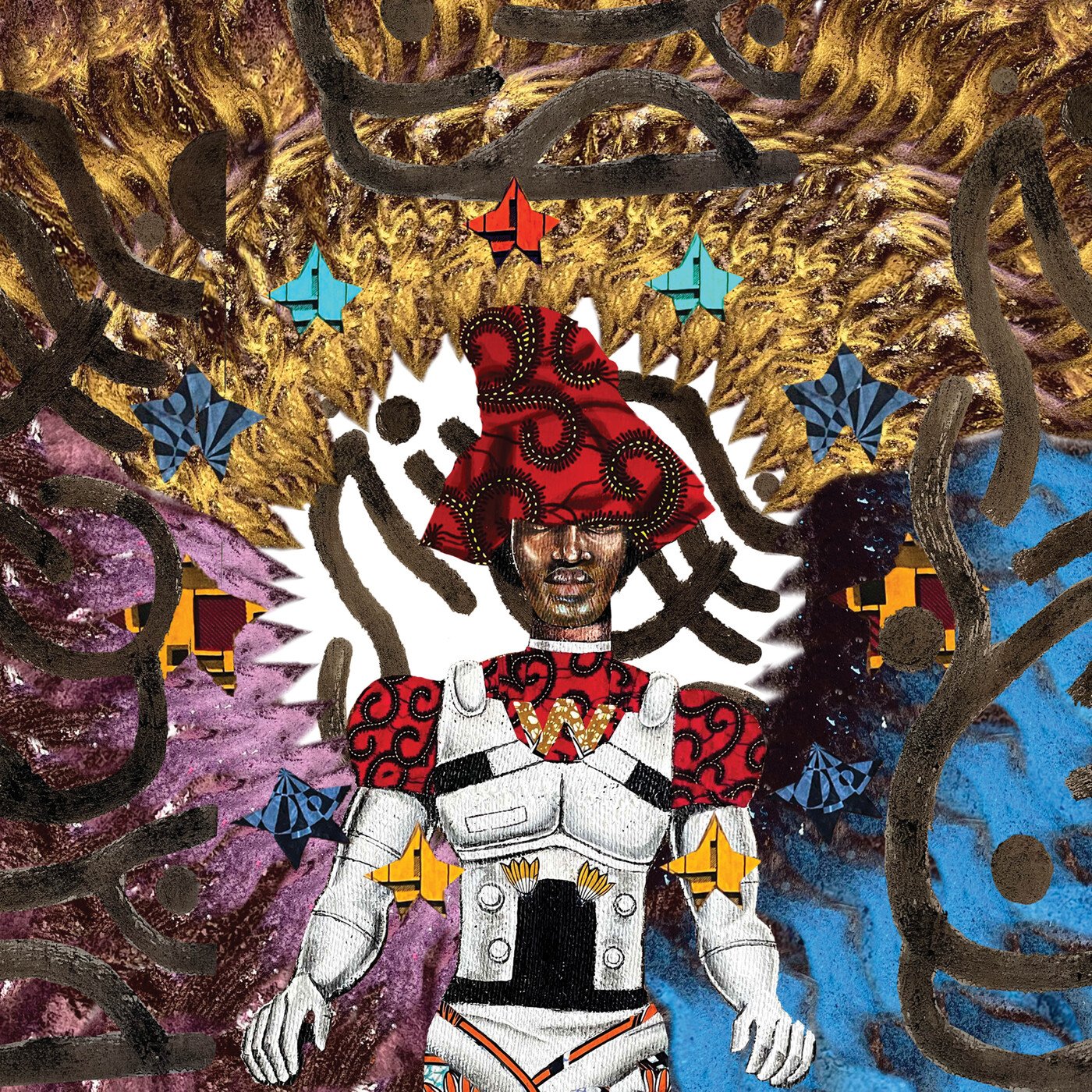
SOGOLO is out NOW.
WITCH will be playing in Brooklyn, NYC at Elsewhere, on September 19th
..and you can get your tickets here.
You can watch their amazing 25 minute, Live on KEXP performance here.
You watch the music video for “Kamusale ” here.
You can watch a 14 minute documentary on their 2023 comeback album Zango here.
You can purchase SOGOLO on bandcamp here
You can also catch WITCH on tour in a city near you here.

CIVIC - INTERVIEW
Beau Croxton speaks with Jim McCullough of CIVIC on their new record Chrome Dipped, touring, opening for Sex Pistols and more
Interview & foreword by Beau Croxton

CIVIC by Marcus Coblyn
Australia's CIVIC has shown no signs of slowing down since their killer debut record Future Forecast released in 2021 on Flightless Records. CIVIC was already in great company on the label, releasing alongside notable Aussie rockers King Gizzard & The Lizard Wizard and Amyl & The Sniffers. The band’s sound on their debut was muscular and gnarly with high-voltage riffs, recalling Australian punk-greats The Saints and New York’s own punk royalty– The Dead Boys. Their sophomore LP Taken By Force doubled down on their signature sound with even more snarl, landing the band more critical acclaim.
On their new third LP Chrome Dipped (just released on May 30th, via ATO), the band successfully and boldly pushed themselves to widen the scope of their sound, without losing any of their grit and glory. The album leans into vulnerability with the cool-factor of a Johnny Thunders or Stiv Bators solo effort (“Gull’s Way”) and runs wild with creativity, getting darkly poetic and artsy like Nick Cave (“Starting All The Dogs Off”). Although, there is no need to fret for those seeking high energy punk-rock– plenty of tracks like “The Hogg” and "Poison" are pumped full of distortion and adrenaline. CIVIC has already had a wild year opening for Sex Pistols with Frank Carter in Australia, and they are currently on the road supporting their new record.
CIVIC has an upcoming show here in NYC at Brooklyn’s TV EYE this Friday, June 13th– and we couldn't be more excited. Beau Croxton caught up with CIVIC lead singer Jim McCullough ahead of the show to talk about everything from Chrome Dipped, to Australian rock music and even weed-eating goats. Check it out below
JIM: Hey! How are ya man? Having a good day?
BEAU: Hey Jim, Yeah, doing good! So great to chat with you brotha. So, I'd love to start at the beginning… I would love to hear how it all began for CIVIC. What were the early days like and what inspired you to all come together as a group?
JIM: Well, the very early days were like… 2017. Me and my mate (the original guitarist), we were in Japan in this bowling alley. We were talking about bands like The Saints and Birdman and were like, “Oh, why isn't anyone doing a band that sounds like that in Melbourne?” and then we're like, “Fuck it, we should just do it ourselves!” That was the moment where we kind of started the band. I remember we were like, “Oh, who should we get on drums? Who should we get on guitar?” Actually, Louis, the guitarist, was actually the original drummer for like two days– and then we realized that he was the best drummer. (laughs) So he got on guitar. But yeah– It's always a bit fun like that in those early days, you know?
BEAU: Yeah, absolutely. I mean, it sounds like you all were dedicated to the cause…any which way that you could figure it out.
JIM: Yeah, for sure, man. Exactly.
BEAU: So once you got going and CIVIC started playing lots of shows to bigger audiences, was there anything specific that served as a pivotal moment where things got to the next level, and inspired you to really keep at it?
JIM: I don't think it was a conscious thing. We had noticed that we were playing shows and they were kind of getting bigger and more people were coming. Then lockdown/COVID happened, and we wrote that record (Future Forecast). When we came out of COVID. We played a really big show to like…a thousand people. After that, we were like “All right, let's try and take this thing even further” you know— instead of just playing little clubs in Melbourne. So then we did more overseas shows and bigger shows in Melbourne and Australia. I think after our first album came out– I feel like that definitely got things a bit bigger for us.
BEAU: Absolutely, It's a great record. So, speaking of which, the Australian music scene has been pretty wild for the past decade. I found out about CIVIC through the whole Flightless Records umbrella of bands– I just saw Amyl and the Sniffers last night in Manhattan. They were absolutely fantastic, they played to a sold-out crowd at a rooftop venue— they are just killing it right now.. There are so many awesome Australian rock-based artists really spreading their wings at the moment.
…So, what do you think it is about the Aussie music scene that's building so many great rock-type bands at the moment?
JIM: I think there's great music all around the world, right? And there's always going to be these cities where some will excel at certain points in time when they need to. Look at Ireland, right at the moment, you've got like Fontaines and Kneecap….. I like that these bands can exist for like 10 years or whatever– and then all of a sudden it's like, “Oh, fuck, there's this sick band in Melbourne!” or wherever. Then it kind of becomes this pinball machine where if there's a scene there, it becomes this kind this crazy mixed bag of “Oh, fuck, there's this band and there's that band”...you know?
I love looking at (for example) the Northern Island punk scene in the 70s, I know there's only, say 30 bands, but I'm always like, “Oh, surely there's one more” you know, “Surely, there's like another deep cut” and then you do find one. And then, it becomes even more exciting. I don't know if that's exactly what's happening with Australian bands at the moment, but I do think that it's hard for us to see it because we're in it. Does that make sense?
BEAU: Gotcha, totally.
JIM: I don't know…I mean, I guess there are people looking at Australian punk at the moment or rock or whatever you want to call it and being like, “Oh yeah! That's cool.” But I don't know how big the bull is because we're situated in it, you know? But I'm down for it!
BEAU: Yeah, from our perspective in the states…We're just like, what the fuck is in the water over there? (Laughs)
JIM: That's funny as well. I mean, the Melbourne scene's crazy. Like it's pumping, you know, it's like, if you wanted to go out every single night and watch like 15 bands, you could!
BEAU: Yeah, I guess it's just like you said, it's kind of pinballing off of the momentum perhaps.
JIM: It just fucking grows, you know?
BEAU: Exactly. Let's talk about your new record Chrome Dipped . Amazing record, by the way. Despite the sound sort of changing, it manages to stay super badass– even in its lightness, which is really kind of a tough balance to manage. Things were changed up in a very bold but successful way. I was wondering, was there anything in particular that inspired you to change it up for this record or
JIM: Going back to what we were talking about before, starting the band in 2017— we had specific influences. When you do your first demo and you do your first album– obviously it's always going to sound like you, but I think your influences kind of stand out a lot. Well, maybe that's not always true, but for us, I felt like they did.
I felt like it was like “Oh yeah, that sounds like Birdman or Saints” or whatever, right? Going into the third album, it's like, “All right, what are we doing here?” We could probably easily just do another record that sounds like the other ones. Not that they all sound the same, but we were like, it's a risky move to just flip things on their heads sometimes.
I know that it's different, but it's not like we started doing reggae or something,
(Everyone laughs)
JIM: I mean, like it's still like…noisy fucking punk music. Even as you said, the softer songs they've got like, passion and shit, and we all know— just because it's punk, it doesn't mean it has to be loud or abrasive–right? It can be tender as well, you know? “Ain't It Fun” by the Electric Eels is one of my favorite songs and that's punk as fuck, but it's so tragic as well. So basically we were just like,”Let's flip this thing on its head. It's going to be it's risky, but we were open to that change”
BEAU: Yeah, absolutely. It sounds like you just really wanted to go for it.
JIM: We wanted to push ourselves, because you get three albums in and….You were talking about Flightless before and with bands like King Gizzard…they're our mates and like, I always laughed with Ambrose ... like…people give them shit for like, you know– “You're doing a metal record!” or doing this and that… I reckon it's mad that they even have the balls to do that.
I think there's a real beauty in that kind of a stark shift of just like pulling the rug out, you know?
BEAU: Yeah, I mean absolutely, King Gizzard is one of my absolute favorites– so I’m right there with you brotha! And yeah.. with Chrome Dipped, you all did that shift so successfully, it's really exciting. So, when you moved into the newer sounds of the record, were there any references in mind going in? Or did you kind of happen upon stuff?
JIM: I think we were all listening to a bunch of different shit. I honestly don't believe that we were like, “Okay, let's make it sound like this or let's use that.”
This sounds really lame… but I'm going to say it— it honestly felt like it just came from us. It did feel true to us. We demoed it, we demoed the whole album and we were like “Okay, this is as far as we can push it now.” Then we're like “Let's take that into the studio with Kieran” and “Let's see what we can squeeze out of it”. That was the interesting part, typically we would have just gone, “Okay, that's the demo, let's record that and then that's the album.” But it's, it's kind of scary how far you can actually push something, you know?

CIVIC by Marcus Coblyn
BEAU: Absolutely! I'd love to talk about Kieran J. Callinan producing the record. That's a really sick collab. How was his involvement in the process and how did he kind of contribute to the new sounds?
JIM: Well, it's funny because I thought he's pretty “big energy”....a powerful person. We kept talking about wanting to make the sound bigger and make everything bigger, right? But he actually ended up taking a lot of things out, which I thought was really interesting. He fully stripped back the drum kit. The first day, he took all the cymbals off, making everything way more minimalistic. At first I was like, “I don't know if this is going to be good or bad” , but it actually ended up being my favorite part about the record…this kind of weird drum sound on it. Previously, all our other drummers did these crazy fills. Not that the drums are simple on this record, but I think they're way different to the other records. Kieran brought so much. He kept us on our toes, but also kept us on the edge as well, and I think that's what a producer should do.
BEAU: Absolutely man. Well, one of my favorite tracks on Chrome Dipped is “Starting All the Dogs Off”. I'm getting like some….Nick Cave meets Stooges Fun House, like…. Iggy Pop exorcisms. The lyrics are just so vivid. What can you tell me about that track coming together?
JIM: Sonically, we were just jamming. We wanted to have a jam on the album. We wanted it to be just a long song, because normally we have a pretty basic structure of…..verse/ chorus/ verse/ chorus/ bridge/ solo…. fucking, you know, same shit every time– And you just get so bored of it.
We were like, “Let's just have a jam.” It just kind of started ascending, I was kind of just rambling bullshit or whatever, then I went back and wrote this kind of story. I was in the library and I was reading all this like old Aussie poetry and stuff, and it was all about like…Stockmen and shit. I just started bringing up all this imagery. So I just wrote my version of this lone guy out on the road on the motorbike. But then it becomes this story about, you know, challenges… and it gets pretty wild. But that's the thing in the song….It just it builds, you know, and then it kind of releases.
But yeah– that was a really fun one, too. It's funny because it just flowed really easily– I thought it to be hard to write, but it just kind of worked. It was like I was just writing a story. It's one of my favorite songs on the album for sure as well for me, too, to be honest.
BEAU: Oh, yeah. It's really cool. I mean, everybody's kind of playing off of each other really well. And the character development and story just really peaks really well.
JIM: Well, it gets a bit creepy. Like I remember when Kieran was recording it and in that last verse where it just kind of feels a bit like, yeah an “exorcism”, like chaotic…. It was like “what the fuck's going on?” And he was putting in those big war drums and shit. I remember the first time hearing it back and my hair on the back of my neck stood up because I was like, well, this like what this what have we made here? This is like some fucked up ritual or something. You know what I mean?
BEAU: Absolutely man, it's such a cool song. What are some of your favorite songs from Future Forecast or Taken By Force like to play live? Is there anything from Chrome Dipped that you're particularly looking forward to playing live on your new tour?
JIM: “End of the Line” is always fun to play, which we still play. “Fly Song” is always fun from Taken By Force. That always gets the crowd going. I do like playing slower songs, which we only play a few now…or sometimes we don't even play them – if we're doing a smaller club or something, we just want to be real chaotic. We do our hardcore set where we just play like all the fast songs. But this time around, we're going to actually try and make more of a diverse show– because most sets are going to be like an hour– you want to show a bit of diversity.
I always actually wanted to play that “Neighborhood Sadist” song off Taken By Force. We never played that live. But our old guitarist wrote that song. And I always loved that song. But I'm really looking forward to playing “Swing Of The Noose”— the last song on the record. I feel like once people hear it, I think people will kind of go off to that song. I reckon its got this “not give a fuck about anything” energy about it and just like you can just mosh to it, you know?
BEAU: Oh yeah, I can see it now!

CIVIC by Marcus Coblyn
BEAU: So CIVIC opened for Sex Pistols with Frank Carter in Australia in April…So.. I imagine that was pretty surreal?
JIM: Yeah, we got the call up to do it. And we were like, “Fuck, we're not NOT going to do this,” you know. And people were like…“It’s not even the real Sex Pistols” and blah, blah, blah…And I was like, “Man……Glenn Matlock wrote all those fucking songs anyway and he's there….” you know what I mean? And like, John Lydon's gone all fucking spicy….right wing shit…
And I was just like, who gives a fuck anyway? Like, I'm sure you've been in bands too, where, you know….. just because the members change, it doesn't mean that the spirit is not there. The voice of that band was still there in my opinion. Like… it was fucking SICK, man. My mates were like, “Oh, this is going to be interesting.” And the first night we were like “Holy shit, this is really fucking good”. Yeah it was just cool, we didn't really get to hang out with them much or anything. But Frank was really nice– it was just a cool experience.
BEAU: Sounds incredible. Besides that show, are there any other specific CIVIC shows that kind of stand out as your favorites ?
JIM: In terms of America, when we played in Chicago last time– The Chats played the same night as us. And we were hanging out with them beforehand having beers. And they were playing this fucking massive stadium– and we were playing this little bar.
And Eamon was like, oh, “I'll tell everyone on the mic to come to your show after.” Because their show finished and ours was after theirs. And so he did- He was like, “Our mates are playing down the road… go down there!” So we held our show back for like half an hour. And it was fucking PACKED in there like everyone came down. That was my favorite show of the last America tour. And that was our very first tour— I was like, “This is fucking mad!!!” you know?
BEAU: Yeah okay…this is just a great story in general. That's that web of awesome Australian bands I was talking about! You know, you got each other's backs overseas, too! It's great.
(Everyone laughs)
BEAU: I have one more question. How excited are we for the tour and the New York City show at TV EYE? Any other shows that you're looking forward to coming up?
JIM: We're just pumped as, man. Like, it's funny, like we all finished work yesterday. Like for the we're like “All right, that's fucking it!”. New York will be sick. It was actually mad last time, too. TV EYE is a sick venue. I'm just keen to wherever we are. I mean, it's good that we don't have to go through the center this time because that was pretty brutal driving through the center.
We ended up in this random ass fucking town. We stayed in this guy's house and he had all these goats that he would feed. He had all these weed plants that he didn't want. And he had these goats and he fed them all of his weed…He was feeding the goats weed plants! Like that's what they ….leafed on? It was fucking crazy– anyway. That's a story for another time. But yeah, it was a crazy fucking crazy trip. Looking forward to coming back and playing everywhere to be honest– nowhere specific. I mean, New York's going to be mad!
BEAU: Sick, brotha! Well, thanks so much. It's been great talking, Jim. Love the record and we will be catching CIVIC at TV EYE- I'll be sure to say Hi! And yeah….maybe you can tell me more about that story about those goats eating weed when I see you next.
JIM: I will, I will! It's a good story. I'Il tell you.
BEAU: Haha. Thank you so much, man. See you then!
JIM: Seeya brotha!
Chrome Dipped is out NOW.
CIVICs NYC Show is this Friday, June 13th at TV EYE-
..and you can get your tickets here.
You can watch the music video for “ The Fool” here.
You watch the music video for “Chrome Dipped ” here.
You can watch the music video for “The Hogg” here.
You can purchase Chrome Dipped on bandcamp here
You can also catch CIVIC on tour in a city near you here.

DUSTIN DOLLIN & JULIA PIERCE (FINE MESS) - INTERVIEW
Beau Croxton interviews Aussie skateboarding legend Dustin Dollin and notable NYC musician Julia Pierce on their new project; Fine Mess
Interview & foreword by Beau Croxton

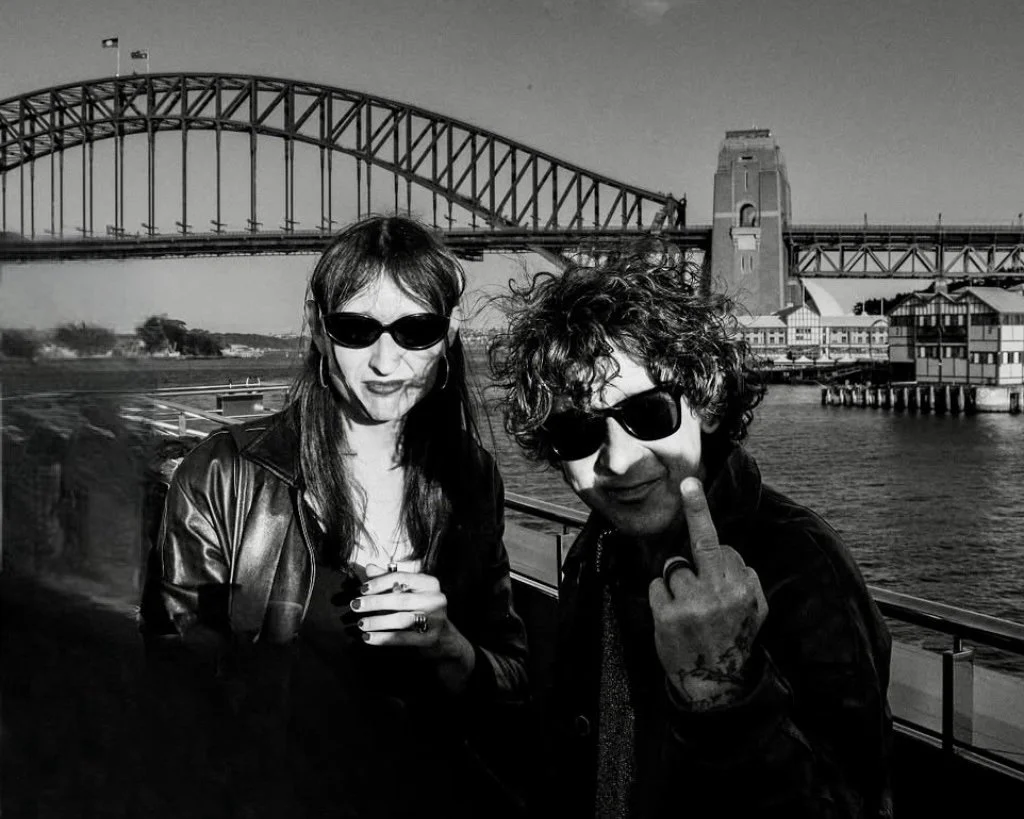
Julia Pierce & Dustin Dollin by Chevy Taheyna
Dustin Dollin is an Australian professional skateboarding legend who has been in and out of music his whole life. He is also a figure who I’ve personally been well aware of since the early 2000’s when I was about 11 years old. As a kid, I used to watch Dustin’s skate videos with my friends on repeat, such as Transworld’s “A Sight Unseen” and Baker Skateboards’ “Baker2G”. Dustin was a part of the notorious “Pissdrunx” crew, which consisted of many of my favorite skaters. A large part of my journey with music was due to the killer music selection in these skate videos, so big shout out to the Pissdrunx- because Occult Magazine may not have existed without them!

Julia Pierce is a notable musician in the NYC scene and a dear friend of mine. We worked together for some years, spoke endlessly about music and supported each other's music endeavors. Her band Titsdickass (aka TDA) has been on a real tear for the past two years. To sum it up briefly- TDA were declared “New York City’s Hardest Working Band of 2023” by Oh My Rockness, for their staggering amount of live shows, and they celebrated the announcement with a photo of the band that was taken by Hedi Slimane. Respect!
Recently, Dustin and Julia have become quite inseparable since meeting in October; they have known each other for 8 months and have been together for 6 months of it. They formed their group called Fine Mess and they toured the East Coast of Australia, from Sydney to Brisbane and back. They launched photo exhibitions of skate/punk culture and played sold-out shows to follow. They opened for the Aussie post-punk band, Dust, in Newcastle, who went on to support Interpol on tour. It’s been a wild ride with a spontaneous spirit, and Dustin and Julia plan to extend this nonstop touring party throughout the summer in New York with countless shows, DJ sets and plans to record an album.
I caught up with Dustin and Julia ahead of their first NYC show at Club 101 with Christeene, which is this coming Friday, May 30th.
BEAU: Hi Julia! Been a minute ol’ friend, glad to talk to you. Dustin- It's so nice to meet you, man.
DUSTIN: Nice to meet you!
BEAU: I'm sure Julia told you, but I grew up skating, and watching all the Baker/Deathwish videos quite a lot. That whole crowd was my very favorite corner of skateboarding culture. There's a lot of great skating, culture, humor, and music in those videos that I really appreciated growing up. It was very inspirational for me, for sure.
DUSTIN: Oh, wow...we appreciate you! Every one of ya. Everyone that's keeping us alive right now is great!
BEAU: Dustin, I'd love to hear about what you've been up to the past couple years. It looks like you've been up to like a lot of art, music and skating related things- kind of a mix of the three?
DUSTIN: Well, I was living in Paris for seven years. And I was on tour a lot with the Vans Europe crew, which are my greatest friends. But when I was off tour, I wasn't really feeling too productive. Then one day, I was at my friend's house and my friends' band were all kind of jamming out, and I started to do my poetry. And then we all started this group……with 46 members in this band in Paris, called Olympia Jamming Orchestra. So they gave me the opportunity to start singing again.
I used to sing with LSDemon and like with Figgy, Nuge and Tommy and Richie…. But I hadn't really played music since Skate Rock, like after Asia. The band kind of split up because it was too fucking hectic. But I've been in music my whole life, like as much as I've been skateboarding. And then while I was here, I was staying with my producer, Matthew Hutchinson's place. And we took the train and I met Julia on the metro going to see Lydia Lunch. And then we have kinda been inseparable about writing music these days.
If I want to skate again, I'll have to really get back in shape. I've been working on a documentary of my life, like for two years now of like… all the fucking crazy shit. So we've got one more year to film that. The art shows we do are like seven different photographers and we just go hang them on the wall ourselves with nothing for sale. It's just like- showing the Skate punk-rock life.
JULIA: We would go to a new town and do the photo show and then we'd attract all the heads- and then the next night we would play a show. So it was a good way to like to meet people & meet musicians and then play with them the next night. It was a cool way to approach a tour.

Dustin Dollin by Adam Scarf
BEAU: My next question is about the band - Fine Mess. I haven't been lucky to see you all live yet, but I will be changing that this week.. What’s the collaboration about and the whole vibe?
JULIA: Sometimes I like to say it's punks making rock and roll. There's some ballads and a variety of stuff. It's very romantic and also poetry-based, Dustin is an intense writer.
DUSTIN: I would say like.. Leonard Cohen and Frank Zappa…(laughs) you know? But the thing is… Julia was meant to come out and just play her solo stuff at shows with me, but then I said “fuck this, let's start a band!” So we just grabbed band members from everywhere and just ….hit the road, you know?
JULIA: We've talked about bands like Violent Femmes and that kind of stuff. Beau, do you know, David Peel at all?
BEAU: Yeah!
JULIA: Yeah….. it's kind of like “street rock” kind of stuff.
DUSTIN: I don't know. All the songs are so different. People are going to be surprised. I think they're just going to think it's going to be like TDA, her other band. Yeah. You know, like where it's just like rock-
JULIA: It's not heavy the whole time. It's just nice peaks and valleys. But we're not afraid of doing pop songs or anthems…..but we do them in our own way, you know?
BEAU: Yeah, I'm sure there's kind of a cohesive thread through it all.
JULIA: Dustin and I both sing together and kinda sound the same. While we were in Australia, we stopped in Newcastle and we recorded this song called “Fun”- it was really a great experience. We had all these kids in a room and we're just singing together..
DUSTIN: We would grab bands, and then stay at the hotel room above the pubs in Australia. It's like a “play to stay” kind of thing- it's very old school. The way that we've done Fine Mess, it's like gathering new band members wherever the fuck we go. We're the legs of the band and then everybody else jumps in because they believe in it. It's a rotating cast.
BEAU: It sounds sick. It sounds like there's a really good spirit behind the whole thing.
DUSTIN: Yeah, it's romance and music!
BEAU: So how does the song writing work in the band? Like, Dustin, do you bring in your stuff separately, and Julia brings in hers, or do you collaborate on it ?
JULIA: It's kind of everything. Dustin will write lyrics or have poetry, and then I can make some edits. Then I work with the music behind it. Everything we do… at the core, is very simple. And that's kind of why we're able to have people cycle in the band because they're easy songs to learn in some ways.
DUSTIN: You know how we write good songs is…. no ego of who's in charge of it. I'Il write lyrics and I'm like… “you can change anything you want.” I don't give a fuck. I don't know the progression of how the music works properly, so I give her the lyrics and she says, “these are good.” And then I'll go to the park, have a beer and come back with “I just want to change this one part.” And then she will put the chorus in a better place. We just work together perfectly well. Usually, we pick a subject.
JULIA: True. Yeah, sometimes we start with a subject and work backwards. So with our song called “Fun”, Dustin was like “ I just want to write something that's like a message for young kids to be optimistic and just like, have fun and just like bringing goodness into the world.”
DUSTIN: ….And then we go “Fuck everything!” (laughs)
JULIA: (laughs) And then we have another song called like, “I Don't Give a Fuck.” A lot of the writing we've done has been while we’re on tour.. So it's a direct representation of what we're doing.

Julia Pierce and Dustin Dollin by @filth.film
DUSTIN: But also we've had a lot of film on the road too. There's video clips coming out like, this is Zombie Island for like an Australian surfer- like a skit, you know.
JULIA: Yeah Ozzy Wright, he's a surfer.
DUSTIN: He's in Goons of Doom.
DUSTIN: What was the first name we had for the band? We were joking around like “Uncle Dusty and the Pizza Nipples.”! (everyone laughs) Then I was like nah… I don't want to call it that anymore, it seems like a joke.
JULIA: But yeah- We’re excited to bring Fine Mess to New York. Yeah!
DUSTIN: Did you see that (New York) schedule? It's fucked.
BEAU: Yeah, that looks.. that looks insanely busy!
DUSTIN: Yeah, but as exhausted as I am, this is the only thing that makes sense for me. As a skateboarder who’s been on tour for 28 years, it’s just best to just keep going with the band ..like to keep motivated, you know. Creativity is my only addiction really besides… beer…and.. cigarettes.
(everyone laughs)
BEAU: Julia, I have some questions for you. You've had a lot of solo music come out, and it's super cool. I really love “It's Not Nothing” , that is such a good one !
JULIA: Aw, thank you!
DUSTIN: Did you like the video clip? I filmed and edited that.
BEAU: Yeah man! I noticed that!
JULIA: So when I got to Sydney, that was the first thing. I wrote that song about Dustin while we were apart for a month before I went to Australia. We filmed in bars, and I just got to Sydney, so I was so hyped - but at the same time, I was like, “I don't know who any of these people are.” But then like a week later, I knew everyone.
DUSTIN: You definitely don't look embarrassed on that fucking video. You look cocky as fuck. Yeah, I love it. Like…confidence!
JULIA: It's funny because I'm American, but going to Australia, we wanted to make something that was very Aussie-coded. So like…the kiddy pool…and like all the local pubs and like, you know, all the spots in Sydney.
DUSTIN: It's a very Australian looking video clip. It's like…an old school video by The Saints or something like that.
JULIA: But regarding my solo stuff, I have a couple of solo shows in New York this summer with a backing band. It’ll be fun to be able to play some of the music with a full band behind it. But some of those songs ended up becoming a part of the Fine Mess set - So it's kind of like... It's a huge collaboration.
DUSTIN: It's kind of just a gigantic cultural collaboration basically. We got a theremin player today. You know…we’ve had Roy Molloy from Alex Cameron playing saxophone…
BEAU: Incredible! Julia, question- how do you know what's good to separate for solo material versus TDA material or Fine Mess? It does sound like A Fine Mess is.. a fine mess of everyone’s songs.
JULIA: Yeah, that brings life into Fine Mess..
DUSTIN: Well, we'll just talk to each other like, to Julia, I'm always like, “you keep that”. Or she's like, “that's for your solo shit.”
JULIA: They all kind of influence each other. With TDA, I'm in a position where I'm like, okay, TDA can stay more aggressive or noisy. And then “Julia Pierce” gets to be a little bit more softer and twee and Fine Mess is a little bit fun and chaotic, you know?We like using the word rock and roll with Fine Mess because in TDA- we're punk rock or we're like, like post-punk or whatever. But with Fine Mess, we're not trying to overcomplicate it. There's a bit of Americana to it too.
DUSTIN: It's a lot different from a lot of other music that's going on right now.
JULIA: Well, a lot of music can be so overproduced or can sometimes lack the human quality. So with Fine Mess, we get to be kind of messy, we get to be ourselves.

Julia Pierce by Nico Malvaldi
BEAU: So Julia- What's up with TDA? That band has been on such a tear for like, yeah, oh my gosh. The past two years. I think I saw some footage of you in the studio with Gordon Raphael…maybe?
JULIA: I guess TDA is keeping a low profile these days. The last show we played was in January at TV EYE. Now we're playing Elsewhere on the 28th. It's a little harder to catch TDA these days, but we do have some cool stuff coming out… I still want to keep the momentum going! Everyone in the band is on a crazy schedule, we love each other and with everyone’s side projects we build on the collective creativity. And yeah, we will have a second TDA album eventually rolling out..
BEAU: Excited to hear it !
JULIA: Gordon (Raphael) was just so great to be in the studio with. He had everything set up and he works really fast. The band came in and recorded eight songs in a day. He just hit all the levels and had the mix kind of just set up before we even recorded. So when we recorded, it was already basically mixed. He's a pretty well oiled machine. Mike from Insecurity Hits helped make that happen. TDA was a three piece band for a while, but now TDA is now a four piece band. We have Carmen Esperanza on bass, she’s great- and my friend Caitlin Starr. So more girls in the mix, which I'm happy about. When the record rolls out, you know you can expect tour dates and things like that.
TDA is trying to make the switch from being a local band who plays a lot locally- to being a band that plays a few shows locally and focuses on touring more…when that record comes out. You know how it goes, Beau.
BEAU: Yeah, of course, I do. You pound the pavement and just play a million shows…And then when you finally start getting the attention you strive for, then you can kind of hang back and be a little bit more strategic…then you can spread your wings on tour a bit.
JULIA: There's nothing more fun than playing a ton- I mean, at least for my experience at TDA. That’s what Fine Mess is going to do in New York this summer. Just meet as many people as we can.
DUSTIN: I don't want to meet NO ONE! I want to play to NOBODY….(Laughs) But Yeah, we're just bouncing around.
BEAU: The TDA Elsewhere show is coming up this Wednesday, May 28th- that’s exciting!
JULIA: It’ll most likely be the last chance to see TDA this summer. Yeah, it’ll be a great show! We're playing with Shred Flintstone-
BEAU: They’re sick!
JULIA: also (the band) Adult Human Females.. I mean, TDA headlining Elsewhere- Zone One is probably one of the best shows we've played. We took pretty much the whole time in the band to kind of earn a headlining spot at Zone One (at Elsewhere).
So I think it'll be a fun show. We're going to be playing songs from both albums too. You'll hear the old material and some of the Gordon material, which is a little bit different. There's guitar solo moments, which is something TDA never really had before. Nothing crazy but it's really fun to have that.
BEAU: Yeah, expand a little bit yeah ? That's great. So yeah, I got two more questions here-
DUSTIN: Yeah baby! COME ON BEAU-BEAU!! WHATSUP?!?
BEAU: Hell yeah brotha! (laughs) So, what's in the cards in the immediate future for Fine Mess? You just showed me the massive schedule-. Tell me a little bit about the prospective recording studio stuff ahead.
JULIA: We're supposed to go upstate to Hudson and potentially record at Sound at Manor studio with Oakley (of Black Lips). Our bass player in Fine Mess- Jesse- He's in a band called Figure of Fun and he will also be a main character for this summer. He's a great producer and musician, he produced Genre is Death’s debut. Our goal this summer is to kind of finish our record in New York and hopefully do that with Oakley upstate if schedules can work out.
BEAU: Looking forward!
JULIA: The goal is to leave New York with a record. And then I think we're going to go to Mexico after that and just keep on going, traveling around and setting up shows.
DUSTIN: Oh, we're going to play Mexico City!
JULIA: Mexico City is going to be like…August…September-
DUSTIN: Then maybe Brazil and then we have a Vegas show ... .and then maybe go to Russia.? Just insane.
BEAU: Fine Mess world tour? Fuck yeah.
JULIA: Yeah, we're going to keep traveling and playing wherever we go.

Dustin Dollin and Julia Pierce in Newcastle, Australia
DUSTIN: I just think it's funny because most bands take a year to like, like plan like their world tour. And ours is like…calling someone like, “oh, in two weeks, we'll come in there…We're playing.”
BEAU: Spontaneous. That's kind of the vibe of the band, you know, so adding to the experience and the music… that's so fun and sick though!
JULIA: Yeah!
BEAU: So on Friday you have a big show playing with Christeene at Club 101. How excited are we? I haven't been to club 101. What's the vibe?
JULIA: It's where Pyramid Club used to be- It's cool that we're doing a late show like Christine's playing at midnight. We're playing at 11:30. So it's like it's a great debut for us. It's kind of cool playing a late show in New York. Like they used to like the old school way-..
DUSTIN: We love it when everyone's hammered and they like to get into it. Yeah! (laughs)
JULIA: I think Dustin and Christeene are going to be a great fit. I think they're big personalities. And I think it'll be fun to have them share a bill.
DUSTIN: I think I'll have to try and keep up with Christine. You know I'm a little bit mellow, but you know…I might fuck it up a little bit! (laughs)
JULIA: It'll be fun. (Our friend) Lyla is playing drums with us for the show! So come through.
BEAU: Oh sick! Oh, OK I'm going to come by… gotta say hey to all you lovely motherfuckas!
DUSTIN: Yeah! Come get a free drink because we fucking definitely better be…
(Everyone laughs)
BEAU: Well, I'Il see you then! Thanks y’all!
JULIA/DUSTIN: Bye Beau! Thanks so much. See you soon!
Fine Mess plays Club 101 this Friday with Christeene and you can get your tickets here.
The Fine Mess never ending NYC party, aka the “NYC RECONNAISSANCE” starts there and continues thru the summer …….
May 30 - Night Club 101 with Christeene (Tickets)
June 3rd - Poetry Reading @KGB
June 4th - Night of Joy (DJ Residency)
June 10th - Night Club 101
June 11th - Night of Joy (DJ Residency)
June 13th - Flying Fox Tavern (DJ set)
June 14th - Main Drag
June 18th - Night of Joy (DJ Residency)
June 19th - Powder Room @KGB
June 25th - Night of Joy (DJ Residency)
July 3rd - Baker Falls
July 12 - Alphaville
More to come! follow along at @finemessofficial / @therealdustindollin / @devilstgirl
SUPPORT OCCULT MAGAZINE
Hello reader and thanks for your support!
Occult Magazine is currently an independent & ad-free music publication. We rely on the passion and volunteered hard work of our generous contributors in order to deliver our best to you on your favorite music.
If you enjoy what we are doing—
Please consider donating anything you can HERE or HERE if possible!
Thanks!

SUNFLOWER BEAN - IN CONVERSATION
For our second cover story, Beau Croxton speaks with Nick and Julia of Sunflower Bean on their new record Mortal Primetime, the NYC DIY scene and more.
Interview & foreword by Beau Croxton
Sunflower Bean by Lulu Syracuse
Here at Occult, we celebrate independent artists and the spirit of DIY. For our cover story and second installment of our interview series, Occult: In Conversation, we have a real NYC DIY success-story- Sunflower Bean, who still channel their indie roots to this day.
Sunflower Bean came up in NYC’s DIY scene back in the early 2010’s to much acclaim and they went on to grace the stages of festivals like Glastonbury and Lollapalooza. They released their fantastic debut LP before the age of 21; success ramped up very quickly for the band due to their highly dedicated DIY ethos. The band has toured with the artists such as Beck, Interpol, and The Pixies and sold-out international headline shows.
Despite the band members slightly drifting apart after releasing 2022’s Headful of Sugar, the band came back together to make a breakthrough on their first self-produced album, Mortal Primetime. The new album manages to touch on all the most successful sounds of the band's fruitful discography since their early days; “Champagne Taste” continues the ripping revival of their DIY roots from last year’s fantastic “Shake” EP. The single “Nothing Romantic” could be beamed back to 1970’s radio and it would dominate with its brilliantly catchy pop-rock songwriting. “Waiting For The Rain”, led by guitarist Nick Kivlen, is a great slice of british-invasion style psychedelia that is highlighted by twinkling piano and gorgeous harmonies from bassist/singer Julia Cumming. “There’s a Part I Can’t Get Back” is some of their most vulnerable and bold work yet, and its choruses carry a Fleetwood Mac aura that recalls their sophomore album Twentytwo in Blue.
The band will be celebrating the release of Mortal Primetime at their NYC release show this Thursday, May 22nd here in Brooklyn at Warsaw . We caught up with Julia and Nick ahead of the big show.
BEAU: Congrats on your fantastic new record Mortal Primetime, how does it feel to have this album out in the world?
NICK: Great! It’s the fastest turnaround time from recording to release we've ever had so it still feels really fresh.
JULIA: It feels like the nuances we really wanted to be heard on the record are coming through, and that’s a really great thing.
BEAU: I would love to hear about your experience coming up in the NYC DIY scene, as Sunflower Bean is such a great success story to represent that time. How does it feel looking back on that time from your current perspective?
NICK: The DIY scene when we were teenagers was extremely diverse and independent. On Kent Ave, there were a handful of amazing spaces that would host a huge range of underground and independent artists. As soon as the noise/nowave show would end, the experimental electronic rave would start. It was a formative time of exposure for us.
BEAU: What are some of your fondest memories or takeaways from that time?
NICK: I'm very grateful for all the older musicians who nurtured us and treated us as equals within the scene. We were so happy to be able to participate and treated with respect even though we were 16/17 years old. A lot of the local bands were very encouraging to us and we idolize them. I couldn’t believe that the cool older kids let us hang out all night in their afterhours and house parties.
JULIA: It was the beginning of instagram, where it all felt less serious and more fun. Honestly, there were just more venues and more space to make noise. That is really the killer of DIY…Neighbors who can’t handle sound.

Sunflower Bean by Lulu Syracuse
BEAU: Speaking of which, I would love to hear about the band coming together to channel its DIY roots on 2024’s Shake EP. How did you decide on the more heavy and fuzzy sound? Did the Shake EP influence how you moved forward with your new record Mortal Primetime?
NICK: “The Champagne Taste” was a moniker we used when we wanted to play smaller shows and venues within the DIY community. Those shows were always insanely sweaty and fun, we wanted to take on that alter ego for an entire project. That's where the immediacy and energy of SHAKE was born from. When you're playing rock shows like that you just want to keep the party going.
BEAU: Mortal Primetime has such a great flow- I really love how it starts rocking where the Shake EP left off and kind of morphs into its own beautiful thing. How did the songwriting and the flow of the record come together on this one?
NICK: We wanted to embrace the chemistry we have together as live musicians. We realized that's what really made us special, the fact that we've been playing together as a three piece for over a decade. The idea was to capture as much of the live magic as possible with full performances with no copy-pasting-editing. We tried to make the record in a way that was closer to 1969 than 2025.
JULIA: The beginning of the record starts out in conversation with SHAKE, and then blossoms forward into more sweetness. The songs that made it on were the ones that we really knew HAD to be on there, and we weren’t willing to give them up.
BEAU: What are some of your personal favorite moments or songs on Mortal Primetime?
NICK: A lot of my favorite songs from the album recording sessions didn't make it onto the album, right now they are only available in the special deluxe version of the record. All the songs that were a bit too crazy or did not fit in were all regulated to the bonus disc. I'm really excited for people to hear them when they hit streaming later.

Mortal Primetime album artwork with photography by Lulu Syracuse. Out Now
BEAU: There are so many cool and varied sonic details on Mortal Primetime, from Julia’s great vocal layers to Nick’s elaborate guitar solos. I would love to hear about some of the studio work and gear used to achieve the sounds on the album. What in particular stands out to you?
NICK: We used all the same gear on every song, we recorded 15 songs in 15 days. A Lot of pre-production and planning went into that. Once we were in the studio it was just about executing all the ideas. We had a really clear vision going in and it made the process smooth and easy. Our music was never about subtly and we wanted to have big performances with little focus on manipulation or studio trickery.
JULIA: We made sure we knew what we wanted out of the performances before going into the studio so that we could spend our time making sure the execution was what the song needed. One of my favorite aspects is the use of cello, which I think really accentuates the melancholy of the record.
BEAU: What were some of your influences on Mortal Primetime and how did they differ from previous releases?
NICK: The major influence was capturing a live vibe and sound that would stand out from the way most music is recorded right now. On Headful of Sugar, we experimented with a lot of modern production techniques- but for this record we wanted to get back to being a live band in a room together, it seemed like the more radical and interesting thing to do. We wanted to create something outside of the hegemony of perfectly tuned and edited playlist music.
BEAU: Who are some artists out there who you are admiring these days?
JULIA: I really admire my friends in the band Hello Mary, because they know exactly who they are and they aren’t afraid to protect that.
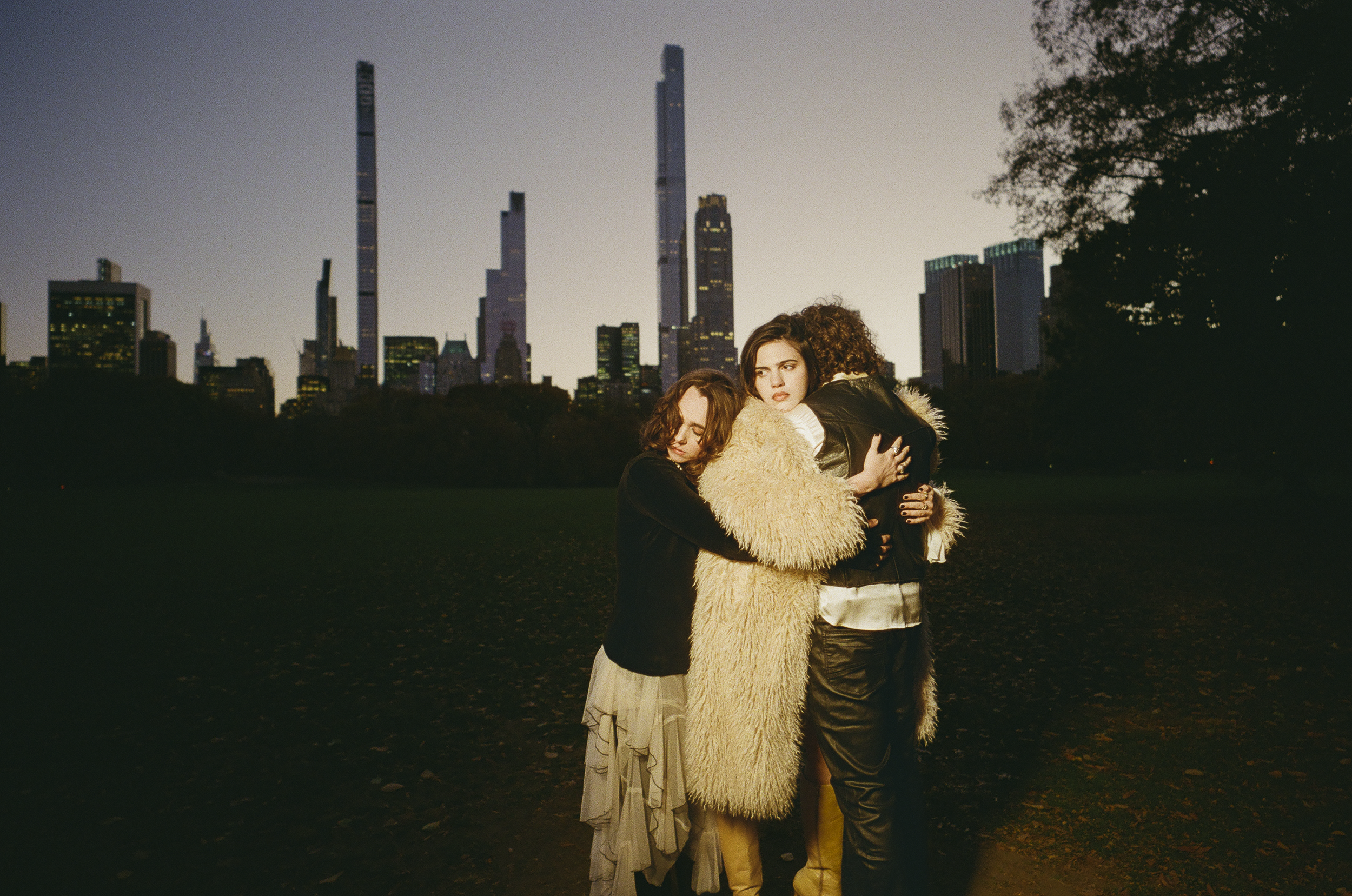
Sunflower Bean by Lulu Syracuse
BEAU: What are some of the most memorable Sunflower Bean shows over the years?
NICK: My favorite recent show was an acoustic benefit show that Julia and I performed at in Los Angeles at Makeout Music, a DIY space run by amazing people. It felt really amazing to be a part of the music community in LA and raise money for people affected by the fires. Also performing acoustically is out of our comfort zone and gave me a good dose of adrenaline and nerves that i don't usually get. We also debuted a few of the new songs that ended up being on Mortal Primetime, re-arranged in a more folksy way that I really enjoyed.
BEAU: What’s next for Sunflower Bean?
NICK: More touring, festival performances, and hopefully more records for years to come!
BEAU: How excited are we for the NYC album release show at Warsaw in Brooklyn ?
NICK: Really excited, it's going to be a special night with a few guest appearances.
JULIA: We always put something special into our New York shows, and this one will be no different. We also love playing New York so much as it’s our hometown, and we don’t get to play it often. It’s going to be a night to remember.

Mortal Primetime is out NOW.
Sunflower Bean’s NYC Release Show is Thursday May 22nd
..and you can get your tickets here.
You can watch the music video for “Nothing Romantic” here.
You watch the music video for “Champagne Taste” here.
You can watch the music video for “There’s A Part I Can’t Get Back” here.
You can purchase Mortal Primetime on bandcamp here.
You can also catch Sunflower Bean on tour in a city near you here.

L.A. WITCH - INTERVIEW
Beau Croxton speaks with Sade Sanchez and Irita Pai of L.A. WITCH on their new record DOGGOD, touring and their upcoming show at NYC’s TV EYE.
Interview & foreword by Beau Croxton
L.A. WITCH by Marco Hernandez
L.A. WITCH first caught my attention with their exciting self-titled debut album back in 2017. As someone with a real punk & garage-rocker heart, I consider their sophomore album Play With Fire to be an instant classic. The band always thrived in the coolest corners of garage rock, psych-rock, proto-punk and so much more. With their new mighty record DOGGOD, they also add post-punk and goth influence to their list. It’s one of my favorite records of the year so far- be sure to check out our review. L.A. WITCH is now back on the road enchanting audiences with their new material. I caught up with Sade and Irita ahead of their two shows here in Brooklyn at TV EYE, which we are very excited to cover.
BEAU: So DOGGOD is now out in the world! What a great record. How are we feeling?
IRITA: Happy to finally release this record, it’s been 5 years since ‘Play With Fire’ came out during Covid. We’ve traveled and grown a lot personally and musically since then, which hopefully comes through in the new record.
SADE: It's definitely a good feeling. It’s nice to have new music to share and play. It’s more fitting to who we are today. I’m very proud of it.
BEAU: What are some of your personal favorite songs or moments on DOGGOD? Which songs are you particularly excited to perform live?
IRITA: My favorite is probably ‘I Hunt You Prey’ and ‘Lost at Sea.’ My favorite one to play live is ‘The Lines’ and ‘777’ because I see people getting really excited when we start playing them.
SADE: I’m attached to all of them cos they are all written from personal experiences so it’s hard to pick. I really love the space in “I Hunt You Prey.” I’m happy with my guitar part in “The Lines” and “Kiss Me Deep”, “SOS”, and “Icicle. “
BEAU: There are lots of fresh new sounds on this album. How much of the new sound was discovered in-studio and how much was preconceived?
SADE: I definitely had a vision for what I wanted for a while before going into the studio in terms of guitar tone and production. I knew I wanted to use certain effects like chorus that I didn’t use as much in the past. The synth is a sound that we tried out during the studio. It just made sense to use the Solina and the Roland VP330. It fit with the songs and didn’t feel intrusive. A lot of the music I was listening to at the time used them like the Adolescents, Christian Death or Joy Division.
BEAU: Did recording in Europe inspire the sound or themes of the new album?
SADE: I’d say yea. I guess a lot of it is on a subconscious level too. I definitely wrote a lot of the lyrics while living in Paris. The visual aesthetic is obviously very European. We used colors like red, whites and blues making the connection between the U.S. and France. The colors of revolution. There’s a lot of gothic influence in the architecture of Europe.
BEAU: How does it feel going back on tour again?
IRITA: The first week is always a little rough to get back into the swing of things. But then you get into the rhythm of road life and it’s great to be able to connect with friends and fans all across the country.
BEAU: What is your favorite part about touring and playing live shows?
IRITA: Definitely meeting fans, seeing how excited they are for your show. Road life is pretty tough, you’re away from your support system at home and a lot can go wrong. But playing shows live, and feeling that energy exchange with the audience, is a really special experience.
BEAU: How excited are we for two nights at TV EYE in NYC?
IRITA: We love NYC, it’s like a 2nd home. We’re playing with our friend Ammo’s band. She came with us to the first big festival we played, Austin Psych Fest, we drove through a crazy lightning storm in the desert together. It’ll be nice to bring it back full circle 10 years later.
BEAU: How has it been interacting with the L.A. WITCH fanbase over the years?
IRITA: We seriously have the best fans. A few of them have even become lifelong friends, like Brandon Folmar who we thanked on this album.
BEAU: What is everyone in the band listening to these days? Any new discoveries or up-and coming-artists you wanna shout out?
IRITA: I’ve been listening to a lot of dungeon synth. Lamentation is classic, I also really like Old Tower and Nahtrunar.
BEAU: If you could assign a character or film to each of your 3 studio albums - what would each album be?
IRITA: Self-titled would be ‘To Live and Die in LA’, Play With Fire would be ‘Barton Fink’ and DOGGOD would be ‘Martyrs’
BEAU: What do you hope listeners take away from DOGGOD?
IRITA: That they can relate to it in a way, and make them feel emotions whether it be happiness, sadness, anger, joy - it’s all part of our shared human experience and music is the best way to connect, to feel seen and heard.

L.A. WITCH plays at TV EYE in Brooklyn on
May 8th
with & Daiistar & Tea Eater
& May 9th (SOLD OUT)
w/ Daiistar & Silent Mass
You can get tickets to the first night here (8th)
Their new album DOGGOD is out now via Suicide Squeeze Records
You can watch the music video for “The Lines” here.
You can watch the music video for “Icicle” here.
You can buy the record on bandcamp here.
You can also catch L.A. WITCH on tour in a city near you via the tour dates here.

LOU TIDES - in conversation
For our first cover story, Beau speaks with Teeny Lieberson extensively on her new debut album as Lou Tides, “Autostatic!”. They also speak on her work in Sharon Van Etten & The Attachment Theory, and touring with Sleater Kinney.
Interview & foreword by Beau Croxton
Lou Tides by Suz Murray
I’ve been listening to Teeny Lieberson’s music since 2012 when I discovered her band TEEN and their great debut album In Limbo. I was lucky to meet Teeny among peers back then (in the good old days of Shea Stadium, Glasslands and 285 Kent). I have been catching her live shows ever since and I always thought of TEEN as one of the most impressive groups NYC had to offer.
Teeny has always been an artist with a capital A, but with her solo project Lou Tides, she brings her artistry and musical intensity to a new peak. On May 23rd, she will release her stunning debut full length LP Autostatic!. Teeny has also had a remarkable past few years, becoming a member of Sharon Van Etten & The Attachment Theory and performing as a touring member with Sleater Kinney.
To kick off our interview series Occult: In Conversation, I caught up with Teeny to discuss everything Autostatic!, Lou Tides, Sharon Van Etten & The Attachment Theory, Sleater Kinney and much more.
BEAU: It’s so great to chat, it's been so amazing to see your musical evolution for the past 13 plus years. I would love to ask about the beginning of your solo work after TEEN. Once you started doing solo music as Lou Tides, how did your approach change and what different goals did you have?
TEENY: Well, you know TEEN was a band and primarily focused on being a band, there was not as much of a performance aspect to it. When I was a teenager I first started out in theater, so I think I started to feel like I wanted to approach what I did with more of a performative angle…. with movement, and not as focused on a band playing on stage. So I really started Lou Tides as a project where I was gonna practice the material live and see how I could build choreography, build movement and build performance. And then kinda revisit recordings to see how the two informed each other. So it's definitely informed by performance- much more than the band approach was. I just felt like I needed to perform more. I needed to let out a different kind of energy. You can't really do that when you're behind an instrument on stage.
BEAU: Let’s talk about your new album Autostatic! . It’s incredible, I’m a big fan of everything you’ve done but this one is truly up there. It’s super gnarly, it's got great jumpscares and it's really powerful.
TEENY: Thank you! Well, it started during the pandemic. I took a little retreat because I had to quarantine for two weeks while I was visiting my family in Canada. So I was like, “Well, I’ll use that time to write.” So, I basically wrote a record during that time. And then I wanted to flesh it out. So I took it to Bartees Strange as a producer and we co-produced the record. I knew I wanted to take it out of my “solo brain”. I like taking it to a producer who can help me sort of flesh out the sound. And Sarah Galdes, my drummer who I've been performing with for a long time…. who's just an unbelievable performer, an unbelievable improviser and player in general- I knew I wanted her input on the record. So we went down to D.C. and worked with Bartees and kinda knocked it out in about ten days…..And then I was psycho and fixated on it for about… (laughs)... two more years!
BEAU: Yup ! That's how it goes sometimes ! Tell me a little bit more about Bartees Strange producing this record, that's such a cool link up.
TEENY: So I worked with him on a record. My friend Xander has a project called Pegg and I made that record with him. We all went upstate and Bartees was producing our other friend, Blake, who plays in a project called Fusilier ...Shout out to Fusilier! Amazing project. So good. You should listen to it. So we were all upstate and we just got along and I was like- “Oh! this would be a cool person to kind of link up with to make some music with.”
BEAU: Well, you’ve got some great singles out. Let's talk about the “Autostatic!” single a little bit. I really love it. The warm synths and your vocal delivery reminds me of a lot of your earlier stuff, but it still has the new energy of your new record.
TEENY: That one just kind of happened really, really fast in the studio with Sarah and Bartees. I think that was one of the ones that Bartees heard and was like, “that's definitely a track that needs to go on the record.” And it's funny, people have been saying it reminds them of In Limbo- like really early TEEN. Which I kind of didn't put together because I think it has that sort of ……I don't know, it's a little bit post-punk, I guess? But you know that one….. it just came together really fast. And it was just one of those songs that was really easy, you know.
BEAU: Yeah, it sounds very quintessentially your sound. So I can imagine that it just kinda flew out. Sometimes the best ones just come to you quickly.
TEENY: Also, I didn't overthink that one. It's kind of straightforward. It's a little dumb, just like musically, you know, it's just like it's easy. There's not that many changes. There's a driving baseline the whole time. And sometimes it… just calls for it to be that simple.
BEAU: Totally - and I would say it's kind of sitting at a great spot on the record because the first two tracks are intense in a very, very awesome way. That might be one of my favorite parts about the record is the choice of the first and second song.
TEENY: Oh.
BEAU: Yeah- I really like how as soon as your finger comes off pressing play of the opening track….you know ? (gestures hands like an explosion) Right?!
TEENY: Yeah! (Laughs)
BEAU: I mean, after those its a great spot for “Autostatic!” to kind of coast.
TEENY: Right, Right. (Laughs) It wasn't there originally. Originally it was later in the record and then I moved it.
BEAU: Oh, nice.
TEENY: Moved to a good place!
BEAU: About “Map Maker”.... So I saw that you said that this song is about sobriety, which is amazing- I'm actually hitting nine years of sobriety in a week and a half.
TEENY: Wow! Congratulations! Amazing.
BEAU: Thank you! Sobriety in the music scene is really a tricky thing. I love “Map Maker” and the sobriety element adds a whole new layer. What can you tell me about this track?
TEENY: I added that one later actually. I felt like the record needed something else. I had written that in the studio by myself. Also, I think most of the rest of the record was written while I was still drinking. And I felt like I needed to tie it up a little bit. Like, “Oh, well, I don't do that anymore.” You know? “So what is my relationship to all of this other behavior on the rest of the record…. now?”
So I wanted to have a track in there that sort of tied up the rest of the behavior. Also, some of it I didn't relate to anymore, you know, it's like when you get sober and two years later, you're like “Oh my God, I don't recognize that person anymore.” So I felt like I needed to have a little bit of “current me” in the rest of the record because it was taking me a long time to finish it. I knew I needed something to relate to- currently.
BEAU: That makes perfect sense. So there are definitely a lot of different personal themes throughout the record. What could you tell me about the other themes outside of the sobriety theme in “Mapmaker”?
TEENY: It was written during the height of COVID. So there was a lot of ruminating on sort of like falling empire, failing state…… which we're REALLY experiencing now. I mean, it's been happening for a long time, but it's really fully crumbling right now.
BEAU: Yeah..
TEENY: And I also look at the songs as sort of like… ghost stories. Partially because I think I'm exiting my relationship with New York a little bit. I mean, I love the city, but I've gone through so much in this city. These are all little tales of “ghostly New York” to me. They are little hauntings. Being here during COVID was, it was hard for everybody everywhere in the world, but, you know, New York was rough, like sitting in your little apartment.
In order to feel, I have to see things sort of visually. I have to make stories or fantasy out of songs - it's a storytelling aid for me in order to be able to perform them…. Hence the “performance before the music” thing. By visualizing these as ghost stories, I can also let them be things of the past and not current hauntings, you know. Although, now the themes are like…..they're sort of warnings. That's what I think ghost stories are as they function.
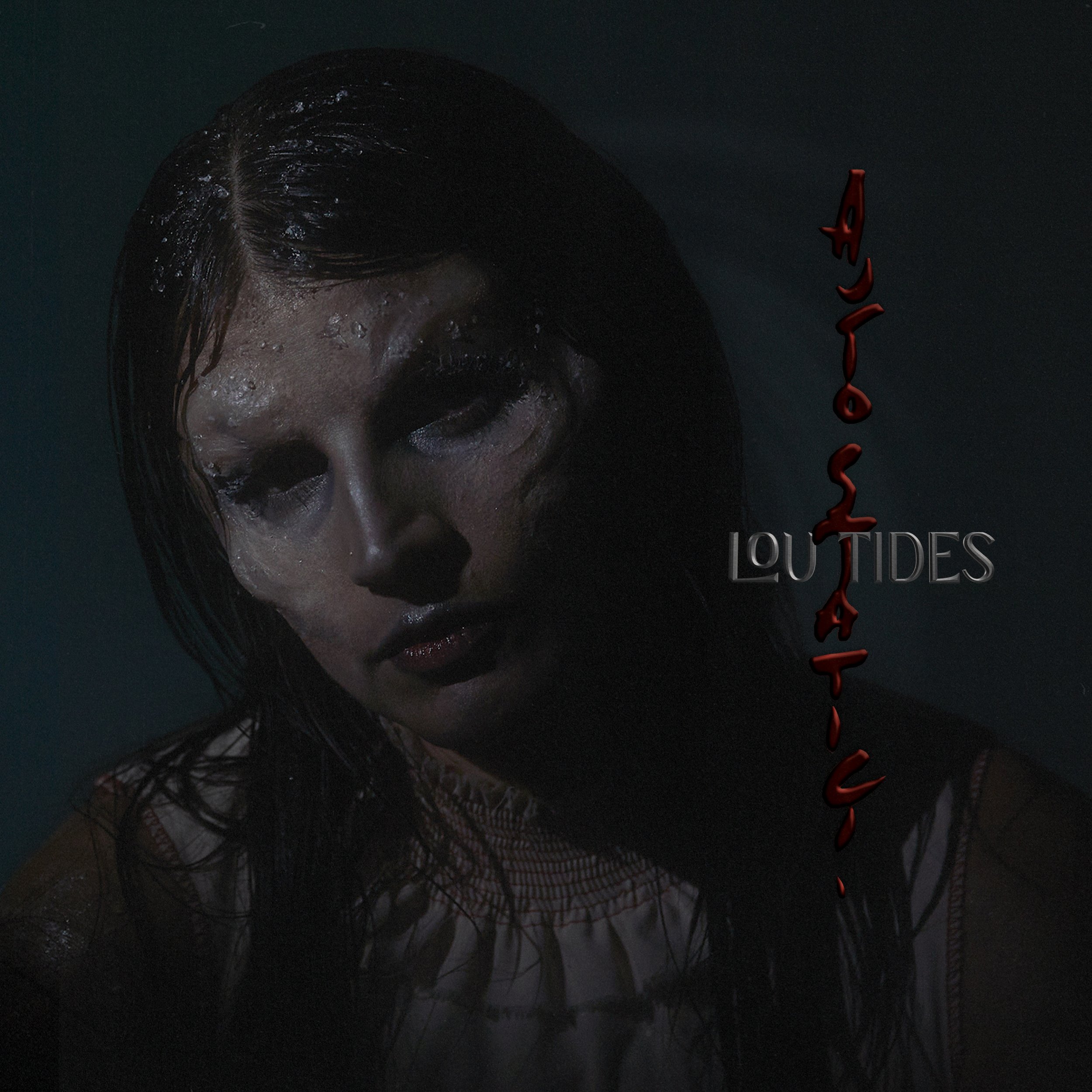
Autostatic! Album Artwork. Art & Design by Vanessa Castro with Creative Direction & Photography by Suz Murray. Out May 23rd via Switch Hit Records.
BEAU: So I've noticed that you have such an awesome tendency to randomly jump to a really low vocal (naturally) and you also use a lot of the sub-octave vocals in your work with Lou Tides. I would love to know any more about when you see fit to do that- and what you're trying to convey when you use that. Because it feels like a deliberate choice in certain spots.
TEENY: Well- the altered vocals, like the pitch stuff, is definitely to point out it's a different character. So it's like in the story, this is a different character from this character. So I'm using it sort of as a storytelling mechanism. As far as writing or melody, it's literally something I don't think about. I think I just do it. I wonder if it has to do with vocalists that I've admired in the past. But Yeah, it's sort of subconscious. I've been told this from other people, like “you jump the octave a lot!” or “you do this very particular vocal thing.”…I'm like….. I don't even know what I'm doing.
BEAU: (Laughs) It's a really awesome characteristic- and it's really fun as a listener. But yeah, I'd love to know more about your background in singing as well.
TEENY: Well, I've been singing forever. My dad was a composer, my mom is a singer. So we were always just sitting around the piano and harmonizing with my sisters and singing with my mom. And I would often have song books where I would find songs, mostly jazz tunes, because my dad could play jazz also. We would sit down and play songs together late at night. He would play and I would learn these songs. And then I went on to sort of study… I was like a dorky musical theater kid after that. And then I was a bad kid. And then I went to college for jazz vocals. And I totally flunked out because I partied too hard.
BEAU: Yeah, I can relate. (laughs)
TEENY: Yeah, (laughs). And then I started playing in bands. And I was like, “ohhhh, I can do that.” And now I'm like, now I would love to go back to school and actually learn things.
BEAU: Isn't that funny how that works? It's quite an interesting time - the whole drinking age and when you ACTUALLY might want to study and get it together.
TEENY: Right. (laughs)
BEAU: So the visual world of Lou Tides is fantastic. The “Autostatic!” video is great. The choreography…The backlighting…everything was gorgeous.
TEENY: Thank you.
BEAU: With Lou Tides, you have always had a very creative and bold approach…..like the Infinity Loop visual short film, or the video for “Bad Decision”. Where does your inspiration, your intent and your drive come from with that? I can tell a bit with the performance aspect that you've mentioned before, but I'd love to know a little more.
TEENY: I think it started to become clear that it was gonna be an important aspect of this project just because I think I do make really intense music. I think when you add a visual element, it can be a little bit of a translation tool. Also, I'm a big fan of cinema. So I think a lot of what I get inspired by often isn't musical, it's often films. Like lately I watched Kwaidon, which is this Japanese horror film (from the 50’s? I think). The scenes and the width of what you're able to express visually by using space, by using costume and by using color…I think helps a lot with the translation of the music. I do a lot of flips and I do a lot of character changes. So I think it's helpful to have visual tools. I've been told as an audience member that sometimes when they see the performance, they understand the music more. And I think that's really cool. I think it just sort of happened naturally because it's natural to me. I work with this person, my collaborator, Suz Murray is an incredible director and also Nina Corelli - who's within prosthetics. We all are kind of this little collective now. And Lena Engelstein, who was the choreographer - they really understand what I'm trying to go for and they have been like incredible collaborators. There's also that- because I think they're helping translate what I'm trying to do also. And it's successful. So for me, I also love fantasy play and I love Jim Henson. And I think those sort of theatrical aspects are part of the music as well.

Lou Tides by Suz Murray.
BEAU: Not everybody is really tapped into visuals like you are, it's incredible. So is there any gear you want to shout out from this record? Because there is some really great synth sounds.
TEENY: Matriarch…. Moog Matriarch. I've been using that thing for a couple of years now. And it's just…..man. I love that instrument. I use it all over the Sharon Van Etten record too- That thing is like gold. What else did I use on that? Oh! You know what I used a lot on this record was a Korg… I think it's a Korg MS2000.
My partner has one, yeah, Korg MS2000. It's a more digital synth. I love that thing. I was surprised by it. It's not usually the kind of synth I would go for, but- Korgs are really toothy. So they can add a really nice edge in comparison to a really lush Moog. It's like a really nice combination, those two against each other.
BEAU: So you mentioned Sharon Van Etten. You've had a really exciting past couple of years- linking up with Sharon, becoming a member and having input in that band, and touring with Sleater Keeney and performing on Fallon. It's been so exciting to see it all happen. How has life kind of changed for you as a musician ….you know… -in or out of Lou Tides- since you became a member of The Attachment Theory band? And how has it been working with the new band members in that group and collaborating with them?
TEENY: I mean, it's been a huge influence on my writing and my musicianship. Sharon's an incredible songwriter, obviously. We all know this. I've learned a lot from her. She's a master of her craft. So it's been really enlightening to work with her and also see somebody at her level of professionalism and her level of success too- like how she needs to get things done. That's been also very informative as far as not overthinking things. She is willing to kind of put things out there and let them be. And I really appreciate that as an artist. Playing with Devra Hoff, who's become one of my closest friends….she's just a brilliant bassist and musician overall. What a mind…And Jorge as well…. I love them deeply as friends and deeply as musicians. So I think it's been a really great learning experience as far as also approaching your own music.
When you work with people at that caliber of songwriting and arrangement, then you start to think about, well, “How can I not throw everything at the wall… and sort of be a little bit more intentional?” Because Jorge and Devra are extremely intentional in their approach to music. So I think that that's been really informative and helpful. And then Snake, our new member, Snakeskin. Man, she's amazing. Touring with everybody too, it's just like it's electric on stage. So that's also been really, really exciting. And touring with Sleater Kinney was just like, you know….
BEAU: Yep! that was my next question, How's that been?
TEENY: Well, it was only last year. So I don't know if I will be touring with them again, but I hope to play with them again. They are…you know.. They are such legends. I think that one of the biggest things I took away from working with them was their sort of “system of care”, how they care about each other, how they care about people they work with. They're really intentional about what they do and what they wanna say. They're also both highly intelligent. So, I just feel like being around the two of them was an honor. I think taking away that sort of “system of care” and how you can apply that to your own projects and your own little circles of friends and colleagues, you know, and like how you can approach your touring life too. I think that they were very intentional about that as well. And Carrie is obviously one of the funniest people I've ever met. So that was fun, because I'm a goofball.
BEAU: Absolutely- and I'm sure that makes being on the road that much smoother.
TEENY: Oh yeah, yeah. You have to be funny…. I can't.
BEAU: (Laughs) Well! What is next for Lou Tides and the release of “Autostatic!” and beyond? Any shows? Any other exciting stuff?
TEENY: Yeah, I'm planning a record release show…. And then hopefully more shows. Honestly, I'm really busy with Sharon. So we'll see. I would like to play some more release shows and maybe do a little touring and following the record after the record comes out.
BEAU: Well, I will be there. I will absolutely be there! Thanks so much Teeny!
TEENY: Thank you!
Autostatic! Is out on May 23rd via Switch Hit Records.
You can watch the music video for “Autostatic!” here
And watch the music video for “Map Maker” here
You can pre order the record on bandcamp here
You can pre add the album on streaming services here
You can also catch Teeny on tour with Sharon Van Etten & The Attachment Theory and the dates are here.